
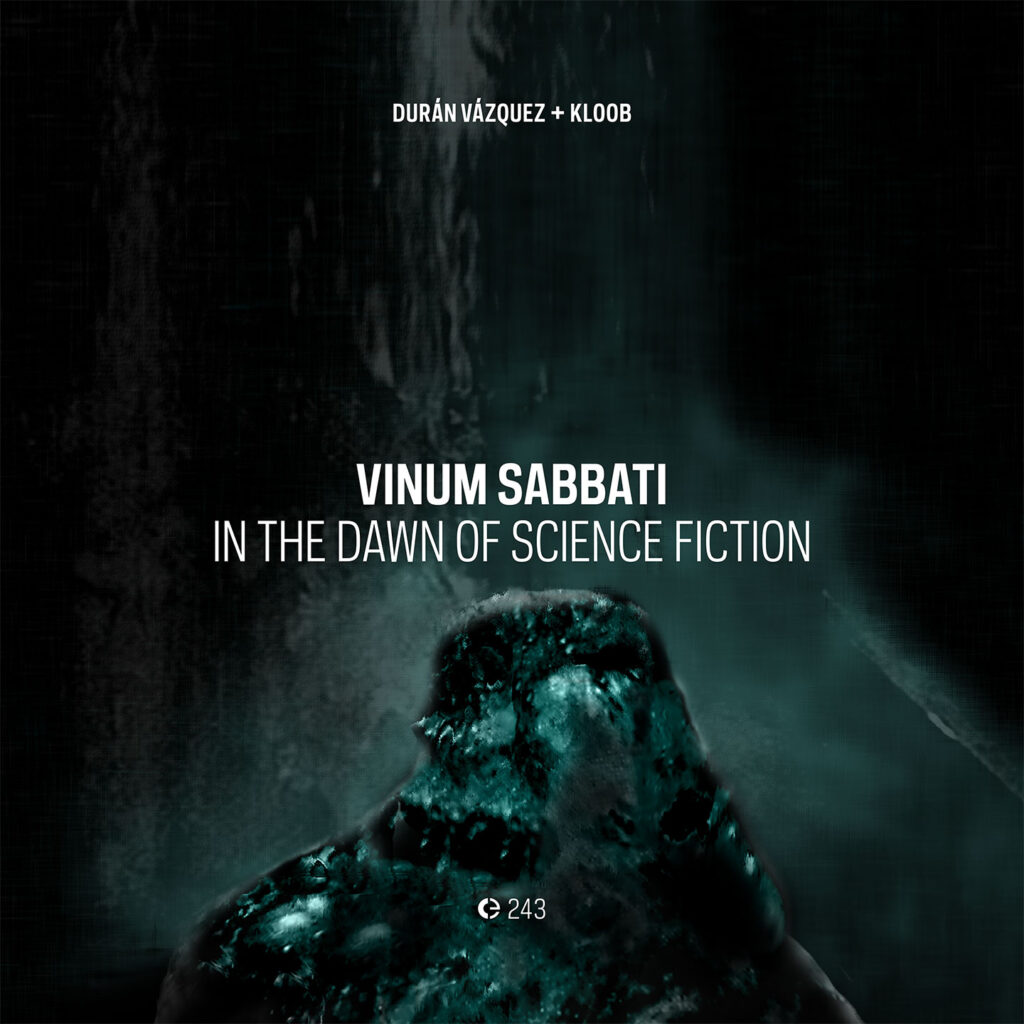
There are albums that flirt with darkness, and then there are albums that brew it slowly, like a dubious tincture simmering in a back room where the light never quite arrives. “Vinum Sabbati, In the Dawn of Science Fiction” belongs to the latter. Durán Vázquez and Kloob don’t just reference Arthur Machen’s unsettling “Novel of the White Powder” – they distill it, inhale the fumes, and then calmly invite the listener to do the same, warning label already peeled off.
Both artists come with long electronic pedigrees, but this is not a nostalgic handshake between veterans. Vázquez, long associated with Crónica’s austere and conceptually sharp catalog, brings a rigorously hands-on approach to sound: no generative tricks, no algorithmic safety nets, just legacy software pushed until it starts behaving like a nervous system. Kloob, whose path runs from subterranean dance music to a more rarefied ambient practice, supplies an instinct for atmosphere that knows when to envelop and when to withdraw. Together, they operate less like collaborators and more like accomplices.
The Machen reference is crucial, not as literary garnish but as structural DNA. In the original text, “Vinum Sabbati” is a substance that alters its subjects from the inside out, turning latent corruption into something grotesquely visible. The music mirrors this process with unnerving patience. Sounds rarely arrive fully formed; they seep in, coagulate, and mutate. Drones curdle. Textures itch. Rhythms appear briefly, only to be swallowed by something thicker and less cooperative.
The opening “Prelude to Dreadful Confessions by a Doctor” establishes the album’s clinical tone: a cold, observational distance that paradoxically heightens the horror. By the time tracks like “Devil’s Pharmacy” and “The Rotten Limb” unfold, the sound design has become almost corporeal – less electronic music than a study in sonic pathology. There’s a dry humor lurking here too, in the refusal to dramatize. The titles scream Grand Guignol; the music responds with a raised eyebrow and a scalpel.
What makes the record particularly effective is its sense of restraint. Even at its most oppressive, it avoids the temptation to overwhelm. Dynamic range is treated as a moral issue: silences feel complicit, low frequencies feel invasive, and sudden shifts in density land like unwanted diagnoses. “Ominous Remedy – Transcending Human Condition” stretches this tension beautifully, balancing slow-burning dread with a strange, almost ritualistic calm, as if transcendence were just another side effect listed in small print.
By the closing “Scientific Horror”, the album has completed its transformation. Fear here is not theatrical but procedural – administered carefully, observed closely, and left unresolved. The dedication, “In memory of those who did not survive the medicine”, stops being metaphorical and starts feeling uncomfortably precise.
“Vinum Sabbati, In the Dawn of Science Fiction” is not an easy listen, nor does it pretend to be. It’s an album that understands horror as a process rather than an event, and science fiction as an emotional condition before it ever became a genre. Durán Vázquez and Kloob don’t offer catharsis; they offer exposure. Drink at your own risk. Vito Camarretta
via Chain DLK