

The AXA building in Porto, of which we have so many fond memories, will close down permanently. A big party is being organized to mark the event and celebrate all the good things that have passed through this amazing space for such a long time. Net Saturday, November 28, AXA will be open from 16h to 4h, hosting a range of events, from performances, installations, dj sets, etc. Crónica has been invited to collaborate and programmed an audiovisual installation by Haarvöl at level 4.
Pedra Contida live in Porto, Lisboa and Coimbra

The Pedra Contida quintet — Marcelo dos Reis, Angelica V. Salvi, João Pais Filipe, Nuno Torres, Miguel Carvalhais — will be presenting performances in Porto, Lisboa and Coimbra throughout the next week. Starting in Thursday 19 in Passos Manuel in Porto (with Vitor Joaquim opening), they will follow to Lisboa’s Desterro on Friday the 20th and finish at Coimbra’s already legendary Salão Brazil on Saturday the 21st. The three performances will be recorded for a future CD release in the trail of last year’s “Xistoâ€
Today: Zero’15 with @c, Ricaro Jacinto and Jonathan Saldanha in Coimbra

Included in the program of Ano Zero, the Coimbra biennial, [zerodB] is a series of performances curated by Pedro Tudela on November 13 and 20. Tonight’s performances will feature Ricardo Jacinto, @c (Miguel Carvalhais and Pedro Tudela) and Jonathan Uliel Saldanha. The series closes with Marçal dos Campos, Haarvöl and Susana Chiocca next Friday.
“Positionsâ€Â reviewed by Bad Alchemy

Musik wird meist als Kunst in der Zeit betrachtet, auch wenn manche sie ins Zeitlose zu dehnen versuchen und dann von ‘deep’ raunen oder von einem Theatre of Eternal Music. Wagner fand für das Zeitlose die Formel: Zum Raum wird hier die Zeit. Der Raum ist also mit im musikalischen Spiel, auch wenn die site-specific music davon nur den abgeschmacktesten Gebrauch macht. Mot der platten Suggestion, dass es auch in der Musik ein Oben und Unten, Nah und Fern gibt. Ja und? Dieser 1974 geborene Holländer hier lässt bei ‘Three Modulators’ einmal drei Posaunisten tutend ihren Spielraum ausloten. Und ein andermal drei Kontrabassisten ebenfalls weitgehend ad libitum einen sonoren Klangraum aussägen, betont knorrig, aber auch agil federnd mit klapprigen Effekten oder Pizzikatolauten. Da die Bassisten positioniert bleiben, ähnelt ihr Raum eher einer Blasenkammer, einem Aquarium, einer Voliere, einem Maschinenraum. Bei ‘Truth, exercise for a listener’ bilden dann die extraordinary Gentlemen Satie, Cage und Ferrari eine gemeinsame Zeitebene. In eine Gesellschaft, die über Musik smalltalk (und insofern keine x-beliebige und gänzlich unvorbereitete sein dürfte) mischen sich ein Posaunist, der monoton tutend umher läuft, und das modulierte Summen eines Kontrabasses. Zuletzt hört man Schritte auf einer Treppe und eine Frau beginnt durchdringend zu schreien. Das nicht als direkte Erfahrung, sondern als Positionskrampf im Dunkeln. ‘Branching into Others’ wird aufgeführt vom Ensemble Modelo62, das sich dabei im Muziekgebouw anaßt IJ verteilt hatte, um in einem schmalen, aber kraftvoll, genutzten Klangfenster strahlende Töne in den Raum zu stoßen, wobei vor allem Blechbläser und Akkordeon mit Metallicfarbtönen hervorstechen. Nacht gut zehn Minuten entsteht ein einziger schillernder Dauerton, der zuletzt zart behalt. ‘Positions, for those involved’ schließlich ist ein pfiffiges Spielchen für das Publikum selbst. Alle erhalten eise simple Opelanweisung, nach der sie dann pfeifend, blasend, trappelnd, hustend oder summend und dabei die Position wechselnd einem vielgliedrigen Klangkörper bilden. Sogar ein Hund pufft mot. Das geht über die Abkehr vom zentralperspektivischen hören nochmal deutlich hinaus. Liegt aber schon wieder im Trend, dass man immer mehr selber machen muss und einem unbezahlte Arbeit als Selbstbedienung, Spiel, Spaß und Freiheit untergejubelt wird.
“Gamelan Descending a Staircase†reviewed by Loop
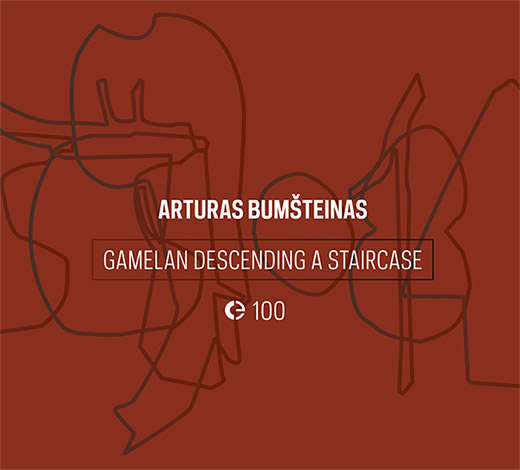
Arturas Bumšteinas es un compositor, artista sonoro e improvisador lituano que trabaja en los campos de la música experimental y electroacústica, del radio arte e instalaciones. Desde 1997 trabaja en solitario con su nombre editando más de 30 discos, también bajo el seudónimo de Refuse y tiene varias colaboraciones con artistas locales e internacionales.
El material sonoro de este disco se grabó en el Ethnologisches Museo Dahlem en el verano de 2013, durante una visita para un trabajo de investigación.para este álbum se grabó una gran colección de instrumentos de orquesta Gamelan de Indonesia, ejecutados por Arturas Bumšteinas & Raminta Atnimar. Luego fue compuesto par una composición de sonido envolvente, estrenada en el Festival Jauna Muzika en el Centro de Arte Contemporáneo de Vilnius (Lituania), en abril de 2015. En la versión en vivo de esta pieza también participan tres trompetistas en improvisación, proporcionando texturas para tocar en solitario o para acompañamiento de música pregrabada en vivo.
‘Gamelan Descending a Staircase’ consiste of dos temas. El primero homónimo de 50 minutos de duración, es una amalgama percusiva de campanillas, metalófonos, xilófonos, membráfonos, gongs, flautas de bambú e instrumentos de cuerda frotada y cuerda pulsada. El segundo corte ‘Sad Young Man on a Train’ de 12 minutos de duración está más orientado al trabajo de cuerdas frotada junto a manipulaciones electrónicas. Guillermo Escudero
via Loop
Futurónica 153

Arturas BumÅ¡teinas’s “Gamelan Descending a Staircase” is Crónica release 100! We celebrate with a full episode of Futurónica dedicated to it.
Episode 153 of Futurónica, a broadcast in Rádio Manobras (91.5 MHz in Porto, 18h30) and Rádio Zero (21h GMT, repeating on Tuesday at 01h) airs tomorrow, November 11th.
The playlist of Futurónica 153 is:
- Arturas Bumšteinas, Gamelan Descending a Staircase (2015, Gamelan Descending a Staircase, Crónica)
- Arturas Bumšteinas, Sad Young Man on a Train (2015, Gamelan Descending a Staircase, Crónica)
You can follow Rádio Zero’s broadcasts at radiozero.pt/ouvir and Rádio Manobras at radiomanobras.pt.
The First 100
The First 100 from cronicaelectronica on Vimeo.
“Message in a Bottle†by Gintas K
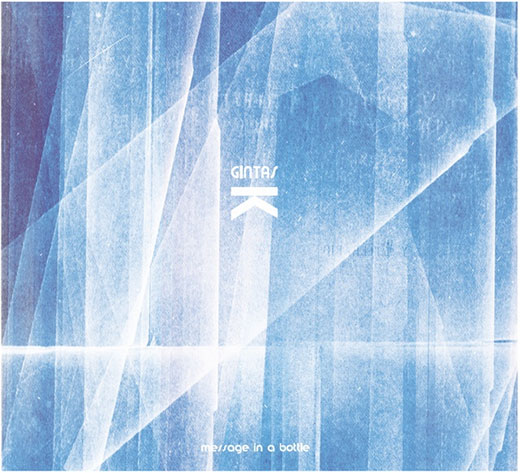
The Music Information Centre Lithuania has just published a retrospective CD for Gintas K titled “Message in a Bottleâ€. This album features some tracks previously published in Crónica, in such releases as Mus*****c, Lovely Banalities or So On.
New release: “Gamelan Descending a Staircaseâ€
Crónica is very proud to announce it’s 100th release, Arturas BumÅ¡teinas’s “Gamelan Descending a Staircaseâ€!
Arturas Bumšteinas (aka Refusenik) is a composer of acoustic and electronic music (graduated from the Lithuanian Academy of Music and Theater), performer, sound artist, and a founding-member of Quartet Twentytwentyone, the Works & Days, Wolumen and Zarasai ensembles. His various projects and performances were presented in dozens of festivals and art events around Europe and USA. Arturas lives and works between Vilnius and Warsaw. In 2013, Arturas Bumšteinas was awarded the Euroradio Palma Ars Acustica for the best radio-art composition.
The instrumental sound material for Gamelan Descending a Staircase was recorded at the Ethnologisches Museum Dahlem in the summer of 2013, during a research visit there. A large collection of Indonesian Gamelan orchestra instruments was recorded, and later it was composed into a surround-sound composition, premiered in Jauna Muzika festival at the Vilnius Contemporary Art Center, in April 2015. The live version of this piece also involved three improvising trumpetists providing live solo/accompaniment textures for the pre-recorded music.
Marcel Duchamp’s 1912 painting Nude Descending the Staircase No.2 was an inspiration lurking not only behind the title of this composition but also regarding the deconstructed micro-forms and the study of sound structures, progressing as if in slowmotion, and without a clear point of destination… Descending into the unknown territories… The title came in a vision, as a possible sonic event of a instruments of a gamelan orchestra falling down the stairs. A beautiful, unrealistic image. A dream.
Sad Young Man on a Train is composed from sounds recorded entirely on one prepared harpsichord. Preparations as wood, glass, stones, metal objects, kitchenware, toys and electric devices such as e-bows and cappucino mixers were used. All these objects were dangerously applied to the strings of harpsichord and the recording attempted not to reveal their presence, only amplifying the sounds of the harpsichord’s strings and body.
The whole recording session took place after recording another Bumšteinas’s composition Epiloghi. Six Ways of Saying Zangtumbtumb, which was produced by Deutschland Radio Kultur’s Klangkunst and released by Unsounds label in The Neatherlands in 2014.
The composition’s title is borrowed from the 1911-1912 painting of the same name by Marcel Duchamp. The auto-erotic associations provoked by the painting should not be dismissed as an influence for this musical composition.
Gamelan Descending a Staircase is now available from Crónica, Bandcamp and all the best digital and physical goods retailers!
Ano Zero’15: @c in Coimbra
Included in the program of Ano Zero, the Coimbra biennial, [zerodB] is a series of performances curated by Pedro Tudela, taking over the magnificent Salão Brazil on November 13 and 20. The first evening will feature performances by Ricardo Jacinto, @c (Miguel Carvalhais and Pedro Tudela) and Jonathan Uliel Saldanha. The series closes with Marçal dos Campos, Haarvöl and Susana Chiocca.