New release: “Loud Listening Murano”

cronica099-2015_520
Loud Listening is a format created by Alessio Ballerini, Enrico Coniglio and Attilio Novellino, members of the Archivio Italiano Paesaggi Sonori, an association founded to promote the culture of soundscapes.

Loud Listening is a sonic exploration experiment that intends to investigate the soundscapes of Italian industrial areas. This starts from a reflection on the current global economic crisis and on the future of the production areas of the peninsula, largely destined to abandonment or conversion.

Despite the downturn, many companies are still operating, and the soundscape of the Italian production areas is still distinguished by the acoustic characteristics typical of primary and secondary manufacturing. Whether this peculiarity is being lost or not is an open question and Loud Listening seeks to seek for a response.

By collecting field recordings made in industrial areas located in four different cities of the peninsula, the first step of Loud Listening draws the first sections of a sound map of the Italian industrial production, which is geographically documented.

If the first edition of Loud Listening includes field recordings from different Italian sites, the second edition focus on a particular production district: the island of Murano in Venice and its unique glass production.

In January 2014 the artistic residence “Loud ~ Listening Through the Sound of Murano Glass”, was held, a project made possible thanks to the Consortium Promovetro Murano with the support of the Chamber of Commerce of Venice. This project allowed the development of a sound mapping of glass production, with particular attention to sounds related to traditional activities both by companies that operate in the handcrafts sector and by those working in the industry. During the residence the sound artists were engaged in the audio recording of the sounds during glass production in some of the most important furnaces in Murano. The entire residence has also been documented with audio and video recordings for the construction of a documentary film.

Ballerini, Coniglio and Novellino spent a considerable time in the island and were engaged in audio and video recording of the glass production of some major companies that have agreed to cooperate in the initiative, opening access to the places of production. The sounds of glass production were recorded in all the stages of the production cycle, making it possible to create a sound library of Murano production: from the classic furnace to lampworking, from the mirror to the grinding of the product in secondary processing.

Sites documented:

  • Signoretto Lampadari (furnace illuminazione), Fondamenta da Mula 148
  • Simone Cenedese (furnace), Calle Bertolini
  • F.lli Barbini (mirrors/enhancing), Calle Bertolini 36
  • Alessandro Mandruzzato (Grinding department), Fondamenta Navagero 54b
  • La Perla Veneziana (lampwork beads), Riva Longa 53
  • Seguso Gianni e Zanetti (2 furnaces), Fondamenta Serenella 3

Loud Listening Murano compiles twelve reinterpretations and remixes, from Ballerini, Coniglio and Novellino, and from a host of musicians and sound artists to whom the original recordings were sent.

Tracklist:

  • Alessio Ballerini: LL2 (2:26)
  • Jazznoize: Sforzo (10:39)
  • Gintas K: 3.16 (3:16)
  • Durán Vázquez: Edward Bernays’s Pupils (14:26)
  • Mikel R. Nieto: Everything that needs to be there is here and nothing more (or 39 recordings all together starting from the beginning) (6:22)
  • Attilio Novellino: A New Path to Murano #1 (6:49)
  • Ephraim Wegner: 8a1b11c4d11e2f2g4i2l3m11n13o5r7s10t1u2z (11:20)
  • Maile Colbert: Seesaw (7:43)
  • @c: Centodieci (9:59)
  • Enrico Ascoli: 1723°C (7:40)
  • Vitor Joaquim & Miguel Carvalhais: LLLX (16:22)
  • Enrico Coniglio: A New Path to Murano #2 (12:04)
“Positions” reviewed by Le Son du Grisli

cronica097-2015_520
Sur ces cinq pièces du compositeur Martijn Tellinga (enregistrées à différentes époques), c’est l’espace dans lequel se positionnent (positions obligent) les instrumentistes qui est inspecté, questionné et (même, ça arrive) lu…

Si l’on peut craindre la collision pour ces trois trombones (Nathan Lane, Milton Rodriguez & Facundo Vacarezza) leur évolution dessine une chorégraphie de cornes qui troue la brume. C’est une note et une seule que trois contrebassistes (Mike Majkowski*, Rory Brown & Sam Pettigrew) modifient aussi dans un semblable délire monochrome.

L’auditeur se demande sans cesse quel est le positionnement de tel musicien et s’il prend celui-ci en compte dans son jeu (dans l’attaque, le volume, la durée…). Il faut donc plusieurs écoutes pour établir la carte de Tellinga, d’autant qu’il va jusqu’à mettre le public à contribution (celui-ci doit réagir dans une salle sans musiciens) et donc prolonge incroyablement l’espace scénique. Intéressant, non? Pierre Cécile

via Le Son du Grisli

Futurónica 151

futurónica_151
Episode 151 of Futurónica, a broadcast in Rádio Manobras (91.5 MHz in Porto, 18h30) and Rádio Zero (21h GMT, repeating on Tuesday at 01h) airs tomorrow, October 16th.

The playlist of Futurónica 151 is:

  1. Florian Hecker, Pandämonium 9 Playlist (2011, Pandämonium 9 Playlist / Stocha Acid Vlook)
  2. Florian Hecker, Standard Map & Cusp Map (Binaural Mix) (2005, Live @ ZKM / Standard Map & Cusp Map (Binaural Mix))
  3. Florian Hecker, Stocha Acid Vlook (2011, Pandämonium 9 Playlist / Stocha Acid Vlook)
  4. Florian Hecker, I (2007, Hecker, Höller, Tracks, Semishigure)
  5. Florian Hecker, II (2007, Hecker, Höller, Tracks, Semishigure)
  6. Florian Hecker, III (2007, Hecker, Höller, Tracks, Semishigure)
  7. Florian Hecker, IV (2007, Hecker, Höller, Tracks, Semishigure)

You can follow Rádio Zero’s broadcasts at radiozero.pt/ouvir and Rádio Manobras at radiomanobras.pt.

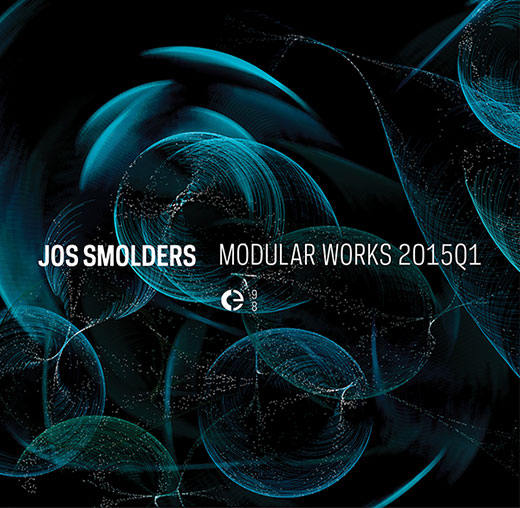
“Modular Works 2015Q1” reviewed by Whisperinandhollerin

cronica098-2015_520
As the title suggests, the four compositions featured on this album came into being in the first three months of the year, and is a counterpart to last year’s series of ‘Modular Works 2014’ (Q1-4) releases. While the pieces may on the surface appear to be sparse, darkly atmospheric ambient works, there was a definite methodology behind their construction, designed to bring a sense of linearity.

Certainly, there are distinct, if subtle, structures to the tracks, the first, ‘For RH (dark)’ building from misty rumblings to an ominous and altogether denser, louder conclusion. ‘For RH (light)’ is a more overtly electronic piece, and although the bleeping notes float in the air at some distance from one another, the introduction of percussion lends it a greater sense of cohesive form. ‘For RH (debris)’ is different again, a low, slow, barely there undulating tone slowly dissolves.

Smolders explains that “Three of the works are dedicated to Robert Hampson, because I admire his electro acoustic works very much and because he can be such an inspiring conversationalist on the subject of Musique Concrete.”

The final track, ‘Tom Tom Tom’ marks something of a departure, as near-silence interrupted by deliberate electronic scrapes.

It’s a worthy addition to Smolders’ already extensive catalogue, and shows his well of inspiration if running far from dry. Christopher Nosnibor

via Whisperinandhollerin

“Positions” reviewed by Vital Weekly

cronica097-2015_520
The press release for this is very lengthy, even when it doubles with information to be found on the cover of the CD. There is also some information on the composer, but it leaves out what I know him best for. I am sure for him that’s ancient (or perhaps irrelevant) history, but maybe it is for readers a few lines to connect. Martijn Tellinga I know best from the time we spend in an office together, working for Staalplaat, and him presenting lots of music he created as Boca Raton, one of which I even released. Tellinga also had his own label, Stichting Mixer, which acted as a publishing house for cross-over between beat oriented music and musique concrete. Tellinga later on went to the Institute for Sonology in The Hague and established himself as a serious composer of new music, dividing time between Amsterdam and Beijing. His current work, and I didn’t hear any of his work since ten years or so, is all about composing and performing ‘musical proposals and acoustical situations’, ‘rendering an on-going meditation on the rudimentary condition of the sonic arts’. It is ‘drawn from a reduced formalist-seeming vocabulary’ but his ‘scores are often open-ended, simple rule-based system providing performers with a template for listening, acting and interacting’. The five long pieces that we find on ‘Positions’ certainly could all be linked back to all of this. There is for instance ‘Truth, Exercise For A Listener’, which can only be recorded with a handheld device, so the engineer is part of the execution of the piece (and thus sounds sometimes far away). ‘Positions, For Those Involved’ is a piece for audience making sounds for themselves, and there are no musicians. That’s the kind of music one can expect here. The press text mentions some notes by Michael Pisaro and although it’s not mentioned, maybe Tellinga feels these days connected to the Wandelweiser group of composers? His music would certainly fit in that with these more silent composers. Tellinga’s pieces are part minimal, such as ‘Three Modulators, For Trombones’, which employs slow moving, long sustaining trombone sounds, such like ‘Branching Into Others, For A Large Instrumental Field’, which is for more instruments and who location is wide apart in an auditorium. These pieces I really enjoyed; it reminded me of Phill Niblock. The other pieces worked less for me. The absence of music and everything being in favour of an idea rather than music is nice, certainly when it’s presented in the context of a live ‘concert’, however broad that might be in this case; it’s perhaps too much John Cage, Fluxus and ‘happenings’ to me. I know that sound may equal music, but I rather sit down and be enchanted by musicians doing whatever is possible with sound. (FdW)

“Positions” reviewed by RifRaf

cronica097-2015_520
Trois trombones, trois contrebasses ou absence de musiciens, l’art du Néerlandais MARTIJN TELLINGA explore les possibles et l’au-delà sonore sur ‘Positions’ (Crónica). Ardue et enthousiaste, l’expérience acoustique inscrit pourtant sa première écoute dans une âpreté repoussante, elle s’estompe dès la seconde entame pour ne plus lâcher. Tout démarre avec l’extraordinaire pièce ‘Three Modulators, for trombones’, où trois acteurs de l’instrument – on tire un énorme chapeau à Nathan Lane, Milton Rodriguez et Facundo Vacarezza – évoluent dans un espace- temps physique et musical où le lointain côtoie le proche, telle une expérience sensorielle troublante et enivrante. Plus loin, si ‘Truth, exercice for a listener’ donne surtout le sentiment perplexe de se promener au milieu du public d’un vernissage, les sensationnelles variations de dynamique de ‘Branching into Others, for a large instrumental field’ nous ramènent au cÅ“ur de l’exercice, vital et conquérant. On s’imagine quelque part sur une partition de Lene Grenager, voguant sur un océan déchaîné par Giacinto Scelsi. Vous redemandiez de l’énergie en basses fréquences? Rendez-vous sur ‘Three Modulators, for basses’ et ses variations de hauteur à couper le souffle, avant-dernier propos d’un disque exigeant et novateur, à manipuler avec soin. Fabrice Vanoverberg