
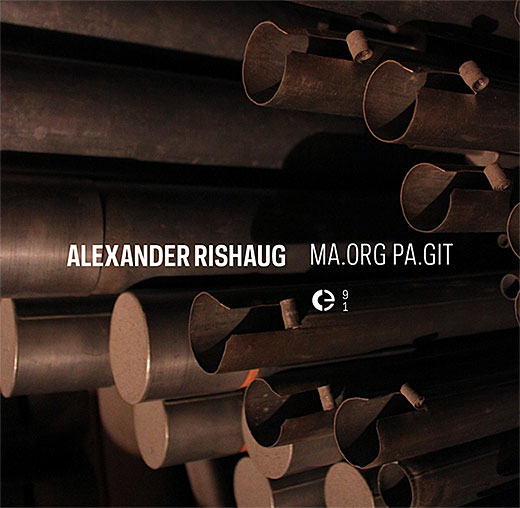
Vito Camarretta talks with Alexander Rishaug in the latest Chain D.L.K.. Great read!
Futurónica 143

Episode 143 of Futurónica, a broadcast in Rádio Manobras (91.5 MHz in Porto, 18h30) and Rádio Zero (21h GMT, repeating on Tuesday at 01h) airs tomorrow, June 26th.
The playlist of Futurónica 143 is:
- Srosh Ensemble, Pre Code (2015, Partials, Sonoscopia)
- Srosh Ensemble, La Soufriére (2015, Partials, Sonoscopia)
- Srosh Ensemble, Blast (2015, Partials, Sonoscopia)
- Srosh Ensemble, Forces in a Continuum (2015, Partials, Sonoscopia)
- Srosh Ensemble, Vrlina (2015, Partials, Sonoscopia)
You can follow Rádio Zero’s broadcasts at radiozero.pt/ouvir and Rádio Manobras at radiomanobras.pt.
New podcast: Arciv ev Noise

Arciv ev Noise is Filip Appel, an artist living in Åódź.
Among other pieces, he recorded “maintenant” with the Enough Rec. label and he created original pieces for dance performances at the Lodz Theatre and the Poznan Theatre.
He has recorded with Baublis and Limmatau, working on both his own and on group projects. He also plays and performs with K. Novotny, under the sobriquet Mavky.
He uses only his own original samples and field recordings for all the tracks he makes. He doesn’t use instruments in a classic sense of the word, so sounds emerge as a result of the laborious, processing of samples.
Futurónica 142

Episode 142 of Futurónica, a broadcast in Rádio Manobras (91.5 MHz in Porto, 18h30) and Rádio Zero (21h GMT, repeating on Tuesday at 01h) airs tomorrow, June 12th.
The playlist of Futurónica 142 is:
- Emmanuel Mieville, Phono-Ting (2015, Siebzehn bis ∞, Crónica)
- Cello + Laptop, Welcome (2015, Segments, Audiotalaia)
- Francisco López, Untitled #324 (2015, Siebzehn bis ∞, Crónica)
- Cello + Laptop, Intermission (2015, Segments, Audiotalaia)
- Cello + Laptop, The Garden (2015, Segments, Audiotalaia)
- Charles Curtis, Unison Offset (2006, Music Overheard, Boston ICA)
- Simon Whetham, Study for Temporary Residence (2015, Siebzehn bis ∞, Crónica)
You can follow Rádio Zero’s broadcasts at radiozero.pt/ouvir and Rádio Manobras at radiomanobras.pt.
Granular Fest 2015

Next Friday and Saturday in ZDB, Lisbon, the 2015 edition of the Granular Fest will present a series of performances with some of the most challenging music being produced by Granular’s members. Among other acts, Saturday night’s program will include performances from the ZNGR Electro-Acoustic Ensemble (Carlos “ZÃngaroâ€, Emidio Buchinho, Carlos Santos, João Pedro Viegas) and a duo performance of Vitor Joaquim and Miguel Carvalhais.
Marc Behrens and @c at Serralves em Festa

This coming weekend at Serralves em Festa, Crónica will be presenting two sound installations: “The Religion of Toxins”, a double-mono installation by Marc Behrens at the first floor of the chapel’s tower, and “Divisor / 4” a multi-channel piece by @c (Pedro Tudela and Miguel Carvalhais) a the house’s chapel. The infrastructure of “Divisor /4” will be used by @c for three performances, on Saturday at 3PM and 10PM and Sunday at 3PM.

Futurónica 141

Episode 141 of Futurónica, a broadcast in Rádio Manobras (91.5 MHz in Porto, 18h30) and Rádio Zero (21h GMT, repeating on Tuesday at 01h) airs tomorrow, May 29th.
The playlist of Futurónica 141 is:
- Ranter’s Bay, Remix (2015, Remixed Ambience Wars, Luscinia)
- John Lenin, Remix (2015, Remixed Ambience Wars, Luscinia)
- Durán Vázquez, Remix (2015, Remixed Ambience Wars, Luscinia)
- Tzesne, Remix (2015, Remixed Ambience Wars, Luscinia)
- Durán Vázquez, Remix (2015, Remixed Ambience Wars, Luscinia)
- kl00b, Ambtronic View Remix (2015, Remixed Ambience Wars, Luscinia)
- Miguel A. GarcÃa, Remix (2015, Remixed Ambience Wars, Luscinia)
- Durán Vázquez, Remix (2015, Remixed Ambience Wars, Luscinia)
- äNACRUSä, Remix (2015, Remixed Ambience Wars, Luscinia)
- Durán Vázquez, Remix (2015, Remixed Ambience Wars, Luscinia)
You can follow Rádio Zero’s broadcasts at radiozero.pt/ouvir and Rádio Manobras at radiomanobras.pt.
“Residual Forms†reviewed by Blackaudio
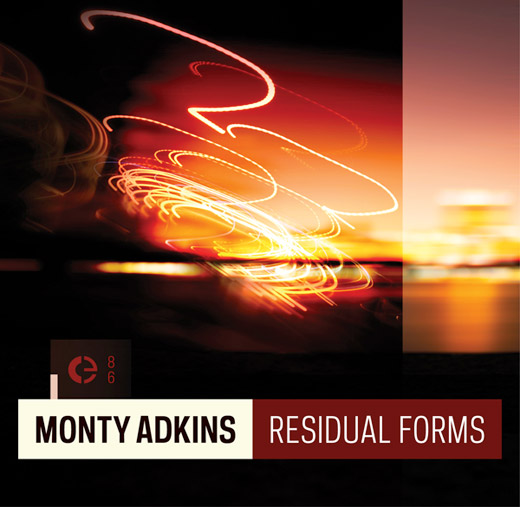
This 20 minute one-track EP is available only on Digital Download (unfortunately for the collectors out there); with Adkins thematically covering the notion of ‘drift’ and a lone figure wandering round a city, locked in their own world.
‘Residual Forms’ is a beautiful release; with captivating drones and harmonies that slide and weave gently together into a rich tapestry of glowing light. Gentle smatterings of understated piano; lay as the bridge for low basses to fall from and light pads to float upwards to the sky.
It’s easy to become sucked into Monty’s story. If there ever was a lesson on how to hypnotise a listener with music, then Adkins accomplished ambient will engross those with a penchant for the genre with consummate ease.
Adkins does have his own sense of originality, but the tell-tale swells of low distorted guitar that rush the listener midway, are reminiscent of Fennesz; and that is no insult at all, completely the opposite in fact.
As a lover and avid fan of most music of this ilk, all I can say to Crónica is “vinyl pleaseâ€.
9/10
via Blackaudio
“Transmissions†reviewed by Musique Machine
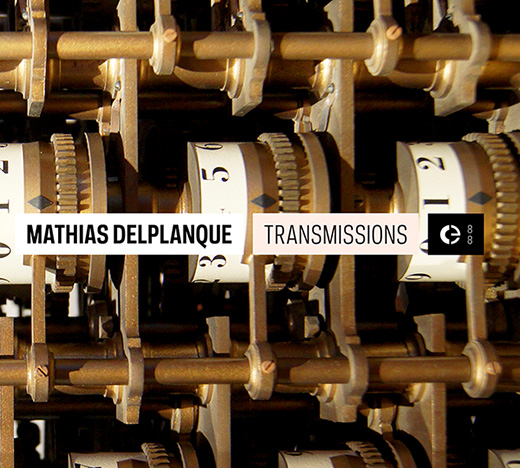
“Transmissions†comes in a card wallet, simply and elegantly adorned with a close-up of machinery workings; this is very apt, since thats precisely the content of the disc, too. The cd has four tracks, ranging in duration from near three minutes, to a mammoth near-forty. All the pieces use the sounds of machines: “Part 1†and â€Part 2“ utilise loom sounds as source material, whereas “Part 3†and Part 4†are more broadly based on “machine-tools soundsâ€. This truly industrial material is fashioned by Delplanque into collaged constructions, flitting between raw sounds and processing.
As you might imagine, there is often a strong rhythmic element to the pieces; though, Delplanque keeps it shifting and modular – there’s no “cheap†recourse to minimalist repetition, here. Rhythms emerge and develop, become layered; before another element enters and changes the direction. “Part 1†contains several sections like this, with the ordered hubbub of disparate machines whirring away in syncopation, before being morphed into underwater-sounding lurches and near-choral drones. The first two tracks (they’re presented in numerical order) are quite sparing and subtle in their use of processing, while the remaining two are perhaps more clearly stretched and transformed. “Part 3†creates a soundscape verging on eeriness and darkness, without perhaps ever achieving that; not that this is a criticism at all: as before, there are very few cheap or easy paths taken by “Transmissionsâ€. “Part 4†welds the atomised, if undoubtedly “physicalâ€, machine sounds to majestic, monolithic drones with cosmic overtones.
This is a very good album indeed, using a potentially small (and limiting) palette of sounds superbly; with no sense of boredom or tiredness. Its further to Delplanque’s credit, that the first two pieces use so many unprocessed sounds – without ever becoming a dry exercise in field-recording. There’s always a temptation in this area, to think that merely coupling and layering “raw†source material is enough: “Transmissions†pushes past that and creates something, not just “with†the materials, but “out†of the materials. Oddly enough, I was listening to the wonderfully stark “Rejector†by the legendary Omit, yesterday and there are clear parallels to be drawn here. Both projects create austere, sometimes even barren, soundscapes out of “primitive†materials; both deal in ambiguous atmospheres and both have an enviable sense of space and environment. This is therefore, most definitely, a recommended album.
Martin P
via Musique Machine
New release in Crónica: Siebzehn bis ∞

siebzehn bis ∞ is tied with the previous work eins bis sechzehn, recorded within the ruins of a hotel complex at the Croatian coast in 2011 and released in 2012.
Â
These ruins situated in the Župa DubrovaÄka area are silent witnesses of once mono-functionally used areas resembling each other by their interchangeability and absence of history. Massive holiday resorts — typical Heterotopian spaces as defined by Foucault.
Â
Out of decay, the plundering and destruction of new forms of existence (milieus) has developed. The interchangeability and uniformity of the former transit space is annulled by new specific characteristic features evolving from decades of dilapidation.
If a place can be defined as relational, historical and concerned with identity, then a space which cannot be defined as relational, historical or concerned with identity will be a non-place. (Marc Augé, Non-Places – Introduction to an Anthropology of Supermodernity, trans. John Howe 1995)
Marc Augé coined the phrase non-place (a term originally created by Michel de Certeau) to refer to places of transience that do not hold enough significance to be regarded as a place.
A world where people are born in the clinic and die in the hospital; where transit points and temporary abodes are proliferating under luxurious or inhuman conditions (hotel chains and squats, holiday clubs and refugee camps, shantytowns threatened with demolition or doomed to festering longevity); where a dense network of means of transport which are also inhabited spaces is developing; where the habitué of supermarkets, slot machines and credit cards communicates wordlessly, through gestures, with an abstract unmediated commerce; a world thus surrendered to solitary individuality, to the fleeting, the temporary and ephemeral, offers the anthropologist and others a new object, whose unprecedented dimensions might usefully be measured before we start wondering to what sort of gaze it may be amenable. (Marc Augé, Non-Places – Introduction to an Anthropology of Supermodernity, trans. John Howe 1995)
Inspired by the curiously fascinating atmosphere of the Kupari hotel ruins, Wegner and Weinmann created the conceptual work eins bis sechzehn, in which visual and audible impressions are processed into a series of photographs by Julia Weinmann and a 20-minute composition by Ephraim Wegner. It focuses on the simultaneity of place and non-place — a surreal world originating from the loss of its functionality as a former transit place. Historical and geographic aspects of the hotel deliberately disregarded in eins bis sechzehn are spotlighted in siebzehn bis ∞. Abstract space is transferred into its concrete locality.
Â
Built in 1919, the Grand Hotel was an exquisite seaside resort for the rich and beautiful from all over the world that during World War II was occupied by German Armed Forces. From the 1960s up to the 1980s extensive hotel resorts were “le dernier cri†for millions of tourists to make their individual holiday dreams come true and Josip Broz Tito, sensing a profitable business, built the Kupari Tourist Complex around the old Grand Hotel. This luxury holiday resort was partly used by the military elite of the Yugoslav People’s Army and their families, but was also open to foreign tourists.
Â
Tito who headed socialist Yugoslavia as prime minister from 1953 to 1980, once described his home country with the following words: “I am the leader of one country which has two alphabets, three languages, four religions, five nationalities, six republics, surrounded by seven neighbours, a country in which live eight ethnic minorities.â€
Â
Tito’s tight rein kept ethnic tensions in check. With his death in 1980 the political climate radically changed in Yugoslavia and national and ethnic tensions began to flare. One thing led to another and by 1991 the Yugoslav Wars had started. During that war the Kupari Tourist Complex was destroyed and the following years of looting and plundering turned the hotel complex to not much more than a skeleton of the luxury resort it once was.
siebzehn bis ∞ consists of unique photos taken while working on eins bis sechzehn. These photos were published in the Off Topic magazine (KHM Cologne) in January 2014 for the first time and are set to music by guest musicians and sound artists, working from the archived material recorded by Wegner. Images and sounds serve as inspiration sources for each artists’ interpretations therefore the strictly chronological and documentary approach is dissolved and the perspective changes dramatically.
siebzehn bis ∞ includes unreleased works by @c (Miguel Carvalhais & Pedro Tudela), Ephraim Wegner, Emmanuel Mieville, Francisco López, Maile Colbert, Marc Behrens, Mathias Delplanque and Simon Whetham.
Â
siebzehn bis ∞ (Crónica 096~2015) is now available as a digital release, eins bis sechzehn (Crónica 069~2012), with photographs by Julia Weinmann and artwork by Clovis Vallois, is available as a CD or digital edition.