“Against Nature” reviewed by Passive/Aggressive

cronica103_520
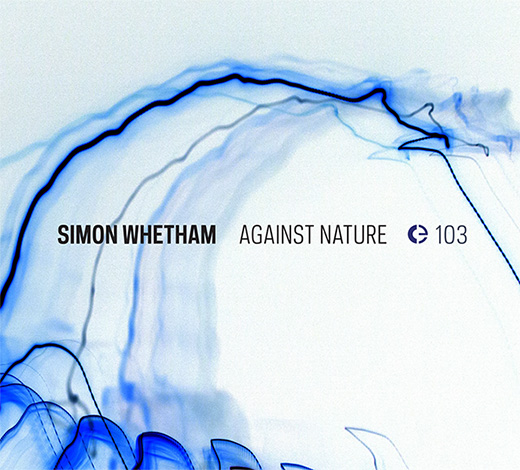
Det absolut første, man undrer sig over, når man sætter den seneste plade fra den engelske lydkunstner Simon Whetham på, er titlen. Han har ad flere omgange ydet bidrag til det fremragende radioprogram Framework, som i mange år har arbejdet for at udbrede kendskab og kærlighed til lydkunst, field recordings og naturlyde. Fra en kunstner, som i årevis har lavet feltoptagelser og brugt dem til spændende værker, er “Against Nature” ved første øjekast den mest blasfemiske titel, man kunne forestille sig.

Pladen er udgivet på det portugisiske kvalitetslabel Crónica, som foruden Whetham også udgiver plader med kunstnere som Marc Behrens, Francisco López og Lawrence English, hvis genremæssige udgangspunkt også ligger i berøringsfladerne mellem eksperimenterende musik og lydkunst.

“Against Nature” er Whethams tredje udgivelse på Crónica, og den fungerer som efterfølger til den ekstremt overbevisende “Never So Alone” fra 2013. Pladens råmateriale, som er optaget under et residency i Kristiansand, består af lyde, som er kendetegnet ved sammenbrud af en strukturel orden: “Sounds emitted by badly built microphones, over-burdened amplifiers, motors driven by sound impulses, misbehaving software, objects toppling.” Pladen omfavner på et strengt konceptuelt niveau mislyd, fejl og uforudsigeligheder, og projektet synes at være forvaltningen af dette niveau.

Faktisk lyder “Against Nature” som ét langt, heroisk forsøg på fra Whethams side at tage herredømme over sit eget materiale. Hans metode er at behandle sine optagelser som objekter og iscenesætte dem på ny; give dem ny kontekst. Det er dén indre dynamik, som driver pladen fremad. Materialets små ikke-intentioner gør hele tiden modstand, og resultatet giver fornemmelsen af en konstant sydende tilstand af ustabilitet, støj, melankoli og kamp. Spørgsmålet er, hvorvidt det er en kamp, Whetham kan vinde; om han overhovedet kan få sit materiale til at makke ret og blive pænt stående, stille, i nye konstellationer.

Lydkunst lider (i højere grad end måske nogen anden kunstgenre) under den forbandelse, at det tiltrækker pseudo-kunstnere og dilettanter, der med udgangspunkt i retningsløst klovneri væver atter nye varianter af Kejserens Nye Plader. Simon Whetham tilhører imidlertid lydkunstens elite, og han er før sluppet af sted med langt mere vanvittige ting end et genstridigt råmateriale. Eksempelvis er det lykkedes ham at blande feltoptagelser og musik, uden at det er blevet uudholdelig kitsch. En sand præstation.

På samme måde er “Against Nature” en balancegang eller en stiløvelse i at producere et konceptuelt værk, som langt hen ad vejen undgår de fælder, som konceptuelle værker ellers normalt falder i: De bliver hermetiske og utilnærmeligt pastorale i deres insisteren på ren ånd. Derimod lyder Whethams værk til tider også rigtig godt.

Mere end måske nogen anden inden for genren mestrer Simon Whetham forholdet mellem forgrund og baggrund – eller rettere flade og objekt. Af og til bevæger lyde sig umærkeligt fra baggrunden ind i forgrunden og tilbage igen; andre gange trænger materialets beskaffenhed igennem og gør overgangene alt andet end smidige, á la lyden har udført en ulovlig handling og vil blive lukket.

Der er en indbygget dobbelthed i “Against Nature”. Det ene øjeblik forekommer den smuk og imødekommende, det næste sidder man og presser høretelefonerne mod ørerne for at forsøge finde rundt i, hvad fanden der egentlig foregår derinde i lydbilledet. Pladen ligger hele tiden og slår sig mellem det akkurat forståelige og det akkurat uforståelige, og det er netop dér, “Against Nature” henter sin kunstneriske kraft. Man får simpelthen aldrig en fornemmelse af, at Whetham har fuld kontrol over sit materiale, men det lader heller ikke på noget tidspunkt til for alvor at være meningen. Jonas Siig

via Passive/Aggressive

“Against Nature” reviewed by Aural Aggravation

cronica103_520
Simon Whetham has a considerable history of taking sound recordings – often environmental sounds – and working them into something unrecognisable, by means of various sonic and software mutations. Against Nature emerged from an exploration of what Whetham describes as ‘errors and failures’, using ‘badly built microphones, over-burdened amplifiers, motors driven by sound impulses, misbehaving software and objects toppling’ as part of an organic process. The album is in many ways accidental in nature, the end product determined more by the material than the artist. It could be seen, in some respects, as a project of artistic self-erasure. This album may bear Simon Whetham’s name, but his function here is as a conduit, more of an editor than an author of the work.

Against Nature may only contain five tracks, but the tracks are both lengthy and intense. Screeding noise sustains interminably, piercing tones that aren’t drones but something altogether more serrated. Pink noise switches to white noise. Hums crackle, fizz and whizz and gradually build to immense, barrelling walls of noise that suck the listener into an immersion tank of sound. The quieter passages lull the listener’s senses, a gentle breeze and the occasional clanking of what sounds like a yak’s bell evoke almost pastoral images, before once again building sonorous, scraping tension that creeps and swells. Metallic clattering grinds like a cement mixer. Blasts of static and white noise tear through silence.

The five movements of Against Nature are not rhythmic in their formation, and are free of anything one might refer to strictly as percussion. Primarily, it’s a work of tonal exploration, as sounds bend and bow against one another, straining and generating sonic frictions, but beneath it all, there are natural – or unnatural – resonances, pulsations, which form their own subtle rhythms. And these resonate biologically, psychologically, rubbing with and against the brain-waves and gnawing away, prodding the nerve-endings and ultimately working their way under the skin. Christopher Nosnibor

via Aural Aggravation

“Roha” reviewed by Amusio

cronica105-2016_520
Mit Roha (Crónica) entzieht sich Andreas Trobollowitsch jener formalen Vorgaben, die seine bisherigen Veröffentlichungen, darunter auch die mit Nörz und Acker Velvet, aus einer dezidiert elektroakustisch generierten Perspektive argumentieren ließen. Seine Manipulationen von primär improvisierten Ausgangsmaterial bringt den Klangforscher hier nun in die Nähe dessen, was gemeinhin als „Musik“ verstanden und rezipiert wird. Ein Zug, der Irritationen schürt. Ein Vermögen klarsichtiger Auswahl und Edition.

Das Klavierchen (Klavirzinho) fasst zum Abschluss von Roha zusammen, was zuvor zum taktisch klug eingesetzten Spielball von Negation, Paraphrase und Geltung eingesetzt wurde. Entgegen allen Ernstes wird hier endlich aufgelöst, was Andreas Trobollowitsch zuvor boykottierte. Denn selbst wenn Tracks wie das dunkel ambitioniert monumentalisierte Tapco oder die begrüßenswert verheerend getakteten Ssbeat und Zain kognitiv verwertbare Gefälligkeiten anregten, so reihten sie doch Verkapselung an Verkapselung, um ihren autonomen Flow gegen die Vereinnahmung des formalen Passepartout zu wappnen.

Um im Bilde zu bleiben: Roha biedert sich weder dem Kataster- noch dem Kartellamt an. Seine analoge Verfassung sowie die damit einhergehende Lebensnähe zelebriert geistige Tiefe in der Verlaufsform. Ihr zu folgen mag an der individuellen Logik des Hörers scheitern. Sich ihr zu entziehen gelingt freilich nur unter Aufbereitung ostentativen Widerwillens. Stephan Wolf

via Amusio

New release: Andreas Trobollowitsch’s “Roha”

cronica105-2016_520
ROHA is the first solo album by Andreas Trobollowitsch.

Previously a member of the duos Nörz and Acker Velvet, he produced two highly acclaimed albums, released through Schraum (Berlin) and Monotyp Records (Warsaw), and in collaboration with David Schweighart, he composed the soundtrack for the 1920’s cinema series Digi Wave for the Filmarchiv- Austria.

As in his previous works, the production process of ROHA is based on improvisations to be used as basic materials. The actual pieces, as heard in the album, were developed by a later process of selecting, combining and cutting these basic materials. Although using a similar approach, the works in ROHA are considerably more straightforward, rawer, and rhythmical than his previous endeavours.

Focused on the colour of sound, ROHA oscillates – in the field of electroacoustic music – between experimental, minimal and metal music. Each piece has its specific and clear compositional idea, which makes them accessible, without forfeiting surprising twists. From somewhat exotic instruments to the no-input mixing desk, this album is mechanical, while remaining intensely human and analogue, not including any digitally-produced sounds.

Some of the pieces start from a single sound-source: 1’11” from feedback produced by a electric bass; zain from double bass; klavirzinho from a piano loop that gradually transforms until almost disappearing in a wall of sound; in ratt, ssbeat and i.ii. the textures are far more complex and orchestral, with high and low pitches, strenuous squeaks from where minimal melodies emerge; tuul is based on unexpected cut-ups, while tapco blends several recordings of double bass with white noise and drums that not only provide rhythm as also sonic complexity.

Highly detailed and thorough, ROHA is a very organic album, built from diverse materials, in a densely textural patchwork.

“Against Nature” reviewed by Tiny Mix Tapes

cronica103_520
If field recordings are often the attempt to freeze-frame nature in all its everlasting purity, then Simon Whetham’s latest album of manipulated ambient is decidedly Against Nature. Conceived as part of his ongoing project to record certain environmental sounds and then allow incidental disturbances to creep into their engineering/mixing/production, the Londoner’s new collection of five aleatoric pulsations explores not only our collective need to return to nature whenever we crave a more solid foundation for our liquid selves, but also our collective failure to find anything but the “nature” we construct and reconstruct with each renewed visit.

In other words, Whetham isn’t Against Nature per se so much as against that simplistic concept of “Nature” as some eternal and immutable entity. Drawn-out gusts of atmosphere and static like “Against Nature [1]” are him vainly miking some isolated nook or cranny in the hope that its isolation will preserve it from change and disruption. Instead, the supposedly objective recording of its sound (including distant clanging and the faint rippling of fire) is infiltrated and undermined by the subjective particularities of his equipment, of an abrupt tear at the five-minute mark and the resulting whiteouts that come to refigure its “naturalness” with the whims and eccentricities of man-made gear.

On the one hand, this qualifies the album as a deconstructionist comment on naturalism, on how all “dispassionate” and “neutral” illustrations of nature are always pervaded by human ideology. On the other, the clattered volleys and muted shufflings of, for example, “Against Nature [3]” allow for a biological or naturalist reading of their own, insofar as the randomness with which Whetham permits them to develop corresponds to the randomness through which natural selection and evolution themselves occur. The cut’s squeaked yawns and grained buzzing move almost haphazardly, ultimately altering their natural source material in much the same unplanned way that genetic mutations alter theirs.

It’s precisely through this error-prone working method that Whetham launches his deepest attack Against Nature. In the crackled, ever-shifting trickles of “Against Nature [4],” he declares that nature, quite apart from the people who would change and appropriate it for their own ends, is always changing and re-appropriating itself. The track’s accidental waves of electrical interference and distortion are the perfect counterpart to a nature that’s accidentally distorting itself as it duplicates its own DNA. Via all the uninvited noises and fractured bursts, the composition paints the picture of a nature that, far from being a reassuring locus of constancy, is the model par excellence of inconstancy, as well as all the Godlessness that comes with it.

Yet in the end, what’s interesting about the album on a musical level is its reminder that art can never innocently depict the world without changing it at the same time. The faulty, cavernous vibrations of “Against Nature [5]” explicitly underline how the listener’s experience of the environments traced by Whetham is bluntly adjusted according to the defective media he employs. The disquiet that the piece’s fizzed, secluded humming incites in this listener contingently influences her perceptions, and even if the particular places represented aren’t actually modified by their representation, she and how she will treat similar places in the future nonetheless are. This goes some way to refuting the view that music does nothing but signify the natural spaces and social domains it claims to guiltlessly mirror. It also goes some way to refuting the view that, despite being an often lonely and desolate listen, Against Nature isn’t without importance and meaning. Simon Chandler

via Tiny Mix Tapes

“Gamelan Descending a Staircase” reviewed by Lizard

Gamelan Descending a Staircase
Opisanie muzyki zawartej na najnowszej płycie litewskiego kompozytora nie jest łatwe. Przy obcowaniu z większą częścią jego dorobku bardzo ważna okazuje się być znajomość kontekstu w jakich dany utwór powstał. Bez tego dość ciężko nakreślić charakter samej muzyki. Z jednej strony powinna ona bronić się samodzielnie, bez względu na okoliczności. Jednak kiedy dla samego artysty źródła inspiracji są równie istotne co efekt końcowy jego pracy, to chyba i słuchacze mogą czuć się rozgrzesze- ni. Czynniki, których znajomość na pewno pomoże docenić Gamelan Descending a Staircase to obraz Marcela Duchampa Akt schodzący po schodach nr 2 i indonezyjska muzyka tradycyjna. Trzecim elementem ukła- danki jest wizyta kompozytora w berlińskim Muzeum Etnologicznym, która miała miejsce w 2013 roku. To właśnie podczas niej udało się zarejestrować materiał, który trafił na Gamelan. Pięćdziesięciominutowa kompo- zycja zupełnie jak obraz Duchampa składa z się wielu nachodzących na siebie ścieżek, przenikających się w bardzo płynny, ale jed- nocześnie pozbawiony wyraźnego kierunku sposób. I tak jak przy każdym spojrzeniu na obraz można dostrzec jakiś nowy, pominięty wcześniej szczegół, tak Gamelan Descending a Staircase z każdym kolejnym odsłuchem pozwala zwrócić uwagę na coś innego. Nie ma dobrej czy złej interpretacji, wszystkie są tak samo trafne.

Futurónica 161

futurónica_161
Episode 161 of Futurónica, a broadcast in Rádio Manobras (91.5 MHz in Porto, 18h30) and Rádio Zero (21h GMT, repeating on Tuesday at 01h) airs tomorrow, March 4th.

The playlist of Futurónica 161 is:

  1. Yiorgis Sakellariou, Everything Emanating from the Sun (2016, Everything Emanating from the Sun, Crónica)
  2. Richard Eigner, When the Days All Tip from Nests and Fly Down Roads (2016, When the Days All Tip from Nests and Fly Down Roads, Crónica)

You can follow Rádio Zero’s broadcasts at radiozero.pt/ouvir and Rádio Manobras at radiomanobras.pt.