“Nocturnal Rainbow Rising” reviewed by Data.Wave


A modern city is an ocean of sounds, techno universe,
with its unique atmosphere, sound landscapes and environment. The album starts with the track Nocturnal Rainbow Rising, which approaches and grows on you, slowly, like the first shadows of a summer evening, and then it gets dark. Very near you can hear a sea, feel its warmth and smell sea salt, the waves wash the beach, take our dreams and return to the sea. Track Suspend in Artanis plays on the strings of our souls. It is one of the most emotional and dynamic parts of the album.
In Summer Clouds Ran Slavin takes you from your room
to the pinnacle of a hot, slow summer, but don’t sweat it.

All ten tracks of the release – make up a soundtrack for a dreamer, romanticizing inside a megalopolis, filled with hisses, whispers, dry clicks, wobbly bass, distant ambient sounds.

Black Dice is a walk around Shanghai at night, surreal memories rise from the secret pockets of Yu garden and enter your mind. Pixel Travels is one of the gems of the release, a limitless drift in ghostly boroughs, where you have never been. Slavin never composes static music, his works are very livid, pieces come together into a puzzle of dreams. Dreamzone Five Twenty Three is the last track showing a sleeping city in its darkest hour, just before the sunrise.

For those, who are familiar with Ran Slavin works, Insomniac City film (released by Mille Plateaux) and his other release The Wayward Regional Transmissions (Crónica label) this album is the second part of the trip around the cities of nocturnal world. The artwork of the album is synched with the music, as it was designed by Ran himself.

The release Nocturnal Rainbow Rising is available for free download. Enjoy!

via Data.Wave

“Juryo: Durée de la vie de l’ainsi-venu” reviewed by Amusio


Nicht zuletzt als Partizipant eines französischen Gamelan-Orchesters unterstrich der aus Paris stammende Emmanuel Mieville seine breit gefächerte Kenntnis fernöstlicher Musiktraditionen. Nun verweist schon der Titel seiner Veröffentlichung – Juryo: Durée De La Vie L’Ainsi-Venu (Crónica) – auf die mannigfaltigen Verquickungen, die sein akademisch der musique concrète zuzuschlagende Forschergeist angeht. Handelt es sich bei „Juryo“ doch um einen ins Japanische übertragenen Sanskrit-Begriff aus dem Lotus-Sutra des Mahayana-Buddhismus. Und bei der CD um ein Paradebeispiel für eine geographisch definite und zugleich entbundene Konfrontation mit (aus okzidentaler Sicht) exotischen Klangquellen.

Fernöstliche Mystik – Religion und Kultus – für Außenstehende zumeist nur im folkloristischen Modus erfahrbar, unterzieht Emmanuel Mieville einer „konkreten“ Kombinatorik, die weniger der aufklärerischen Dokumentation geschuldet ist, als vielmehr der Möglichkeit, einer partiellen Erschließung, einer Annäherung durch die Verfremdung zweiten Grades – auf der Grundlage von Field Recordings. Tibetische Nonnen (Bhikkhuni) treffen auf Hong Kong-Radio, taiwanesische Threnodien aufs japanische Buto-Tanztheater.

Der mit neun Minuten kürzeste Track (Tanit Astarté) findet bei Antonin Artaud (Héliogabale) zwar einen zeitlich-geographisch abweichenden Bezugspunkt (beim Mondkult der Phönizier), doch mag man auch diese Information nur beiläufig hinnehmen. Um weder den Mangel an Vorwissen noch die Ahnung des gebotenen Beziehungsreichtums als eine Form von Bildungsballast empfinden zu müssen, der ein unbefangenes Zuhören eventuell nur zu erschweren vermag. Emmanuel Mieville heißt zu einzigartigen Erlebnissen von Klang und Raum willkommen. Stephan Wolf

via Amusio

“The Waste Land” reviewed by Vital


And finally Luca Forcucci, of which no information was yet available. His cassette was composed and mixed in places INA-GRM, Electronic Music Studio TU (Berlin) and Atomic Lady (Earth). Maybe his composition ‘The Waste Land’ is inspired by T.S. Eliott’s poem of the same name, about the decay of life, and listening to the title piece I am sure it might very well be about the decay around us (and with the current state of affairs, the decay is in full force). Forcucci is someone who takes field recordings and processes to quite an extreme level, without making it all too noisy. The title piece is especially a dark beast of crumbling sounds; acid rain or a polluted river sound like the input. Or perhaps it was all recorded below a pile of dust? It sounds quite good; it is very intense with all its dark toned sounds.

“Under my Skin” reviewed by Vital


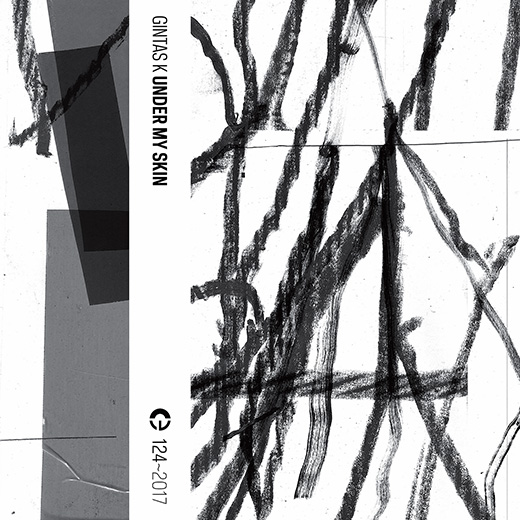
Gintas K, from Lithuania, who has been around for many years, has used no field recordings on his new release. Instead he uses ‘digital synthesis’. I am not sure if an input of any kind is needed here, but maybe it is all in some sort of feedback process, where sounds bounce back and forth against each other. In recent years I have not always been enamoured by his work, mainly because so much seems the same really, and this cassette is no different. Much of what I hear on this one, I also heard before from him. The digital sound processing that can be sweet and melodic (well, not too melodic of course), scratchy, hissy, noisy or looped so that it becomes a rhythm. Think Fennesz, think Alva Noto, think serious computer music and Gintas K does all of that. Every release by him is actually quite good, but it also a bit too much on a repeat mission for me. I wish for something new to happen in his world.

“Juryo: Durée de la vie de l’ainsi-venu” reviewed by Vital


Music releases by Paris born and based composer Emmanuel Mieville are quite apart (Vital Weekly 803 and 1000 for instance) and has a strong emphasis on field recordings and this one is no different. Mieville had training in sound engineering in a film school and later on at INA-GRM, but also played in Javanese gamelan orchestra for two years. He records also sorts of environments and treats them, layers those processed bits together and collages them into a composition. Each of his releases is a bout a specific location. The title of his latest release comes from “the title of this album comes from the Japanese translation of the Sanskrit word and points to a chapter of the Lotus SÅ«tra, one the most famous text of Mahāyāna Buddhism”. Recordings for the four pieces on this album have been made in Asia, such as Tibetan nuns from Copan monastery and FM radio in Hong Kong, as well as Buddhist chanting for a deceased person and inspired by Bhutto dancers. In all four of these pieces, Mieville uses a fair amount of original sound sources, as in to be recognized by the listener; the chanting, percussive music, radio static and maybe overall street/field recordings, which are treated extensively by him using mostly digital techniques. As such his music stays quite close to the more traditional work of acousmatic composers and this would be easily something that could have been released by Empreintes Digitales, even when I am too much of uninitiated listener to judge if Mieville applies all the proper composing techniques that one ought to apply in that world. I quite enjoyed it, and that’s especially due to the fact that we hear so many of the original field recording, culminating in the final piece, ‘Taisi Funeral’, with its abstract organ like sounds and singing and bell sounds; it sounds like this was a straight recording of a death rite and not a mix of various sound sources. This was altogether an excellent release.

“Geography” reviewed by Indie Rock Mag

cronica117-2016_520
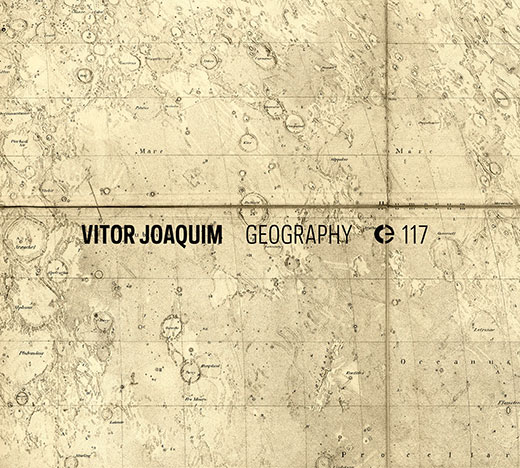
L’album devait sortir courant 2012 chez Kvitnu, il aura finalement fallu quatre ans de plus au Portugais et un retour dans le giron du label Crónica qui publiait 10 ans auparavant son merveilleux Flow pour accoucher de cette ode au déterminisme géographique de nos sociétés et de notre espèce, inspirée par le livre “De l’inégalité parmi les sociétés : Essai sur l’homme et l’environnement dans l’histoire” qui valut à l’évolutionniste américain Jared Diamond le Pulitzer en 98. Musicalement, ce concept de schismes évolutifs forgés par les reliefs et les climats, et l’idée d’une résistance de l’être humain aux limitations de son environnement via la technologie notamment s’illustre par moult collisions vacillantes, entre samples radiophoniques et boucles d’instrumentation glitchée (Geography), microsound abstrait et nappes dark ambient (Cantino), drone organique et lancinances jazzy (Cargo), orchestrations aurorales et crépitements angoissés (le cristallin Domo Arigato, sur lequel Vitor Joaquim malmène une dizaine d’instruments samplés durant ses performances avec des musiciens amis). Un bijou d’architecture sonique en constante mutation.

Number 8 of the favourite records of 2016! Via Indie Rock Mag

Futurónica 186


Episode 186 of Futurónica, a broadcast in Rádio Manobras (91.5 MHz in Porto, 18h30) and Rádio Zero (21h GMT, repeating on Tuesday at 01h) airs tomorrow, February 17th.

The playlist of Futurónica 186 is:

  1. Akio Suzuki, De Koolmees: Suzuki Type – Glass Harmonica (1990, Soundsphere, Het Apollohuis)
  2. Kate Carr, Holding My Breath in Imaginary Ponds (2016, Endings, Galaverna)
  3. Kate Carr, Snow storm, ólafsfjörður, Iceland (2016, Endings, Galaverna)
  4. Kate Carr, Fence in rain, Snæfellsjökull, Iceland (2016, Endings, Galaverna)
  5. Kate Carr, A long meditation on airports (2016, Endings, Galaverna)
  6. Akio Suzuki, Analapos B – Multiple Stand, 1973 (1990, Soundsphere, Het Apollohuis)

You can follow Rádio Zero’s broadcasts at radiozero.pt/ouvir and Rádio Manobras at radiomanobras.pt.

New release: µo’s “.appnd”


.appnd is an EP with six tracks of abstract electronic music composed by Danish composers Jonas Olesen and Morten Riis. The music is edited versions of excerpts from live performances from 2005 to 2010. Jonas Olesen and Morten Riis played a series of improvisational concerts during this period, primarily with analogue instruments, such as modular synthesizers and home-made electronic devices. The recordings are as such, not a documentation of these concerts, but rather radically edited versions of these. The raw sound material went trough a series of digital processing sessions, editing long concert sessions down to the length of a single track. The tracks reveal themselves for the aware an mindful listener as delicate quite endeavors in investigating the relationship between silence and noise, between the audible and the non-audible, between the form and detail. These sonic and aesthetic experiments use the entire dynamics and frequency range, thus making of .appnd an appreciate alternative to the over-consumption that defines the current reality of music listening. Due to the rather extreme frequency content of the audio, this digital version has a different sound than the vinyl.

Jonas Olesen (1979) is a sound artist and composer living and working in Copenhagen, Denmark. He runs the label BIN.

Morten Riis (1980) holds a PhD degree from Aarhus University and is educated in electronic music composition from the Royal Academy of Music, Aarhus. He currently holds a post doc position at Aarhus University, and was director of electronic music composition at the Royal Academy of Music 2013-2014. Besides his academic work he is a very active sound artist having received numerous grants and commissions, released several albums, played numerous concerts and exhibited sound installations in Denmark, Sweden, England, France, Poland, Finland, Germany and China. He has previously released Digital Sound Drawings in Crónica.

.appnd is available as a download from Crónica or Bandcamp.