

Keeping up with what has already become a tradition, Crónica will present another edition of “Natal dos Experimentaisâ€. This year’s event will include performances by Vitor Joaquim, the Srosh Ensemble, Pal, Dirty Dirt, and Sturqen. Pedro Tudela will close the evening with a DJ set. Friday, December 9, from 22h onwards in Passos Manuel. As usual, all is free, and everyone’s welcome!
“Unfurling Streams†reviewed by Ether Real
Depuis qu’on l’a découvert en 2011, Monty Adkins apparaît régulièrement sur ces pages avec un plaisir renouvelé. C’est chez Audiobulb qu’on le découvrait mais son champ de travail est assez large et lui permet d’apparaître sur des labels aussi variés que Signature (le label de Radio France) ou encore empreintes DIGITALes. On a cette fois la surprise de le retrouver sur la structure portugaise Cronica pour qui il avait déjà sorti un EP digital en 2014.
Pour schématiser, disons que Monty Adkins compose une musique ambient glitchy, piochant tour à tour dans les codes de l’electronica et des musiques néo-classiques. Pour arriver à ce style, on trouve généralement dans ses productions une base acoustique (tintements, clarinette…) et des traitements numériques, sonorités, effets, collages. Le procédé est ici repris en utilisant de nombreuses sonorités métalliques (tintements, résonances, grincements) en privilégiant un style ambient. Quelques tintements limpides, une résonance qui se prolonge à l’infini, des notes qui s’enchaînent et se croisent lentement, une poignée de bruissements et bouillonnements électroniques en arrière plan, c’est à peu près tout ce qu’il faut pour construire le très beau ufs_2.
Très beau, c’est un qualificatif que l’on pourrait utiliser pour décrire chacune des 6 pièces qui composent cet album d’une ambient délicate, précise, précieuse par endroit trouveront peut-être certains. L’album est extrêmement homogène puisque le style est strictement identique au fil des 45mn que dure cet album. Mais il arrive par endroit que le terrain soit un peu plus accidenté, à l’image du superbe ufs_3 qui gagne en relief quand ses subtiles mélodies sont appuyées par des basses profondes, et en richesse avec ses glitchs et claquements frétillants. Même constat sur ufs_5 et des élans grésillants qui finissent par exploser en vol.
On notera quelques titres un peu plus expérimentaux comme ufs_4 avec des mélodies plus discrètes et une musique qui s’appuie plus sur des petits bruitages qui nous laisse une impression générale de field recordings nocturne. Pour le reste, on a plus l’impression de faire une sieste dans un jardin ensoleillé, à se laisser bercer par le scintillement des rayons du soleil sur un plan d’eau. Ainsi les tintements de ufs_5 sont lumineux et prennent le temps. Une ambiance qui se prolonge sur le dernier titre qui fait une belle synthèse entre finesse acoustique, profondeur de quelques basses pour gagner en relief (on est ici proche de gongs), et légers frétillements de souffles et textures pour leur aspect organique.
Un album fidèle à ce que l’on pouvait attendre de Monty Adkins, une belle ambient qui mêle habilement électronique et acoustique. Fabrice ALLARD
via Ether Real
New in the Corollaries series: Tarab’s “Gleanersâ€
This is the eleventh release in the series Corollaries, that compiles works resulting from Active Crossover: Mooste, a cross-cultural collaborative residency curated by Simon Whetham and hosted by MoKS, in April and May 2015. All works are composed from material compiled in a collective archive during the project.
Gleaners rummages through the Active crossover: Mooste archive, gathering together the vestiges of our collective and disparate scurryings around the landscape. By allowing the background to almost free itself from the foreground and refusing to differentiate between incident, accident and intent, the various fragments have coalesced (with furtive guidance) into a form (in)determined by which of the residual pieces settled, and where they landed; and which pieces simply disappeared. All sounds have been extracted from recordings by or featuring: Tuulikki Bartosik, Fernando Godoy, Evelyn Grzinich, John Grzinich, Jim Haynes, Park Jin-Young, Rostislav Rekuta, Yiorgis Sakellariou, Dawn Scarfe, Maksims Shentelevs, Eamon Sprod, Taavi Suisalu, Arlene Tucker, Simon Whetham, James Wyness.
Tarab explores re-contextualised collected sounds and tactile gestures formed into dynamic, psycho-geographical compositions inspired by discarded things, found things, crawling around in the dirt, junk, the ground, rocks, dust, wind, walking aimlessly, scratchy things, decay and most if not all the things he hears and sees. More than simply documenting a given site, Tarab is interested in a direct engagement with our surrounds, teasing out half narratives, visceral sensation, false leads and heightened awareness.
“Gleaners†is a free download from Crónica or Bandcamp.
“Primary Reception†and “Alone Together†reviewed by Fluid Radio
The ‘Corollaries’ series by Portuguese label Crónica collects works resulting from Active Crossover: Mooste, a cross-cultural collaborative residency curated by sound artist Simon Whetham in Estonia in 2015. All of the pieces released as part of the series were created using sound materials compiled in a collective archive during the residency. Different artists participated at different points in the project, often visiting and recording in different locations. However, many were particularly struck by hearing material recorded by other participants at the same time and place as they were working, as sound artist Dawn Scarfe recounts:
“The effect of reviewing these fragments is hallucinogenic: they evoke places that are similar but strangely different from how I think they should be, based on my own experience and mis-rememberings. I hear the same sequence of events rendered through the air that I recorded through a wire. Or a field transformed by variations in the weather and voices of migrant birds passing overhead when I wasn’t there to hear them.â€
Scarfe’s own contribution to the series, entitled “Alone Togetherâ€, does a good job of evoking this uncanny, haunting sense of fragmentation, using resonating tones, pushed sometimes to the edge of distortion, to transform a series of sonic events that would otherwise be quite generic. Clamouring flocks of squawking water birds are contrasted with the quiet chirp of an individual songbird or cuckoo in the hedgerows. Pitched sounds reverberate, ring, and thrum. The overall mood is nicely blank and impassive, shorn of any unnecessary sentimentality, and yet I get an impression both of the beauty of the recording locations and of the sense of aloneness Scarfe alludes to in the liner notes. A shared experience inevitably becomes a unique and personal secret in the private space of memory.
Whereas Scarfe’s path through the collective archive downplays the intentions of the composer in favour of a more direct form of listening to the environment, Tuulikki Bartosik’s “Primary Reception†presents a more active intervention into these recorded landscapes. Her big, open accordion chords are soon filling the dense air of a pine forest. A rambling melody sits beneath a blanket of roaring air, followed by the wooden knock-knocking of a percussive exercise recorded by other participants (including Scarfe) at another point in the residency. Towards the end Bartosik adds her own voice by singing softly, evoking an impression of timeless mystery in the depths of the ancient forest.
Although the Active Crossover residencies themselves are a fascinating concept and no doubt deeply rewarding for participants, these two releases suggest that the ‘Corollaries’ series, currently at ten editions, is more than simply a way of documenting the event. As well as compiling the reflections and (mis-)rememberings of those who took part in the Mooste residency, the series provides a fascinating opportunity to compare and contrast different approaches to the same material and situations, mapping the same terrain from different angles and perspectives. These differences in individual recollection and response in no way diminish the power of a shared experience, but rather deepen and enrich it through their diversity. Nathan Thomas
Futurónica 180
Episode 180 of Futurónica, a broadcast in Rádio Manobras (91.5 MHz in Porto, 18h30) and Rádio Zero (21h GMT, repeating on Tuesday at 01h) airs tomorrow, November 25th.
The playlist of Futurónica 180 is:
- Cem Güney, Are You the President’s Militant? (2016, Three Dots, a Jaw, and a Cul de Sac)
- Jonathan Uliel Saldanha, Fanfare from the Resonating Concrete Entrance (2016, Tunnel Vision, Silo Rumor)
- Jonathan Uliel Saldanha, Tunnel Vision (2016, Tunnel Vision, Silo Rumor)
- Cem Güney, Internal Diegetic Arcade (2016, Three Dots, a Jaw, and a Cul de Sac)
- Jonathan Uliel Saldanha, Ressurection of the Concrete Jungle (2016, Tunnel Vision, Silo Rumor)
- Jonathan Uliel Saldanha, Train Tunnel/Crane Dub (2016, Tunnel Vision, Silo Rumor)
- Cem Güney, Overproof Rasps From the Gutter (2016, Three Dots, a Jaw, and a Cul de Sac)
- Jonathan Uliel Saldanha, Fanfare from the Resonating Geophone (2016, Tunnel Vision, Silo Rumor)
- Jonathan Uliel Saldanha, Arca d’Ãgua (2016, Tunnel Vision, Silo Rumor)
- Cem Güney, Voodoo Empire (2016, Three Dots, a Jaw, and a Cul de Sac)
- Jonathan Uliel Saldanha, Crystal Breath Autopoiesis (2016, Tunnel Vision, Silo Rumor)
You can follow Rádio Zero’s broadcasts at radiozero.pt/ouvir and Rádio Manobras at radiomanobras.pt.
Soon in Crónica: Tarab’s “Gleanersâ€
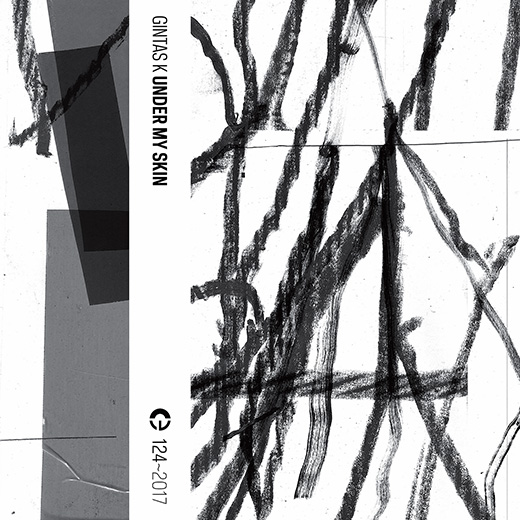
Soon in Crónica: Gintas K’s “Under My Skinâ€
“Three-Body Problem†reviewed by The Sound Projector

Now sixteen albums down the line, Portuguese duo @C continue to refine their own brand of subatomic click n’cut ambience with Three-Body Problem, which began life as Agapornis – another puppetry piece soundtrack (like Ab Ovo before it); one inspired by the writer Anaïs Nin. The title symbolises the logistical synergy of three phases of development: the first, a kind of bi-polar dialogue between two female puppets – described at least partly by the pairing of harp and trumpet – informing the initial structure. This underwent considerable post-performance revision in phase two, when musical collaborators (João Pais Filipe (cymbals and bells) and Ricardo Jacinto (cello and electronics)) added their voice, while still somehow facilitating the distillation of twenty-one tracks into just nine.
While clearly thus a collaborative effort, no effort has been spared into merging all of the participants and themes into highly schizomorphic panoramas; a near-seamless continuum of rattling, electronic textures that sprout, tremble and bifurcate in every living moment; miraculously managing to avoid the perils of overpopulation. This ever-transformative morphology also informed the 3BP’s video-based third phase, which while not part of the album itself, is nonetheless intrinsic to both the group’s visuality. Some striking abstractions and patterning offer a distinctive visual description of @C’s detailed processes – and attest to their collaborative creative process, which unfolds beyond the needs of the individual in an ever-fluctuating galaxy of pure possibility. Stuart Marshall
“Geography†reviewed by Jazz.pt
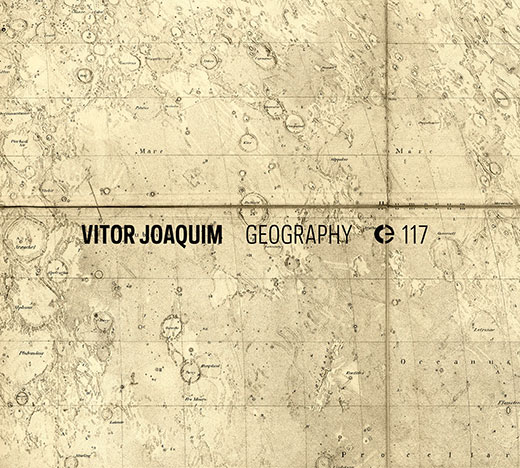
VÃtor Joaquim é um de variadÃssimos casos na cena portuguesa de músicos para quem a improvisação é um processo fundamental, mas que nem por isso consideram tocar aquilo a que vamos chamando “música improvisadaâ€. O facto de o seu instrumento ser o computador, e de este definir à partida o tipo de música que pratica (electrónica / electroacústica), contribui para assim se caracterizar, mas o curioso é verificarmos que o trajecto deste artista sonoro originário de Setúbal, mas há uns anos fixado no Porto, tem sido feito ao lado de figuras da livre-improvisação e mesmo do jazz criativo. Podemos, inclusive, ouvir alguns deles neste disco, como Joe Giardullo, Carlos “ZÃngaroâ€, Gunter Heinz, Angélica V. Salvi, Gustavo Costa ou Ulrich Mitzlaff, com a sua inclusão através de “samples†explicada por Joaquim como uma forma de geolocalizar as suas memórias colaborativas pessoais – cada uma dessas parcerias aconteceu em determinados lugares, que não apenas em determinadas alturas do tempo.
Ora, acontece que este disco é sobre a determinação geográfica dos destinos da humanidade, tema particularmente pertinente nos dias de hoje, devido ao fenómeno dos refugiados do Médio Oriente e do Norte de Ãfrica na Europa, à falsa “guerra civilizacional†entre o Ocidente e o Islão e ao extremar das situações de xenofobia, racismo e nacionalismo, com um regresso do obscurantismo nazi-fascista. VÃtor Joaquim inspira-se mesmo num livro de Jared Diamond, “Guns, Germs and Steel – The Fates of Human Societiesâ€, do qual utiliza como mote a seguinte passagem: «A história seguiu diferentes cursos para diferentes povos devido à s diferenças nos ambientes desses povos e não por causa de distinções biológicas entre eles.» O que quer dizer que a mensagem é a mesma do jazz mais intervencionista e da música improvisada com consciência de si, ainda que os “drones†caleidoscópicos de “Geography†pareçam nada ter que ver com a sonoridade de ambas essas tendências. Assim desmentindo, de resto, que a electrónica seja apenas a banda sonora que se vai dando ao cosmos, na qualidade da mais escapista e alienada das músicas. Rui Eduardo Paes
via Jazz.pt
“Geography†reviewed by Déphasage
Si Vitor Joaquim a un mérite c’est bien celui de conceptualiser ses projets en amont et de les mettre en perspective les uns avec les autres. Après l’élégant “Flow†qui traitait de l’intimité de l’homme et de sa relation avec la machine, puis “Filament†qui questionnait rien de moins que l’infinité de l’espace-temps, voici donc “Geographyâ€. Sorti le 13 septembre dernier, l’album a pour but de relayer les thèses de Jared Diamond, prix Pulitzer en 1998 pour son ouvrage “De l’inégalité parmi les sociétésâ€, dans lequel est défendue l’idée que le facteur essentiel du niveau de développement des hommes est lié à leur environnement immédiat. Loin d’être une simple théorie des climats essentialisante, la thèse de Diamond met plutôt en avant les ressemblances entre les individus, qui partagent les mêmes déterminants biologiques mais sont plongés dans des contextes géographiques qui varient parfois du tout au tout. Vitor Joaquim vise ainsi à développer un discours sur le monde par le seul langage musical ; si le projet est ambitieux les idées font parfois sens, notamment quand Joaquim noie des sons synthétiques que l’oreille associe pourtant à la nature sous d’autres qui, à peine différents, sont immédiatement perçus comme les produits de technologies humaines. Que la pensée de Diamond se retrouve réellement dans Geography ou qu’elle ne lui serve que de simple source d’inspiration importe peu : l’album construit son harmonie grâce à elle et déploie un univers évolutif et tumultueux permettant au formidable label portugais Cronica de compter une belle sortie de plus à son actif.
via Déphasage