Simon Whetham’s “Successive Actions” reviewed by Musique Machine

Successive Actions takes in sixteen tracks built around recordings of motorised devices, sourced from obsolete consumer technology. Track lengths vary between one and eleven minutes, with the recordings moving between textural studies, erratic blending of several different elements, and all-out/ intense sound crafting.The CD album comes presented in a dark blue card gatefold featuring what looks like lines of tiny ‘T’ ‘s set out in a series of vertical lines.  The release appears on  Crónica and can be purchased directly from here.    Since the early 2000’s  Mr Whetham has been sonically active. His work often utilises environmental sound, employing a variety of methods and techniques in order to obtain often unnoticed and obscured sound tendencies. He also explores ways of creating physical traces of sound and transforming energy forms. He has performed/exhibited internationally, has received a large number of commissions and awards, has many published composed works, and regularly collaborates with other artists.We open with the track “Action” which is a blend of low-key drilling tone sweep, several layers of ragged tone buff, and a few moments of thicker tumbling rip. As we move on, we have “Redaction” with its mix of circular scape, bumbling hiss, and busy/close-up like insect-like fumblings.Later on, we have the slurred pitch stabs, rolling drone clutter, and small motor clutter of “Compaction”. There’s the purring chop, firing electrodes, and the loose slicing of “Counteraction”. Or the knocking scarp, electro buzz/ simmer, and circular grain detail of “Abstraction”.Throughout Successive Actions, Mr Whetham certainly mines some worthy tone / textural detail. I personally felt it would have been nice if there had been a larger range of different types of textures, as well as more thought put into the compositional elements- yes, I know it’s primarily noise, but that doesn’t mean it can’t have that element present. Roger Batty

via Musique Machine
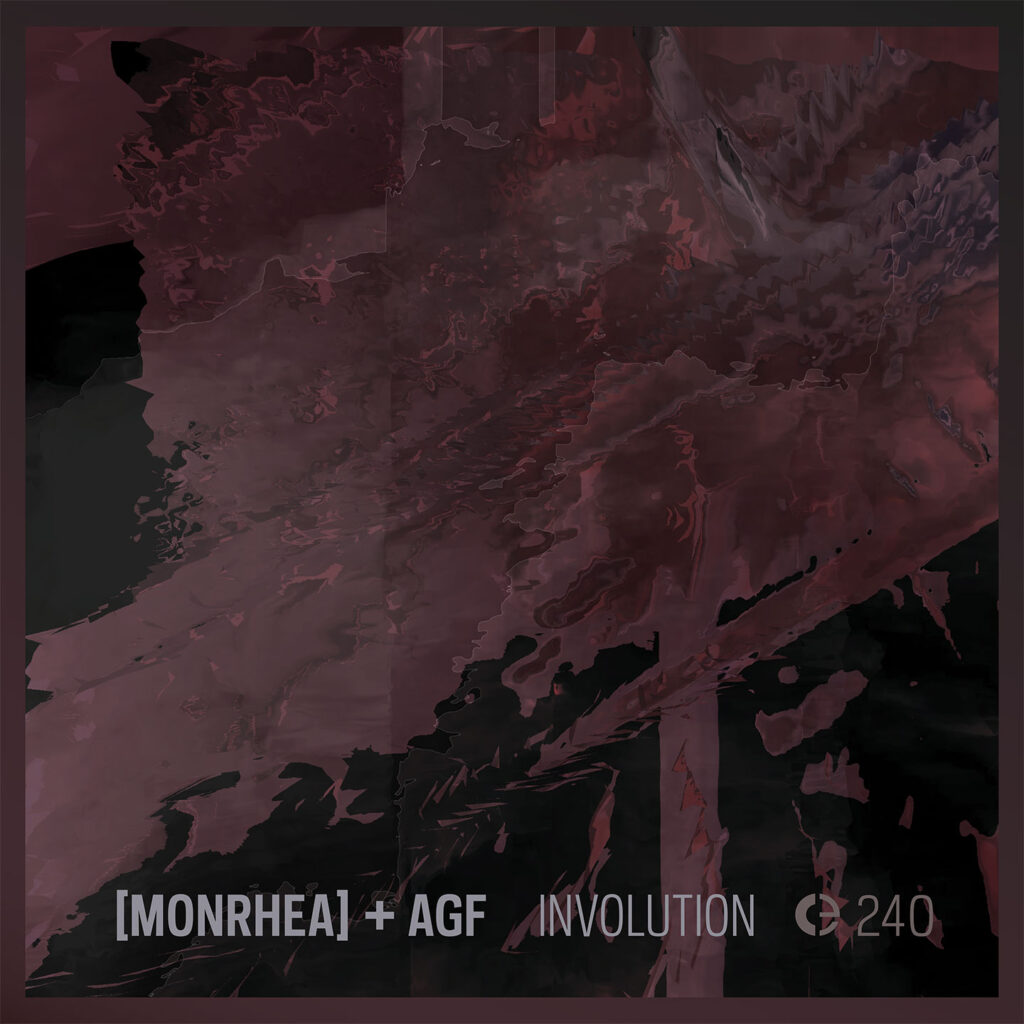
New release: [MONRHEA] + AGF’s “INvolution”

We’re happy to announce the release of the new album by [MONRHEA] + AGF, “INvolution”, now available to download or stream from Crónica’s Bandcamp.

Monrhea and agf met online, as admirers of each other’s productions on Soundcloud. They later collaborated in the Darmstadt summer course program “Sonic Writing & Soundings”, curated by agf and Cedrik Fermont. In 2023 they met in person in Darmstadt for the performance of the pieces created in the summer course program.

After Monrhea invited agf to an online workshop and a lecture to Nairobi artists, they started dreaming about a production collaboration and developed the application of the mathematical concept of Involution in music and run with it remotely between Hailuoto and Nairobi. Their first sessions in this project happened during March 2024, the season during which Monrhea’s Kikuyu culture marks the new year and the beginning of a new season. Their work then focused on creating pieces that celebrated the rain, Spring, rebirth, the inversion into a new season. This line of inquiry led them to come across the concept of self inversion, involution.

Involution is explored in the context of various disciplines. In Psychology, Sociology, or Anthropology, but also in Biology and Medical sciences, in the natural phenomena of arising and passing away. Involution is a natural process of maintaining balance and order, and can be a formula to restoring balance.

INvolution” is now available!

David Lee Myers’s “Terrenus” reviewed by African Paper

Gerade erscheint bei Crónica das neue Album “Terrenus” von David Lee Myers. Das Werk versteht sich laut Label als Erkundung rein elektronischer Klänge, die jedoch nicht ins All gerichtet sind, sondern auf die Erde: “Terrenus” wird ausdrücklich als „earth music“ verstanden, nicht als „space music“. In seiner Ausrichtung knüpft es an “Frontier” (2022) an, ebenfalls eine Arbeit, die bewusst „am Boden bleibt“. Die Stücke rufen dem Künstler zufolge ferne, wolkenverhangene Landschaften und nebelige Flussufer hervor und lassen an vage gezeichnete Karten denken, die Erkundungen durch unklare Territorien anleiten.

Vom Label heißt es: “Myers is well known for his focus on feedback principles in music creation. It is true that this can result in shrieks of cacophony and siren wails, but not necessarily, as seen here. Delays and other processors are force-fed their own outputs via matrix mixers, samples are captured and looped randomly, and joined by various other electronic elements to create soft beds of abstract sound.” David Lee Myers lebt als Klang- und Medienkünstler in New York City. Mehr als sechzig Veröffentlichungen unter seinem eigenen Namen oder als Arcane Device liegen vor, dazu zahlreiche Kooperationen, unter anderem mit Gen Ken Montgomery, Merzbow, Toshimaru Nakamura, Asmus Tietchens und Dirk Serries. “Terrenus” ist bereits sein viertes Album auf Crónica und erscheint als CD sowie zum Download.

via African Paper

David Lee Myers’s “Terrenus” reviewed by radiohoerer

Beim Anhören von David Lee Myers‘ „Terrenus” musste ich ein wenig an Brian Enos „On Land” denken. Wenn auch nur entfernt. Könnte das nicht eine Übersetzung in das Jahr 2025 sein? Für mich ergeben sich da durchaus Parallelen. Was denkt ihr dazu? Aber auch ohne diesen Verweis auf Eno ist die elektronische Musik von David Lee Myers sehr beeindruckend. Ich folge gern den verschlungenen Pfaden seiner Musik, die uns ins Unbekannte führen.

„Terrenus“ ist eine Erkundung rein elektronischer Klänge, und obwohl viel elektronische Musik als „Weltraummusik“ charakterisiert wird, lässt sich „Terrenus“ viel treffender als „Erdmusik“ beschreiben.

Dieses Album folgt ähnlichen Linien wie David Lee Myers‘ „Frontier“ (2022), das ebenfalls fest mit beiden Beinen auf dem Boden steht. Es beschwört ferne, wolkenverhangene Landschaften und neblige Flussbetten herauf, und man kann sich leicht vage gezeichnete Karten vorstellen, die Entdecker durch diese undefinierten Gebiete führen sollen.

Myers ist bekannt für seinen Fokus auf Feedback-Prinzipien bei der Musikproduktion. Das kann zwar zu schrillen Kakophonien und Sirenengeheul führen, muss aber nicht, wie hier zu hören ist. Delays und andere Prozessoren werden über Matrix-Mixer mit ihren eigenen Outputs gefüttert, Samples werden aufgenommen und zufällig geloopt und mit verschiedenen anderen elektronischen Elementen zu weichen Klangteppichen aus abstrakten Klängen kombiniert.

via radiohoerer

New release: David Lee Myers’s “Terrenus”

We’re extremely proud to welcome David Lee Myers to Crónica for the fourth time and to present his new album, Terrenus.

Terrenus is an exploration in purely electronic sound, and although much electronic music is characterised as “space music”, Terrenus is much more accurately portrayed as “earth music.”

This album follows along similar lines to David Lee Myers’s Frontier (2022) which also keeps its feet firmly on the ground. Faraway cloudy countrysides and foggy riverbeds are conjured up, and one can easily imagine vaguely drawn maps intended to guide explorers through these ill defined territories.

Myers is well known for his focus on feedback principles in music creation. It is true that this can result in shrieks of cacophony and siren wails, but not necessarily, as seen here. Delays and other processors are force-fed their own outputs via matrix mixers, samples are captured and looped randomly, and joined by various other electronic elements to create soft beds of abstract sound.

Terrenus is now available as a limited-release CD or as a download from Crónica.

David Lee Myers’s “Terrenus” reviewed by Anxious

Na swojej najnowszej płycie Terrenus David Lee Myers kontynuuje eksplorację świata czysto elektronicznego brzmienia, jednak z wyraźnym zwrotem ku temu, co ziemskie, namacalne i gęste. W odróżnieniu od wielu współczesnych produkcji elektronicznych, które dryfują ku temu, co kosmiczne i odrealnione, Myers tworzy muzykę głęboko zakorzenioną – zamiast przestrzeni kosmicznych, przywołuje obrazy zamglonych łąk, nieostrych pejzaży i rzek spowitych poranną mgłą.

Terrenus stanowi kontynuację podejścia, które artysta zaprezentował na poprzednim albumie Frontier (2022), również skupionym na dźwiękach „przyziemnych”. Tym razem jednak brzmienia są jeszcze bardziej abstrakcyjne, organiczne i niedookreślone. Muzyka przypomina nieczytelne mapy – jakby dźwiękowe szkice nieznanych terytoriów, po których słuchacz błądzi z zaskoczeniem i intuicją.

Podstawą twórczości Myersa są sprzężenia zwrotne i zasady autogeneracji dźwięku. Choć mogą one prowadzić do hałaśliwego chaosu, na Terrenus kompozytor świadomie unika dosłowności. Dźwięki są tu subtelne, zbudowane z zapętleń, przesunięć, przypadkowych pętli i wyłapanych z siebie samych próbek, które przetwarzane przez matryce miksujące tworzą miękkie, ulotne tekstury.

David Lee Myers – artysta dźwiękowy i wizualny z Nowego Jorku – wydał ponad sześćdziesiąt albumów pod własnym nazwiskiem i jako Arcane Device. Pracował z wieloma postaciami sceny eksperymentalnej, m.in. z Merzbowem, Thomasem Dimuzio, Toshimaru Nakamurą czy legendarnym Todem Dockstaderem, z którym stworzył dwa albumy. Jego bogaty dorobek obejmuje również pięć płyt z Asmusem Tietchensem, a także współprace z Ellen Band, Marco Oppedisano, Genem Kenem Montgomerym i Dirkiem Serriesem (VidnaObmana).

Terrenus to czwarty album Myersa wydany w labelu Crónica, po wcześniejszych: Superpositions (2017), Reduced to a Geometrical Point (2021) i Strange Attractors (2023). To kolejna odsłona jego unikalnego podejścia do dźwięku jako materii autonomicznej, żyjącej własnym rytmem i rozwijającej się niejako poza intencją twórcy.

W świecie pełnym elektronicznego nadmiaru, Terrenus wyróżnia się skupieniem, minimalizmem i wrażliwością na najdrobniejsze zmiany w strukturze dźwięku. To muzyka pejzażu – nie tego z przewodników, lecz z pogranicza snu i pamięci.

via Anxious

Haarvöl’s “Horizons of Suspended Zones” reviewed by Chain DLK

Haarvöl have always seemed like time-travelers in reverse: instead of racing toward the future, they slow it down, dissolve it, leave it to drip into pools where sound lingers like dew on glass. “Horizons of Suspended Zones”, their new release on Crónica, is very much in this spirit – a refusal to obey the tempo of modernity, a gentle sabotage of the world’s insistence on speed, excess, and constant distraction.

Here, the Portuguese collective distill their methods to something almost monastic. Six “zones”, each a space of resistance, built not from spectacle but from the bare essentials of tone, silence, and repetition. The trio recorded these sessions in the summer and autumn of 2024 without the usual post-production gloss: what we hear is what they played, nothing more. It’s almost an ascetic gesture, as if they are reminding us that the most radical sound in 2025 might simply be the one that refuses to hide behind trickery.

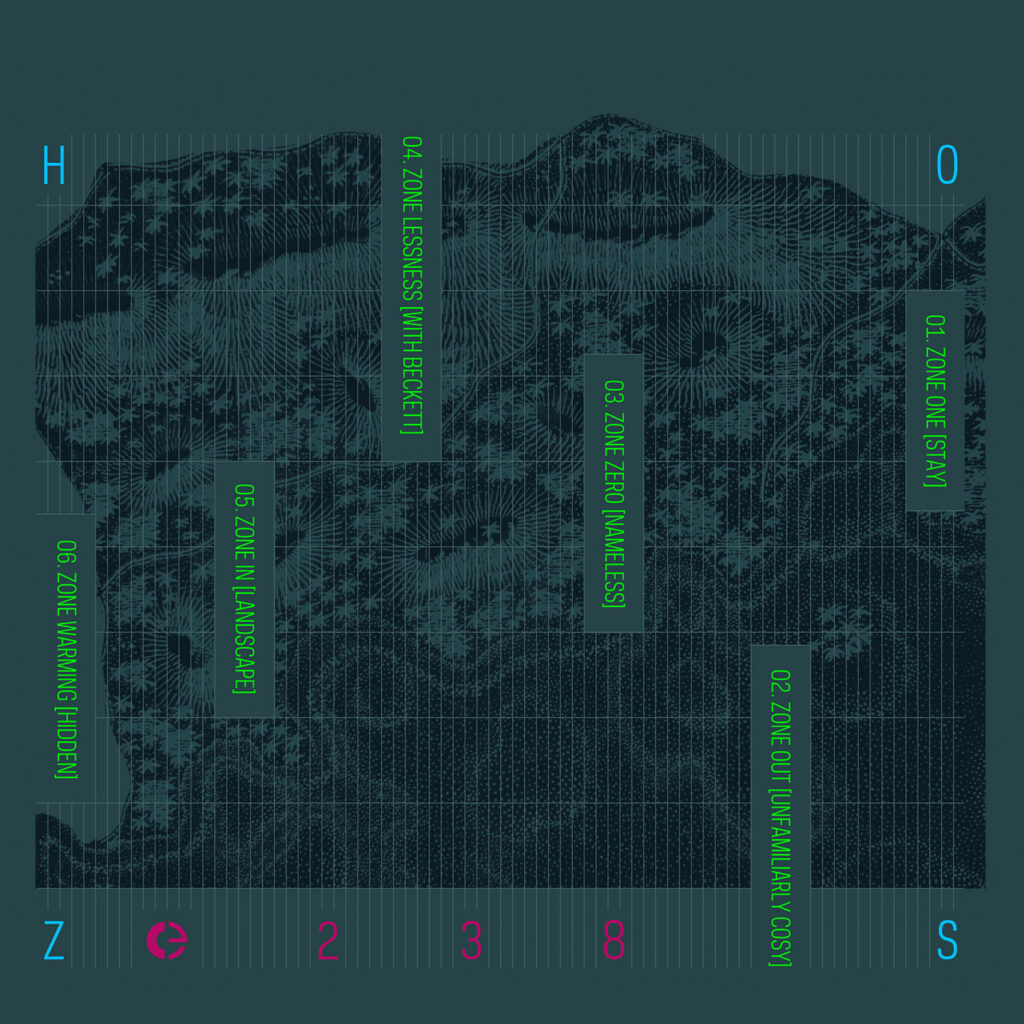
“Zone One [stay]” and “Zone Out [unfamiliarly cozy]” unfold like rooms whose walls are slowly breathing. Drones bend and hover, but they never rush; they wait for you to meet them. “Zone Zero [nameless]” and “Zone Lessness [with Beckett]” are even more uncompromising: slow-motion atmospheres that feel like they’re unraveling the concept of time itself, while whispering that this unraveling is the only true freedom left. By the time “Zone Warming [hidden]” closes the album, we are not quite sure whether we’ve been lulled into stasis or trained to perceive duration anew.

Haarvöl’s references to Hakim Bey and Cage are not academic posturing but lived practice. These “suspended zones” aren’t utopias in the usual sense – more like temporary shelters against a culture addicted to immediacy. They are not spectacular, and that’s the point: they ask you to sit, to endure, to listen, and to realize that simplicity itself can be infinitely complex.

Is it ambient? Minimalism? A protest against Spotify-friendly brevity? Maybe all at once. “Horizons of Suspended Zones” is less an album than a proposition: that in a world chasing novelty with rabid impatience, to sustain a single tone, to linger in silence, to stay—this might be the most radical gesture of all. Vito Camarretta

via Chain DLK

David Lee Myers’s “Terrenus” reviewed by Solénopole

On a souvent l’habitude de lever les yeux vers le ciel quand il s’agit de musique électronique, comme si chaque oscillateur n’avait qu’une ambition : rejoindre les étoiles. Terrenus de David Lee Myers, lui, inverse la focale. Ici, les fréquences ne s’évadent pas vers l’infini sidéral : elles s’enracinent. Elles rampent, glissent, se faufilent dans des interstices minéraux, serpentent dans des lits de rivières fantomatiques. Ce n’est pas de la space music — c’est une musique de la terre, au sens littéral et sensoriel.

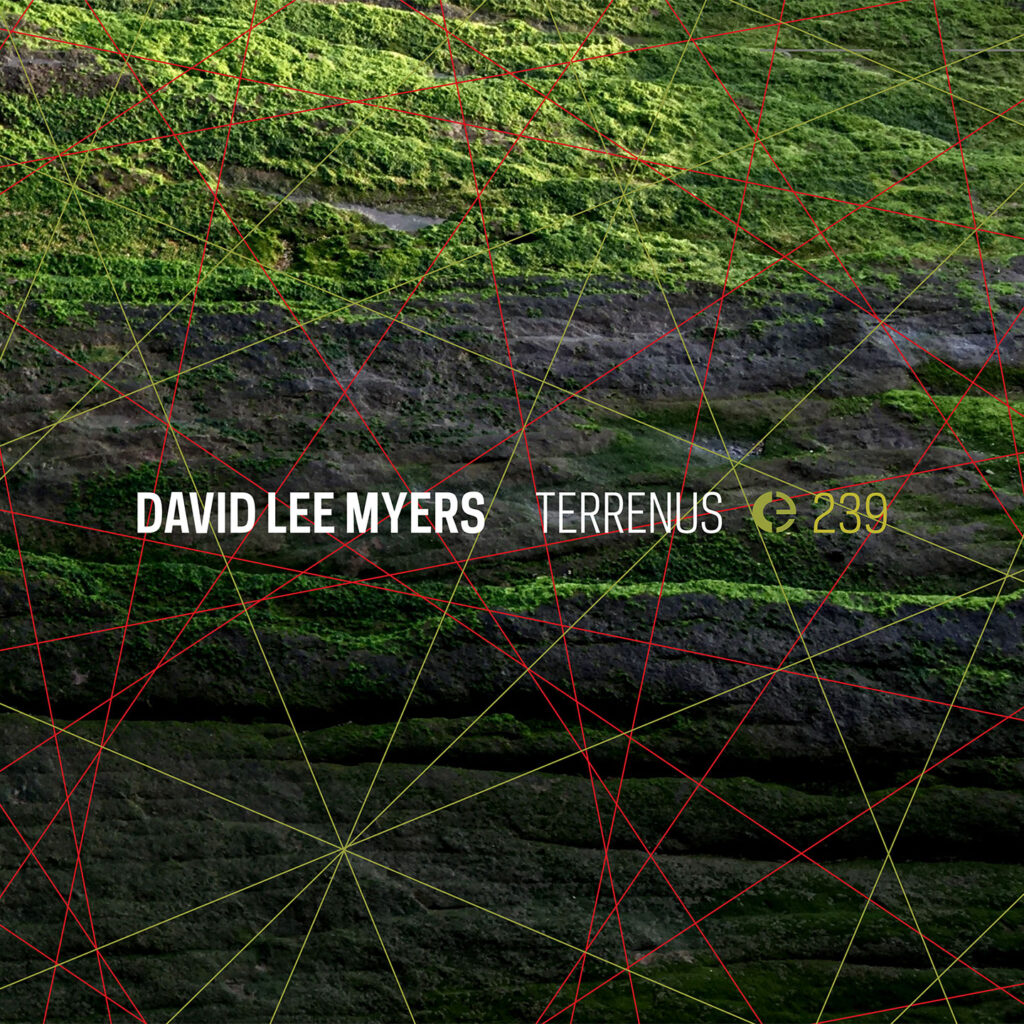
Pochette de l'album "Terrenus" par l'artiste David Lee Myers

Dès Terrenus I, l’auditeur est pris dans une toile — filaments de feedback tendus comme les lignes rouges et jaunes de la pochette — où chaque nœud sonore semble relier un point d’écoute à un fragment de paysage mental. Pas de beats métronomiques, pas de mélodies rassurantes : ici, le rythme est celui de la sédimentation et de l’érosion. Les couches sonores s’empilent comme des strates géologiques, modulées par des retours de boucle qui se déplacent avec la lenteur hypnotique d’un glissement de terrain au ralenti.

Myers, pionnier de la rétroaction sonore et artisan patient du feedback, laisse ses dispositifs agir comme des phénomènes naturels. Les délais se croisent, les échantillons se recroisent, et de ces collisions naît une matière sonore vivante, oscillant entre l’organique et l’électrique. Rien d’agressif : les neuf pièces de Terrenus privilégient la caresse de fréquences souterraines aux éclats métalliques trop voyants. On perçoit parfois, sous la surface, une agitation infime — comme si la terre respirait.

L’expérience est presque tactile. On sent la rugosité de la pierre, la fraîcheur d’un sol couvert de mousse, la lumière diffuse filtrée par une brume épaisse. Écouter Terrenus, c’est comme déplier une carte ancienne aux contours incertains : on y devine des reliefs, des vallées, des zones d’ombre, mais rien n’est tracé d’avance. Le chemin se dessine à mesure que l’oreille avance.

David Lee Myers n’est pas un inconnu pour les amateurs d’explorations sonores. Actif depuis les années 80 sous son nom et sous l’alias Arcane Device, collaborateur de figures comme MerzbowTod Dockstader ou Asmus Tietchens, il a bâti une œuvre où le feedback devient un organisme autonome, un partenaire de dialogue. Terrenus s’inscrit dans la continuité de Frontier (2022) et prolonge cette fascination pour les paysages intérieurs, mais avec une douceur nouvelle — une écoute qui ne cherche pas à dominer l’espace, mais à s’y fondre.

À fort volume, on découvre la densité physique de cette matière sonore. À bas volume, elle devient une respiration, un environnement discret mais chargé de micro-événements. On peut l’écouter assis, immobile, ou en marchant lentement — comme si chaque pas synchronisait la dérive des sons.

Au final, Terrenus n’est pas un disque que l’on « termine » : c’est un territoire que l’on visite, puis que l’on quitte à regret, en sachant qu’il continuera de vivre en dehors de nous, de ses boucles et de ses frottements, comme un paysage sonore persistant dans l’oreille. Une œuvre qui invite à explorer non pas l’infini au-dessus de nos têtes, mais les mondes infinis sous nos pieds.

via Solénopole

Emiter’s “Electromagnetism of the City” reviewed by Vital Weekly

Behind Emiter is Marcin Dymiter. I reviewed some of his work, going back quite a few years, and yet his catalogue isn’t very extensive. On his latest release, he explores the sounds of the city, buzzing and whirring. To that end, he walked around town (I assume Berlin, for no reason; I believe this is where he lives) to record the inner workings of traffic lights, street lights, buildings, and whatever else he found on his way. With electromagnetic pickups, human life is absent, and we only hear the city and the sounds it produces. I’m not sure about the extent of processing here, but I assume there’s a fair amount of collaging involved, layering events rather than processing these sounds further. By collaging and editing, Emiter creates a new, digital map of the city, with long roads (drones) and small sideways (crackles, clicks, cuts). Emiter created two distinct works with the material, maybe intended for an LP release. First, there’ the first part of the title piece, 20
minutes long, and a collage-like affair. This is, perhaps, the kind you’d expect people to do with this kind of source material.
Emiter does a solid job here; dark, atmospheric, changing, and churning this stuff around. The other four pieces are shorter, almost like pop songs – this would have been the B-side of the LP. Here, Emiter works his material into song-like structures. There’s rhythm, sampled from the sources, a bit of melody, something reminiscent of a bass line, and there’s even vocals. In ‘Harmonies Of Noise’, Emiter uses Steve Reich-like phase-shifting with this material. Of course, the music never becomes ‘pop music’, even when the sensibilities are there, best exemplified in ‘Dusts And Fluids’. I think I like the idea of turning this into music rather than soundscapes more than the actual execution, which seems a bit ‘muddy’ at times. Still, as an idea, it is something quite lovely, and something that Emiter (and others) should explore further. There’s a world of ideas out there, literally on the streets. (FdW)

via Vital Weekly

David Lee Myers’s “Terrenus” reviewed by Vital Weekly

Sometimes I think Myers becomes a man machine; a man with machines and a man acting like a machine, one release after another. Sometimes the differences aren’t significant, and sometimes they are. ‘Terrenus’ is described by the label as ‘earth music’, in contrast to a lot of electronic music being ‘space music’. I couldn’t say if the nine pieces on this new album are ‘earthy’; what would define this as such, I wonder. David Lee Myers continues to explore the nature of feedback music; music in which the output becomes the input and, via all sorts of controls, that sound is processed over and over, and the result becomes the composition. Myers has a long career in doing this kind of music and has mastered the technology very well. This always results in thoughtful, intense music. Minimalism is never far away, and noise is. That may sound like a surprise, because for many, feedback equals noise, but not for Myers. Granted, to the untrained ear, this is alien music, but to my trained
Myers-ears, these are the most delicate pieces of music. Slowly evolving, minimally changing, small shards of rhythm, traces of loops and with a very ambient feeling, yet not always easy listening music, there’s too much tension beneath the waves for that. Solid stuff, and as such, perhaps not much of a surprise, but not every work can be a classic masterpiece. (FdW)

via Vital Weekly