“Ab OVO” reviewed by Musik an sich

Ab OVO
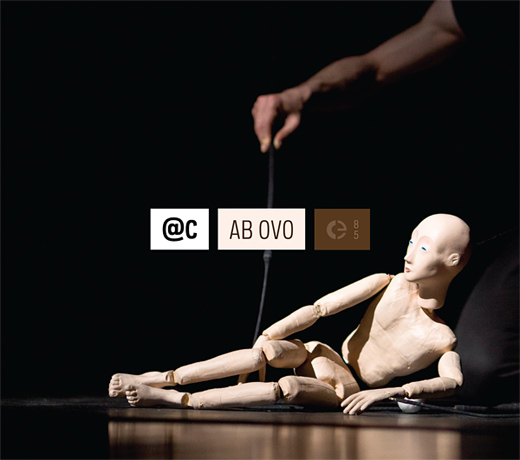
Das aus Porto stammende Experimental Elektronik Duo @C existiert seit 2000. Sein neues Album AB OVO ist das Resultat einer Soundtrack Produktion die sie für ein experimentelles Puppenspiel der Portugiesischen Künstlergruppe Teatro de Maronetas do Porto kreierten und Aufnahmen.
Wie dieses Soundgebilde ein Puppenstück untermalen kann ist schwer Vorstellbar, aber es wird wohl funktionieren bzw. beeindruckt haben. Denn die elektronischen Klanglandschaften der Beiden sind höchst beeindruckend.
Auch sie spielen wie viele Ihrer Kollegen mit elektronischen Sounds die wie Rückkopplungen, Pfeifen und Zirren, Interferenzen und sonstiges klingen, jedoch verbinden diese sich unter dem Einsatz stets vorhandener dunkel dröhnender Sounds und elektronischer Bassklänge zu einer Art dunkler elektronischer Symphonie und bleiben nicht störendes Geräusch.
Auch beherschen die Beiden das Spiel von Laut und Leise. Mal puckern die Sounds unscheinbar und relaxed dahin, dann brechen Sie in wilde Eskapaden aus. Immer wieder formen sich melodische Passagen, welche die Spannung aufrecht erhalten.
Es tauchen auch melancholische und hochmelodische Fragmente, eingespielt mit traditionellen Instrumenten (Gitarren, Klavier und andere) auf, die wie Oasen in dem mitunter auch verstörenden elektronischen Klangbild wirken.
Somit schlägt das Duo z.B. im über 20 Minuten langem “100“ die Brücke zwischen Ambient Künstlern wie Mimir, Andreas Heemann und anderen zur Klangkunst und elektronischen Experimental Musik.
Gerade dieses Stück lädt eben mit diesen traditionellen Passagen, den klackenden und sehnsuchtsvollen Sounds zun Träumen und Relaxen ein.
Doch Vorsicht: hinter jeder Ecke kann eine Überraschung warten.
Das Klangbild dieser Aufnahme ist ebenso perfekt ausgepegelt. Glasklar, perfekte Stereoeffekte und trotzdem nicht steril.

Ein sehr interessantes Werk welches sich auch für Neueinsteiger in das Feld der experimentellen Musik eignet.
Und eigentlich kann ich mir nach dem inzwischen 8. Oder 9. Hördurchlauf doch sehr gut vorstellen, wie ein Puppenspiel von dieser Musik, die schon allein interessante Bilder im Kopf erzeugt, untermalt wird. Wolfgang Kabsch

via Musik an sich

“Residual Forms” reviewed by Kinda Muzik

Residual Forms
Trek de deur achter je dicht en ga fijn een stukje lopen. Maakt niet uit waarnaartoe. Doelloos in verwondering van wat je tegenkomt. Niet alleen onder je voeten, niet alleen voor je ogen, maar ook en vooral wat je hoort. Vooral ook de geluiden die net onder de oppervlakte van wat je normaliter direct zou oppikken liggen, vallen je opeens wel op. Klanken ook die er misschien altijd al waren, zoals Iain Sinclair schrijft over Londen: de stad onlosmakelijk verbonden met haar geschiedenis, zowel echt als fictief of poëtisch; gedeeld met anderen of puur particulier.

Zo’n wandeling of hollend tochtje is Residual Forms van Monty Adkins dus. Een spel van Fennesz-achtige deunen dat bedwelmt in soft focus en het nabeeld vormt van een veelheid aan indrukken opgedaan in diverse steden. Anders dan in bijvoorbeeld het werk van Chris Watson of op The Eye of the Microphone van BJ Nilsen heb je hier dus niet te maken met specifieke field recordings, maar met psychogeografische compositie.

Adkins gaat vaak ‘s nachts een ommetje maken en het is te horen dat de steden op één oor lagen, want er gebeurt werkelijk nauwelijks tot niets in de twintig minuten durende lichtelijk tergende ambientoefening. Hij heeft met Residual Forms anders dan wanneer hij op pad is wel een doel: de luisteraar de vrijheid bieden op een urban drift mee te deinen. Dat kan. Lukt trouwens prima, aangezien de muziek nergens koers of richting biedt, dommel je snel in een halfslaap die alle kanten op kan gaan. Gelukkig is die toehoorder ook vrij om op de stopknop te drukken en wat zinnigs te doen met de tijd. Even een frisse neus halen bijvoorbeeld en luisteren naar de stad; ook fijn.

via Kinda Muzik

“Concret-Sens” reviewed by RNE 3 Atmosfera

cronica084-2013_520
El nuevo trabajo del francés Emmanuel Mieville hace referencia al adjetivo francés “Concrescence” usado por el compositor François Bayle para describir y subrayar la substancia concreta de los sonidos su música.

Este fue el marco de Emmanuel Mieville al componer estas piezas muy cercanas a la música concreta, según la definición de Pierre Schaeffer. Mieville reunió sonidos y grabaciones realizadas de una manera esporádicas por el artista, asociando libremente materiales y sonidos en un enfoque narrativo, sin transformar su concrescencia intrínseca. Algunos elementos se toman de los archivos de radio, los demás se grabaron pero no se utilizaron en las mezclas finales como los de la mujer tarareando una melodía y la preparación de un café que se ha registrado para el tema “locus de Sonus”.

Nosotros hemos hecho un pequeño montaje con algunas de las piezas contenidas en este “Concret-Sens” de Emmanuel Mieville, porque todas ellas son de larga duración y muy densas y para que os hagáis una idea de su contenido hemos tenido que “Concretar” en muy poco tiempo el Sentido de este trabajo.

Futurónica 110

futurónica_110
Episode 110 of Futurónica, a broadcast in Rádio Manobras (91.5 MHz in Porto, 18h30) and Rádio Zero (21h GMT, repeating on Tuesday at 01h) airs tomorrow, March 21st.

The playlist of Futurónica 110 is:

  1. Éliane Radigue, Safari (1970/2013, Opus 17, Alga Marghen)
  2. Éliane Radigue, Epure (1970/2013, Opus 17, Alga Marghen)
  3. Éliane Radigue, Number 17 (1970/2013, Opus 17, Alga Marghen)

You can follow Rádio Zero’s broadcasts at radiozero.pt/ouvir and Rádio Manobras at radiomanobras.pt.

“Ab OVO” reviewed by Headphone Commute

Ab OVO
Besides a handful of abstract and experimental musicians, Portugal based Crónica media label is a home to its founders and one of the most interesting acts, @c (pronounced “at-c”). Originally a trio, @c formed in 2000, and is currently made up of Miguel Carvalhais and Pedro Tudela. Their fourteenth (by my count) release is actually a soundtrack to a play, titled OVO, developed by the Teatro de Marionetas do Porto (a string puppet theater) in late 2011. I find it difficult to actually imagine the visual component of this performance, since the six pieces on the album, consecutively titled “98″ through “103″ feature some of the most abstract and complex compositions I have heard to date. Although the music is incredibly theoretical, it is not nevertheless that hard to digest. There are components of noise, elaborate digital manipulation, and multiple conceptual layers that at first seem to be nearly chaotic, yet the mind stays interested and focused, determined to solve the puzzle presented by @c within. The sound twists, warps, and contorts, creating a tangle of obscure themes, as if the puppets themselves are perplexed at the mangled strings attached at their members. Indeed, the published score is not a direct copy of the aural component of play, but rather a reworked portion of the soundtrack, tailored to be detached from the original context. HC

via Headphone Commute

New release: “(ANT(i)SOM)” by Luís Antero

(ANT(i)SOM)
Crónica is very proud to present the new release by Luís Antero, “(ANT(i)SOM)”, now available as a free download.

The basis of (ANT(i)SOM) is formed by field recordings with ants at the villages of Piódão (Arganil) and Alvoco das Várzeas (Oliveira do Hospital), at the heart of Beira Serra in Portugal. This is the area where Luís Antero resides and where he has been building his project of sound archival and documentation, through the artistic practice with sonic landscapes and soundmarks of the villages of this inner area of Portugal.

The recordings with ants were posteriorly mixed and manipulated with other sounds present in this territory, in an almost-live setting, by deconstructing the original recordings and building a sonic amalgamation where rurality is no longer perceptible and that gives space to other acoustic readings.

“(ANT(i)SOM)” is now available as a free download directly from Crónica or from Crónica’s Bandcamp page.

Composed by Luís Antero, mastered by Miguel Carvalhais, cover art by Lia.

“Lemuria” reviewed by Chain D.L.K.

Lemuria
Not to be confused with those lovely primates living in the island of Madagascar – Lemurs in Po Valley could be an oddity for zoologists indeed -, even if the name of this album could be puzzling as Lemuria is also the name of the hypothetical “lost land” where lemurs came from and the first field recordings of natural sets could let you imagine lemur’s habitat, Lemures is the name of the collaborative project by Venetian sound artist Enrico Coniglio and Ravenna-based photographer and field recordist Giovanni Lami, who supposedly named it after the so-called “spirits of the night” of the ancient Roman religion, which can be considered as forefathers of vampires, as they were souls of dead people who cannot find peace after death as they didn’t receive proper funeral rites, burial or any devotional remembrances by the living, a lack of respect which justified their malevolent or even vengeful behaviour. Lemuria or Lemuralia was actually the name of the feast during which Romans used to perform some rites to exorcise these evil spirits. I apologize in advance for such a smart aleck-like premise, as you don’t have to follow it in order to appreciate Lemures’ release, but the intensive recording session they held in a semi-abondened building in the countryside outskirts of Ravenna results in a blending of well-done stereophonic field recordings by Lami and remarkably piercing (particularly in the track named “I”) sinewaves by Coniglio, which could let you thik about haunted places where inanimate objects came alive as they were pranks from phantasmagorical shadowy entities, who burst on the scene by perturbing the illusory ordinary nature of recorded settings or objects. so that each of the four tracks (six if you consider the freely downloadable EP, which anticipated the release of the album) will appear more like a (somewhat confusing or nerve-racking) proper sonic adenture than a creative crossing of sound techniques. Vito Camarretta

via Chain D.L.K.