New release in Crónica: Siebzehn bis ∞

cronica096-2015_520
siebzehn bis ∞ is tied with the previous work eins bis sechzehn, recorded within the ruins of a hotel complex at the Croatian coast in 2011 and released in 2012.
 
These ruins situated in the Župa Dubrovačka area are silent witnesses of once mono-functionally used areas resembling each other by their interchangeability and absence of history. Massive holiday resorts — typical Heterotopian spaces as defined by Foucault.
 
Out of decay, the plundering and destruction of new forms of existence (milieus) has developed. The interchangeability and uniformity of the former transit space is annulled by new specific characteristic features evolving from decades of dilapidation.

If a place can be defined as relational, historical and concerned with identity, then a space which cannot be defined as relational, historical or concerned with identity will be a non-place. (Marc Augé, Non-Places – Introduction to an Anthropology of Supermodernity, trans. John Howe 1995)

Marc Augé coined the phrase non-place (a term originally created by Michel de Certeau) to refer to places of transience that do not hold enough significance to be regarded as a place.

A world where people are born in the clinic and die in the hospital; where transit points and temporary abodes are proliferating under luxurious or inhuman conditions (hotel chains and squats, holiday clubs and refugee camps, shantytowns threatened with demolition or doomed to festering longevity); where a dense network of means of transport which are also inhabited spaces is developing; where the habitué of supermarkets, slot machines and credit cards communicates wordlessly, through gestures, with an abstract unmediated commerce; a world thus surrendered to solitary individuality, to the fleeting, the temporary and ephemeral, offers the anthropologist and others a new object, whose unprecedented dimensions might usefully be measured before we start wondering to what sort of gaze it may be amenable. (Marc Augé, Non-Places – Introduction to an Anthropology of Supermodernity, trans. John Howe 1995)

Inspired by the curiously fascinating atmosphere of the Kupari hotel ruins, Wegner and Weinmann created the conceptual work eins bis sechzehn, in which visual and audible impressions are processed into a series of photographs by Julia Weinmann and a 20-minute composition by Ephraim Wegner. It focuses on the simultaneity of place and non-place — a surreal world originating from the loss of its functionality as a former transit place. Historical and geographic aspects of the hotel deliberately disregarded in eins bis sechzehn are spotlighted in siebzehn bis ∞. Abstract space is transferred into its concrete locality.
 
Built in 1919, the Grand Hotel was an exquisite seaside resort for the rich and beautiful from all over the world that during World War II was occupied by German Armed Forces. From the 1960s up to the 1980s extensive hotel resorts were “le dernier cri” for millions of tourists to make their individual holiday dreams come true and Josip Broz Tito, sensing a profitable business, built the Kupari Tourist Complex around the old Grand Hotel. This luxury holiday resort was partly used by the military elite of the Yugoslav People’s Army and their families, but was also open to foreign tourists.
 
Tito who headed socialist Yugoslavia as prime minister from 1953 to 1980, once described his home country with the following words: “I am the leader of one country which has two alphabets, three languages, four religions, five nationalities, six republics, surrounded by seven neighbours, a country in which live eight ethnic minorities.”
 
Tito’s tight rein kept ethnic tensions in check. With his death in 1980 the political climate radically changed in Yugoslavia and national and ethnic tensions began to flare. One thing led to another and by 1991 the Yugoslav Wars had started. During that war the Kupari Tourist Complex was destroyed and the following years of looting and plundering turned the hotel complex to not much more than a skeleton of the luxury resort it once was.

siebzehn bis ∞ consists of unique photos taken while working on eins bis sechzehn. These photos were published in the Off Topic magazine (KHM Cologne) in January 2014 for the first time and are set to music by guest musicians and sound artists, working from the archived material recorded by Wegner. Images and sounds serve as inspiration sources for each artists’ interpretations therefore the strictly chronological and documentary approach is dissolved and the perspective changes dramatically.

siebzehn bis ∞ includes unreleased works by @c (Miguel Carvalhais & Pedro Tudela), Ephraim Wegner, Emmanuel Mieville, Francisco López, Maile Colbert, Marc Behrens, Mathias Delplanque and Simon Whetham.
 
siebzehn bis ∞ (Crónica 096~2015) is now available as a digital release, eins bis sechzehn (Crónica 069~2012), with photographs by Julia Weinmann and artwork by Clovis Vallois, is available as a CD or digital edition.
Alexander Rishaug reviewed by Freq

cronica091-2015_520
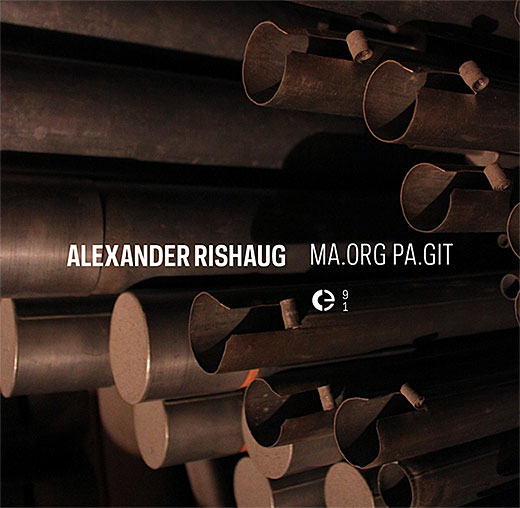
Ma.Org Pa.Git is the fifth solo release from the Norwegian sound artist and experimental musician Alexander Rishaug. Here he is exploring the space and the acoustics of a church organ and the hiss, overtones and feedback of an old tube amp and electric guitar. The album consist of two long pieces, recorded in the Norwegian seaman’s church in Rotterdam. Even though the material is heavily processed and recomposed, the overall feeling is genuinely spacious and acoustic.

The sounds are subtle, with very weak hisses or extremely slowly built up ambient drones. The volume is low, it is definitely not intrusive, it’s rather more like when you listen to someone talking very quietly, and you have to try to make an effort to listen to what was said. Not that I am certain Rishaug wants to express something other than wanting to explore these sounds and recordings. The mechanics of the organ are also used to create some occasionally interesting sounds that are mixed together with the low hiss and drones.

The whole feel of the album is very slow and meditative. After listening for a while I am filled with images, or associations, of space-time-motions, or being locked inside a big gigantic tanker out on the pacific, not noticing the sea at all at all. Or imagining watching a documentary of what life is like under the big glaciers of the Arctic waters, and this being the soundtrack. All in all, definitely music for contemplative silent moments. Ronny Wærnes

via Freq

“Lanificio Leo” reviewed by Onda Rock

cronica095-2015_520

“La macchina, per definizione, ripete la stessa sequenza in ogni momento, in ogni stagione, chiunque la usi. Le mie vecchie macchine, invece, non sono più in grado di fare questo. C’è una sorta di anarchia in loro: sbagliano, spesso. Ma se vai oltre l’idea di errore e la controlli, le macchine ti aiutano e diventano co-autori del prodotto assieme a te”
(Emilio Leo)

Il rapporto tra uomo e macchina, forse una delle tematiche più complesse e dense in cui addentrarsi riflettendo e “studiando”, ha trovato in musica le declinazioni più disparate. C’è chi ha trasformato l’elettronica (macchinale) in pop (umano) cantato la subordinazione del pop (e dell’uomo) all’elettronica (alle macchine). C’è chi ha fatto delle macchine in quanto creazioni dell’uomo strumenti squisitamente musicali, chi ha approfondito il rapporto fra di esse e le loro ripercussioni sulla vita umana, e ancora chi ha studiato i loro suoni trasformandoli in linguaggio espressivo extra-musicale. Proprio in seno a quest’ultima operazione si è sviluppata una delle branchie fondative della sound art, ovvero di quella forma d’arte che tratta il suono – anziché ridurlo a “linguaggio” per esprimere sentimenti, descrivere altri oggetti o evocare immagini – come soggetto puro ed autonomo sviluppando le determinazioni interne ad esso e alle sue caratteristiche.

L’operazione di Attilio Novellino e Saverio Rosi – due fra gli esponenti di punta della sound art made in Italy, già insieme nell’avventura parallela di Sentimental Machines – in “Lanificio Leo” costituisce forse una delle esperienze più riuscite ed originali in questo ambito, una sorta di risposta indiretta all’idea di macchina promossa e mitizzata dall’industrial. La location scelta è il Lanificio di Emilio Leo, il più antico in Italia, che continua a produrre utilizzando macchinari ormai per molti “fuori tempo”. Un’alternativa artigianale alla massificazione industriale e alla progressiva de-umanizzazione del prodotto dovuta alla sostituzione totale della macchina all’essere umano. Qui nasce anche l’idea che queste macchine, tanto lontane dalla perfezione scientifica e così poco “autonome”, permettano una compartecipazione tra esse e chi, per necessità, rimane al loro timone. E siano, dunque, ben più umane nella sostanza e nelle necessità rispetto alle moderne tecnologie, che all’uomo risultano speculari nella forma e nella razionalità.

Nell’agosto del 2013, Leo ha ospitato Rosi e Novellino nel suo Lanificio per una sessione di field recordings che i due hanno trasformato in un lavoro, pubblicato oggi da Crónica in solo formato digitale. I primi sette brani sono riproposizioni integrali di alcune delle registrazioni, che impressionano letteralmente per la loro portata espressiva. Sembra davvero di trovarsi a stretto contatto con macchine “animate”, in alcuni casi capaci di trasmettere le sensazioni, le emozioni e i gesti di chi le manovra (“Carding 1: Rove Making / Carding 2: Web Making”), in altri di raccontare e testimoniare la loro storia operativa (“Carding Machine, OCTIR, 1930”) in altri ancora addirittura di vivere una vita propria, per lo meno a livello essenziale (“Self-Acting Machine, BIGALI, 1950”). Rosi e Novellino si limitano qui ad agire come registi di un documentario, selezionando le testimonianze sonore più pregnanti e lasciando alle macchine libertà totale d’espressione.

Culmine della suggestione di questa prima parte è il monolite corale di “Mechanical Dobby Shuttle Loom H220, NARNALI, 1940 / Fulling Machine with Wooden Drum / Rope Washing Machine, 1930”, davvero a pochi passi dai risultati dei moderni processi di elaborazione sonora digitale eppure così “puro”, terreno, concreto. Nella seconda parte del lavoro, i due riutilizzano il materiale registrato come fonte sonora per una composizione di circa venti minuti: “New Vision: Re-Designing vs. Re-Converting” è un’autentica sinfonia in cui le macchine giocano il ruolo degli strumenti musicali, e Novellino e Rosi si “riappropriano” del loro status di musicisti e autori del percorso creativo. Qui il realismo si fa espressionismo autentico, a confronto si trovano concept e percezione sensoriale e in un percorso inverso a quello industrial, macchina e uomo si controllano e si lasciano controllare a vicenda.

Semplicemente illuminante.

Matteo Meda via Onda Rock

Futurónica 140

futurónica_140
Episode 140 of Futurónica, a broadcast in Rádio Manobras (91.5 MHz in Porto, 18h30) and Rádio Zero (21h GMT, repeating on Tuesday at 01h) airs tomorrow, May 15th.

The playlist of Futurónica 140 is:

  1. Maile Colbert, Doors and Doors and Corridors (2015, Siebzehn bis ∞, Crónica)
  2. @c, Einhundertundacht (für Ephraim) (2015, Siebzehn bis ∞, Crónica)
  3. Marc Behrens, Kupari Odradek Drug Party (2015, Siebzehn bis ∞, Crónica)
  4. Mathias Delplanque, Débris (for Ephraim Wegner) (2015, Siebzehn bis ∞, Crónica)
  5. Ephraim Wegner, 22.22 (2015, Siebzehn bis ∞, Crónica)

You can follow Rádio Zero’s broadcasts at radiozero.pt/ouvir and Rádio Manobras at radiomanobras.pt.

Alexander Rishaug reviewed by Bad Alchemy

cronica091-2015_520
ALEXANDER RISHAUG ist mir bei Possible Landscape (Asphodel, 2004) als Freilichtmaler von Panoramen und imaginären Landschaften begegnet, den ebenso die minimalistischen Möglichkeiten draußen wie das spezifische Tönen von Innenräumen faszinieren. in MA.ORG.PA.GIT (Crónica 091~2015, LP) steht das ORG der A-Seite für die Orgel in der Norwegischen Seemannskirche in Rotterdam und das GIT der B-Seite für eine E-Gitarre mit Vox-Limited-Verstärker. Sanft hebt da ein sonores Brummen an, das sich aus statischem Raumklang mit luftigem Antrieb heraus schält. Das Droning verstummt und setzt neu an, wobei die orgelige Mechanik klappernd und schabend hörbar wird und das dann einsetzende Stöhnen und Tuten nicht nur ins Herz einsamer Matrosen zielt. Der Summton schwillt an, in Demut und Wehmut beginnt ein Adagio jetzt sogar zu flöten und zu trillern. Mit zunehmend langgezogenem Legato weiten sich Brust und Raum, so dass Heimat und Ferne unter einem Dach sich wieder nahe kommen. Dem mütterlichen Kirchenton folgt der väterliche Gitarrensound in einer klanglichen Parallelaktion. Mit dunklem Bassgebrumm und statischem Rauschen, in das ferne Funkstimmen eher halluzinatorisch als konkret eingemischt scheinen. Auch hier schwillt das Dröhnen an, was unwillkürlich aufrichtend und erhebend wirkt. Durch ein Mehr an Präsenz nicht mehr Meer, sondern mehr Trost. Anfangs nur ein schwacher Trost, aber das sonore und auch harmonisch sanft fluktuierende, dabei sogar ein wenig orgelige Dröhnen nimmt zu bis zu einem relativ stabil wirkenden Brausen, auch wenn sich das nicht mehr so sauber vom Grundrauschen abhebt, wie es gläubigere Zeiten noch versprochen hatten.

“Ma·Org Pa·Git” reviewed by Blow Up

cronica091-2015_520
Allo stesso modo, anche “Ma.Org Pa.Git” di Alexander Rishaug si relaziona al concetto di ambient music in modo anomalo e trasversale, tarsformando il suono dell’organo a canne di una chiesa di Rotterdam in un cupo drone sul quale si sovrappongono le registrazioni delle meccaniche dello strumento e i riverberi prodotti dall’ampiezza dello spazio. Qui tutto assume — in modo quase automatico, considerata l’ambientazione chiesastica — un tono ieratico e trascendente, che a tratti viene però turbato da un senso di oscura inquietudine. (6/7) Massimiliano Busti

“Unfurling Streams” reviewed by Blow Up

cronica094-2015_520
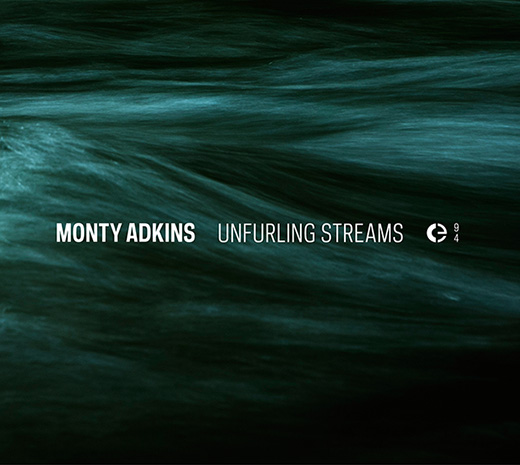
Dopo aver lavorato negli anni novanta nel campo dell’acusmatica e della sperimentazione multimediale, Monty Adkins nella scorsa decade si è avvicinato ad una formula espressiva più intimista, concentrandosi su un’idea di elettronica eterea e minimale. A questo stesso contesto appartiene la musica di “Unfurling Streams”, basata su alcune registrazioni di percussioni rielaborate elettronicamente e trasformate in volute fluttuanti di suono crepuscolare, che se talvolta sfiorano l’astrattezza dell’ambient riescono pur sempre a communicate un certo senso di apprezzabile corporeità. (6/7) Massimiliano Busti

“Lanificio Leo” reviewed by Music Won’t Save You

cronica095-2015_520
Verso la fine dello scorso anno, Attilio Novellino e Saverio Rosi (Sentimental Machines) hanno pubblicato il frutto di una serie di improvvisazioni condotte insieme a Rob Mazurek e Tim Barnes. Le due lunghe tracce delle quali si componeva quel lavoro, “Objects In Mirror Are Closer Than They Appear”, avevano avuto come teatro un luogo di archeologia industriale della loro terra, la Calabria, trasformato in museo e protagonista del peculiare soundscaping dell’opera, con la sua atmosfera e i suoi rumori, al pari di fiati, percussioni e frammenti elettronici minimali.

Quel luogo era il A, al quale è integralmente dedicata la nuova opera dei due artisti calabresi. Non si tratta di una mera suggestione, poiché in “Lanificio Leo” i luoghi letteralmente “parlano”, attraverso il rumore delle macchine, le risonanze e le irregolarità da esse generate, che per natura contraddicono il crisma ambientale della ripetizione.

Il lavoro si articola in sette brevi frammenti, semplicemente prodotti da ingranaggi, che spostano in maniera decisiva il significato stesso di “macchina” da quello più comune legato all’elettronica a fonti di suono tra le più disparate. il solo brano finali, i cui oltre diciotto minuti collimano con la durata totale dei frammenti, provvede a riarticolarli, filtrandoli e trasformandoli in qualcosa di meno materiale, di meno riconoscibile. Eppure, è proprio come se Novellino e Rosi avessero voluto dar luogo a un gioco di specchi, nel quale il suono “lavorato” rivela anche la propria componente più grezza e disadorna, eppure autosufficiente a dimostrare, in maniera niente affatto agevole ma a suo modo geniale, l’attuale labilità del confine tra suono e rumore, tra musica e non-musica.

via Music Won’t Save You