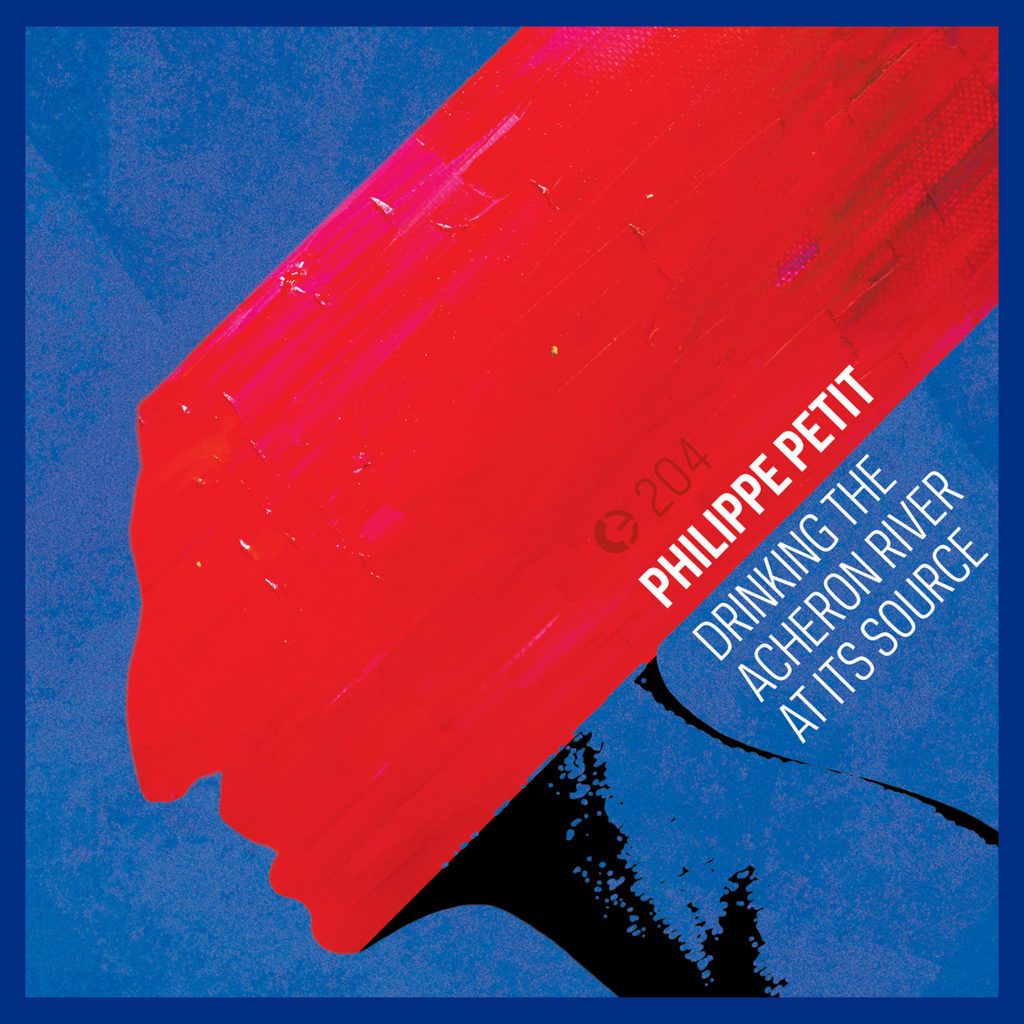
Philippe Petit has completed his most ambitious work to appear on Cronica early in 2024, A Divine Comedy, taking Dante Alighieri’s immense poem as a point of inspiration and developing a double album soundtrack-voyage.
Drinking the Acheron River at Its Source was composed just after and is what one might call a prequel since its story precedes that of the previously created work and depicting Dante dreaming that he is with Virgil alive and bathing in the legendary river, accidentally drinking the poison that will engulf them and mark the beginning of the journey…
Dante had a dream Meeting Virgil Leading to the waters of Acheron. Thick with mire Of fathomless flood A whirlpool seethes and belches all its purity Just as blue as autumn, The desire to bathe too strong, To lose one’s footing is easy and the cup will drink whoever is not careful… The poison shall creep in and the journey to the underworld’s entrance begin
Philippe Petit celebrates forty years of activism in 2023! Born in Marseille, South of France, he started Djing, animating radio shows and editing zines in 1983. His current and past projects and collaborations can be found at philippepetit.info and modulisme.info.
Gerade ist ein neues Album des New Yorker (Klang-)Künstlers David Lee Myers erschienen, der auch unter seinem Projekt Arcane Device bekannt ist, es enthält vier auslandende Tracks von meist kreisender Dröhnung, die sich in Fülle und Intensität stetig steigert. Ein wesentlicher Fokus des u.a. auf Feedback, gesampleten Geräuschen und digitalen Zeiteffekten (Delay, Reverse etc.) basierenden “Strange Attractors” ist in Myers eigener Beschreibung das Suspendieren der gewöhnlichen Zeitwahrnehmung: “Strange Attractors is an example of what may be called Time Displacement Music. A varying mix of feedback, other noise sources, and found sounds are fed to a series of stereo digital delay units whose parameters (delay time, reverse, freeze, etc.) are manipulated in real-time via LFOs, sample and hold controllers, and so on, as well as live manual adjustments to produce an ever-evolving pastiche of sound washes. Sitting quietly (especially late at night) and listening to these compositions can be strangely exhilarating.
My earliest involvement with electronics in music was the introduction of tape delay units. They utterly fascinated me: take a moment of time and store it, move it about, bend it into different shapes. Unbelievable! I spent hours unearthing the possibilities. Years later, technological advances have allowed much more complex capabilities in this realm, and modern versions of the time delay have always been at the core of my sonic explorations. Thus, Time Displacement Music. Taoism, Buddhism, and even contemporary physics state that fundamentally, there is no time, that there is only an incomprehensible eternally existing now, which we have little to no understanding of. But as a composer, I play with time. Unlike painting, for instance, all music is time-based. This creates a conundrum: if time does not exist, what is a composer working with, working upon? I cannot give a meaningful answer, but continue to play”. Das Album erscheint als CD und zum Download bei Crónica.
Strange Attractors ist ein Beispiel für das, was man Zeitverschiebungsmusik nennen könnte. Eine wechselnde Mischung aus Rückkopplungen, anderen Geräuschquellen und gefundenen Klängen wird in eine Reihe von digitalen Stereo-Verzögerungseinheiten eingespeist, deren Parameter (Verzögerungszeit, Reverse, Freeze usw.) in Echtzeit über LFOs, Sample- und Hold-Regler usw. sowie durch manuelle Live-Anpassungen manipuliert werden, um ein sich ständig weiterentwickelndes Sammelsurium von Sound-Washes zu erzeugen. Wenn man sich in Ruhe hinsetzt (vor allem spät in der Nacht) und diesen Kompositionen lauscht, kann das auf seltsame Weise berauschend sein.
Strange Attractors to przykład tego, co można nazwać muzyką Time Displacement. Zmienna mieszanka sprzężeń zwrotnych, innych źródeł hałasu i znalezionych dźwięków jest podawana do serii stereofonicznych cyfrowych delayów, których parametrami manipuluje się w czasie rzeczywistym za pomocą LFO, kontrolerów sampli, a także ręcznych zmian na żywo, aby stworzyć stale ewoluujący pastisz dźwięków. Siedzenie w ciszy (zwłaszcza późno w nocy) i słuchanie tych kompozycji może być dziwnie ekscytujące.
Moim pierwszym zetknięciem z elektroniką w muzyce było wprowadzenie taśmowych delayów. Całkowicie mnie zafascynowały: wziąć krótką chwilę czasu i przechować ją, przesunąć, wygiąć w różne kształty. Niewiarygodne! Spędziłem wiele godzin na odkrywaniu ich możliwości. Lata później postęp technologiczny pozwolił na znacznie bardziej złożone możliwości w tej dziedzinie, a nowoczesne wersje delaya zawsze były w centrum moich dźwiękowych poszukiwań. Stąd też Time Displacement Music.
Taoizm, buddyzm, a nawet współczesna fizyka twierdzą, że zasadniczo nie ma czasu, że istnieje tylko niezrozumiałe, wiecznie istniejące teraz, którego nie rozumiemy. Ale jako kompozytor bawię się czasem. W przeciwieństwie na przykład do malarstwa, cała muzyka jest oparta na czasie. To tworzy zagadkę: jeśli czas nie istnieje, to z czym kompozytor pracuje, nad czym pracuje? Nie potrafię udzielić sensownej odpowiedzi, ale nadal gram… Być może możemy zgodzić się z Williamem Blake’iem, który stwierdził: „Głupiec, który trwa w swoim szaleństwie, stanie się mądry.” Artur Mieczkowski
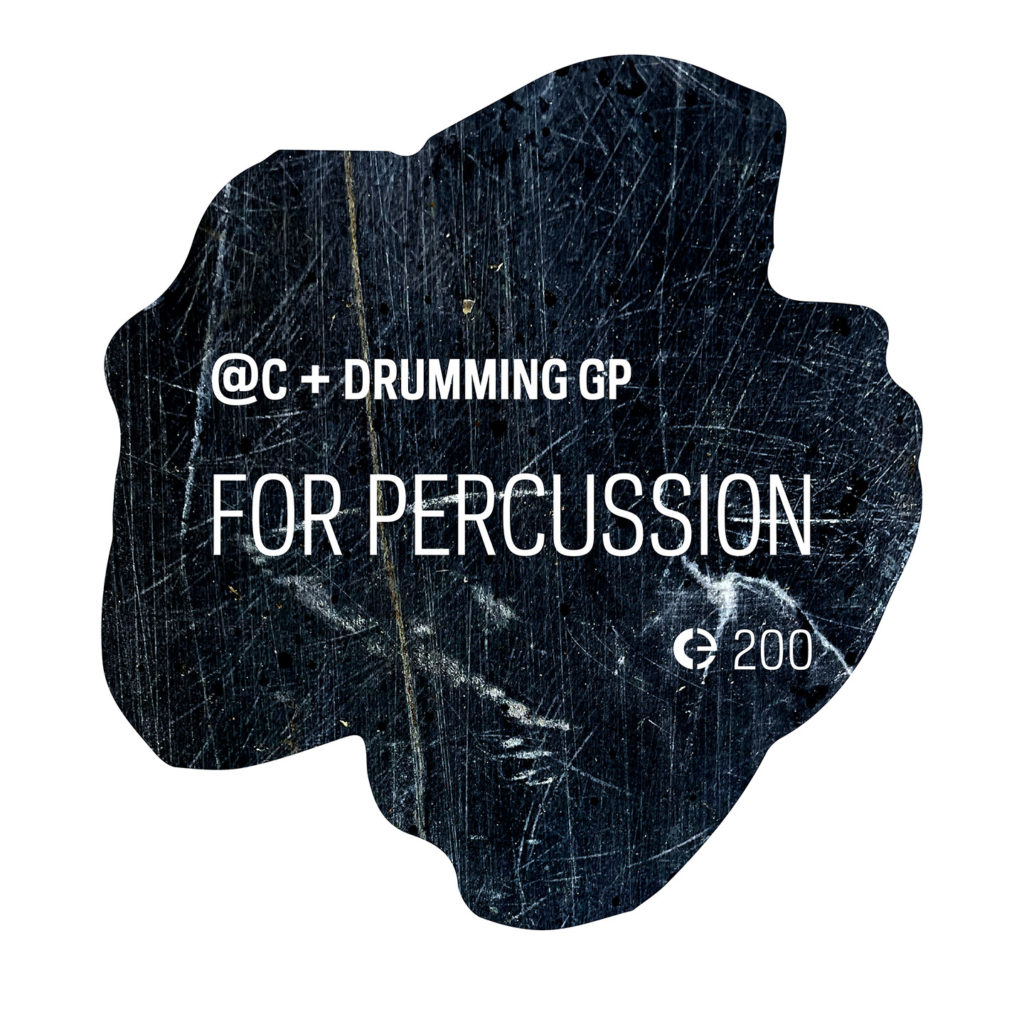
Questo è un lavoro di ricerca, musica sperimentale su commissione, tutto incentrato sulle potenzialità delle percussioni. @C + Drumming GP è il nome di questo progetto, diretto da Miquel Bernat e composto e prodotto da Miguel Carvalhais e Pedro Tudela. Prima di partire coi lavori, i membri del progetto si sono interrogati su cosa voglia dire “composizione”, cosa “programmazione”, e quali sono le connessioni tra questi due metodi produttivi. Incrociando i due concetti ed applicandoli alle percussioni, si ottengono i risultati dell’album “For Percussion”, uscito per Crónica Records. Leggete fino alla fine, e forse vi si aprirà un mondo, pian pianino.
“63” può apparire francamente snervante, nel suo insistere a ribattere un bordo della grancassa, e senza una struttura ritmica fissa. Questo perché si sono programmate a tavolino delle sequenze, poi performate con semi improvvisazioni, mischiando campionamenti a suoni sintetici, sfidando la macchina nei suoi limiti.
Già con “58” l’esperimento si fa più afferrabile: ci sono due marimbe e due computer, e la piacevolezza del suono intonato della marimba, aiuta a capire che succede. Le cellule melodiche di marimba sono brevi e ripetute, e modificate gradualmente; la composizione delle note è generata dal computer, e mentre quest’ultimo esegue la programmazione, loro giocano a modificarne i parametri. Ecco perché non si sente perfettamente un tempo costante. Metrica e ritmica sono due di tutti gli elementi modificati costantemente, per creare caos, e trovare impreviste simmetrie in mezzo al caos generato. Seguendo i percorsi imprevedibili che queste marimbe seguono, non ci si accorge neppure che passano venti minuti! È il fascino della matematica, e del desiderio di metterne alla prova le ferree regole. E più avanti sarà svelato cosa c’è dietro tutto questo.
“88” viene definita da loro una composizione “procedurale”. È in pratica un gioco di ruolo per due giocatori, e gli strumenti usati sono minerali e pietre. L’incipit è la disposizione degli stessi sassi, sulla quale si basano le regole attorno alle quali i giocatori inventano le modifiche, fino a creare una sovrapposizione di strutture. Com’è che si diceva dell’anarchia? Non è fare ciò che si vuole, ma darsi delle regole da soli, prima che te le diano gli altri. Ecco, è qualcosa del genere, tradotto in azione musicale.
Non ancora contenti di tutto questo, con “66” i due energumeni lasciano al computer pure la facoltà di generare cambi di tempo, e così si creano delle tessiture astratte e complesse di suoni sintetici, accanto alle programmazioni su diversi tipi di campane. Verso il settimo di questi dieci minuti, l’esperimento porta ad un’esplosione… sonora ovviamente. Senza feriti ovviamente, però come si dice, ecco i rischi dell’intelligenza artificiale!
Ecco la soluzione chiarificatrice. Per la suddetta “63”, ma anche per “88R”, il duo dichiara di ispirarsi a Frank Zappa, per la precisione ad un suo tipo di lavori, basati sul reframing. Zappa prendeva due musiche diverse, ad esempio un assolo di chitarra e uno di batteria, registrati in due momenti diversi, per canzoni diverse a tempi diversi, e le fondeva, costringendo chi ascolta, a seguire linee temporali simultanee. La chiamava “xenocronia”. Gli @C + Drumming GP mantengono la “continuità concettuale”. È un concetto cosmico.
Il tempo, come lo percepiamo noi in maniera lineare, scandito da secondi e minuti, è falso. Non c’è un prima o un dopo, ma un continuum costante. In “88R”, i rumori prodotti dagli oggetti sollecitati, creano un flusso che non si arresta, che diventa una vera e propria ambientazione avvolgente, un luogo sonoro dove sembra di entrare fisicamente. Se teniamo a mente questo, arrivati alla traccia di chiusura “66L”, possiamo capire che “For percussion”, come i lavori poliritmici in generale, rappresenta il cosmo e il suo caos, formato in realtà non da entità casuali, ma da diverse regolarità armoniche che convivono. (Gilberto Ongaro)
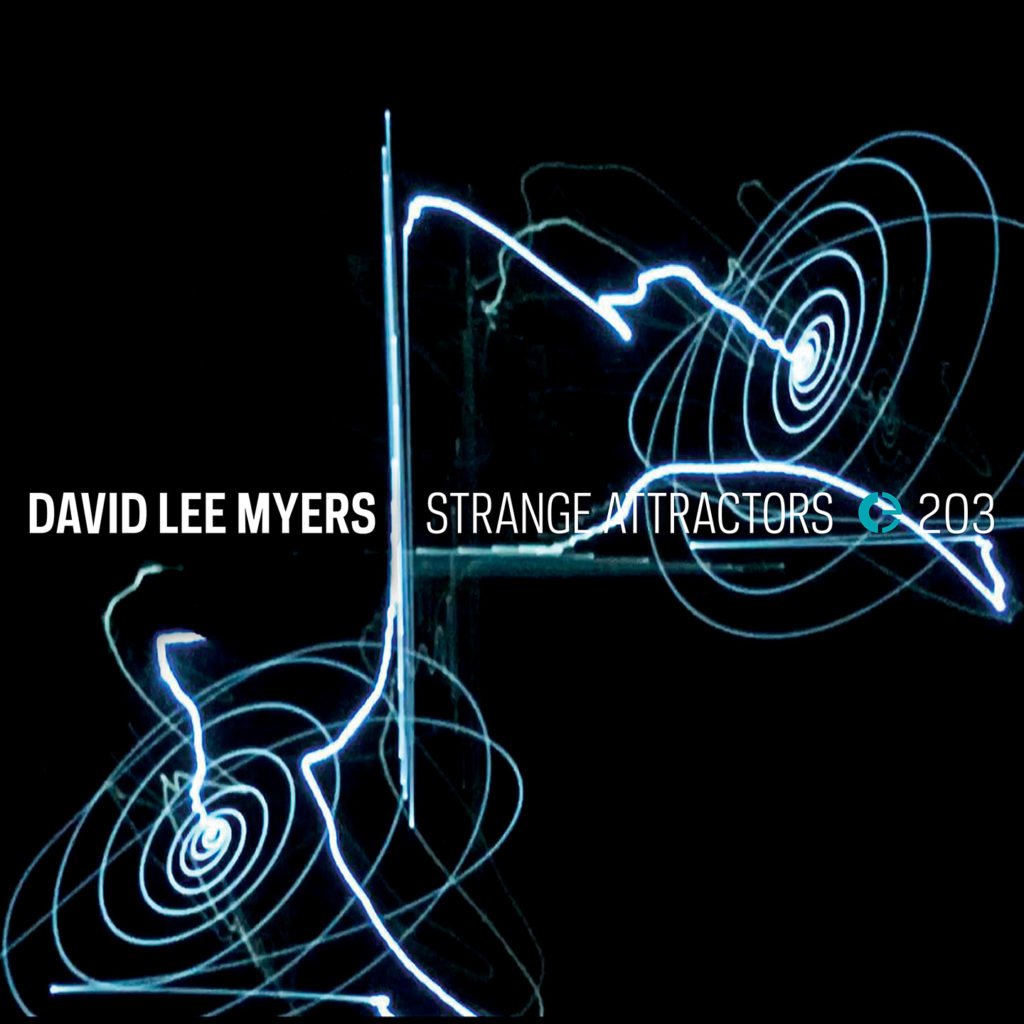
Crónica is very proud to present a new release by David Lee Myers, Strange Attractors!
Strange Attractors is an example of what may be called Time Displacement Music. A varying mix of feedback, other noise sources, and found sounds are fed to a series of stereo digital delay units whose parameters (delay time, reverse, freeze, etc.) are manipulated in real-time via LFOs, sample and hold controllers, and so on, as well as live manual adjustments to produce an ever-evolving pastiche of sound washes. Sitting quietly (especially late at night) and listening to these compositions can be strangely exhilarating.
My earliest involvement with electronics in music was the introduction of tape delay units. They utterly fascinated me: take a moment of time and store it, move it about, bend it into different shapes. Unbelievable! I spent hours unearthing the possibilities. Years later, technological advances have allowed much more complex capabilities in this realm, and modern versions of the time delay have always been at the core of my sonic explorations. Thus, Time Displacement Music.
Taoism, Buddhism, and even contemporary physics state that fundamentally, there is no time, that there is only an incomprehensible eternally existing now, which we have little to no understanding of. But as a composer, I play with time. Unlike painting, for instance, all music is time-based. This creates a conundrum: if time does not exist, what is a composer working with, working upon? I cannot give a meaningful answer, but continue to play… Perhaps we can agree with William Blake, who stated, “The fool who persists in his folly will become wise.”
Strange Attractors is now available as a limited-release CD, stream or download.
En voyant sur la pochette le mot “Drumming”, beaucoup penseront sans doute à la célèbre composition de Steve Reich. Le seul rapport, ce sont les percussions. Extrêmement variées, avec, selon les titres, électronique, ordinateurs, échantillons. Un disque qui semblera difficile, et il l’est, mais ne demande qu’à être attentivement écouté pour livrer ses trésors…
Drumming GP désigne un ensemble de percussion fondé à Porto (Portugal) en 1999 par Miquel Bernat, interprète passionné des nouvelles musiques et professeur. L’ensemble a collaboré avec de nombreux compositeurs, qui lui ont aussi écrit des pièces. Michel Bernat a proposé à Miguel Carvailhais et Pedro Tudela, alias @C depuis 2000, expérimentateurs radicaux des sons obtenus par ordinateur et fondateurs et dirigeants du label Crónica, de composer une pièce pour Drumming GP, une pièce qui rassemblerait ordinateurs et percussions sur scène… et sur disque. Il en est résulté bien d’autres compositions, certaines déjà publiées, d’autres jouées. Quelques unes de ces œuvres sont rassemblées pour la première fois sur ce disque.
Le disque présente six pièces, titrés par un simple numéro, parfois suivi d’une lettre majuscule. La plus courte pièce excède de peu sept minutes, la plus longue dépasse les vingt minutes.
“63” (2006, revue en 2022), pour percussion, percussion synthétique et électronique, a été commandée en tant qu’hommage à Frank Zappa, qui pratiquait déjà la manipulation des bandes magnétiques. La version de 2022 prend ses distances avec les échantillons de la musique de Zappa que celle de 2007 comportait. La pièce joue de la régularité, quasi métronomique, des frappes percussives, et du contraste avec les nappes synthétiques. Musique fascinante, d’une abstraction presque onirique dans la longue dérive de la seconde partie et l’explosion finale zappienne.
“58” (2006, revue en 2022), pour deux marimbas et deux ordinateurs. La partition des marimbas est générée par ordinateur, tandis que les ordinateurs sont libres au milieu d’un ensemble de possibles. Le flux des marimbas croise une multitude d’événements imprévus, d’où l’impression d’une longue narration, d’une vie étrange et tumultueuse traversée d’échos, de souvenirs sonores. Le fil se dédouble, les marimbas virevoltant au premier plan, les ordinateurs introduisant une profondeur énigmatique, déroutante : en somme une trame schizophrène, d’ailleurs parfois grinçante, grotesque dans ses ricanements en sourdine, ses couinements, grognements…Dépaysement garanti avec ce voyage extraordinaire !
“88”(2010), pour pierres, objets, microphones et électronique. Les microphones sont placés au-dessus, en-dessous et sur le même plan que les pierres et objets, si bien qu’ils captent leurs vibrations pour les amplifier ensuite. Quelques réverbérations naturelles sont conservées dans la pièce. Frottements, frappes, roulements forment la base de la trame sonore. On a l’impression d’assister au réveil des objets, qui traînent encore avec eux des filaments de rêve, soupirent, se secouent pour exister enfin et donner naissance à la fois à une frénésie et à une harmonie prenante, d’avant le temps.
“66” (2008), pour bols chantants échantillonnés et ordinateur, est sans conteste la pièce la plus déroutante, jouant de plusieurs manières de frapper les bols. Leurs résonances cristallines “dialoguent” avec des sons synthétiques envahissants, qui ne font en dépit de leurs efforts qu’accentuer la diaphanéité incorruptible des harmoniques majestueuses des premiers. Un léger balancement anime cette pièce incroyable, post-industrielle par les sons synthétiques en grappes informes rejouant un chaos primordial, intemporelle par les bols chantants dans leur rectitude harmonique. Une pièce magnifique !
“88R” (2022) pour ordinateur et percussion synthétique dessine un paysage abstrait, entièrement synthétique, troué de frappes profondes, parcouru de zébrures, fractures. Pièce nocturne aux percussions noires, peu à peu saisie d’une frénésie de micro-battements, de déversements et roulements. Un très beau rituel étrange…
“63L” (2007) pour percussion, percussion synthétique et échantillons, mêle bols chantants et curieux solos percussifs qu’on prendrait presque pour le cliquetis d’une machine à écrire accompagnée d’une frappe plus lourde. Les bols échantillonnés donnent un son continu qui contraste vigoureusement avec le discontinu saccadé du massif percussif. Soudain, c’est presque une voix qui surgit dans cette sèche aridité, une voix tenue dans les claquements, puis une autre voix apparue dans la déflagration finale. Très étonnant !
Un remarquable disque de percussion contemporaine, exigeant et constamment inventif.
Myers has been pushing at the boundaries of electronic music for longer than some folks have been alive, and his continuing explorations within such variegated arenas serve to excite and regularly illuminate the more mundane aspects of existence. Most of this is due to the fact that Myers, whether under his given name or as his longtime alter ego Arcane Device, is that true restless spirit, endlessly innovating, endlessly searching, plumbing the depths of technology like a dogged sonic archaeologist to forever unearth something at once unknown yet new. He’s been on quite the tear during these last isolationist, lockdown years, releasing what seems to be a CD every few months or so, but damn if not every single one is worthy of your time and coin. The man never fails to delight the mind’s eye and ear to match, whether using his trusty feedback machines or ripping out the very innards of a whole host of modular devices, synths, and other mysterious noisemakers.
Here, on his second CD release on the ever-reliable Crónica label (itself a fine source of contemporary electronic and experimental music of all stripes), Myers finds the ideal home, where his knack for testing the malleability of sound is paramount, and the realization of his ideas is rendered sacrosanct to the ear. His description of this latest missive is that of Time Displacement Music, and such a sobriquet is more than apt; experiencing the fluctuating tonal qualities of these four lengthy pieces does seem to suspend any and all chronological means.
Indeed, while diving headfirst into the oscillating length of expansive tundra that is the opening “Equability of Powers,” temporal shifts seem to occur, as your ear gets fully digested by Myers’s itinerant whooshes, whoops, and hollers, until you realize that the piece’s many-splendored tones, chiming and ringing like machinistic marimbas, have held you spellbound for its full nineteen minutes. “Iniquities” vibrates in less strident fashion, but don’t let its lugubrious undertow deceive you—under waves of somewhat mordant gestures, where dank atmospheres recalling Tangerine Dream’s ancient Zeit motifs unfold, noisier tones ebb, achieve a gorgeous luminosity, then subside below the sheer gravitational weight of their own making. The index of metals that pulses throughout “With Perfect Clarity” seeks to resolve some opaque narrative as it courses through the veins, but, like the quicksilver properties of mercury, finds its own precious level while navigating the body corpus, a river of syrupy textures hardening into a modular musique concréte.
The finale, “Yet Another Shore,” harkens back to the sharp, crystalline formations found on the album’s opener, as Myers’ rubs and massages his potentiometers to yield suspension and displacement on a grander scale. As the tones seem to vividly enlarge, explode, and disintegrate in the track’s closing moments, it’s as if you’ve witnessed the aftermath of the big bang itself, the kaleidoscopic fallout of delay turning all the attendant loops, fizzes, and tremolos into a temporal warping of the senses. Brilliant. Darren Bergstein
Noise has a mutant nature and harbors poetic correspondences; it is polysemy that demands its translation from the listener. Concepts only make sense through their opposites; thus, noise means everything and means nothing.
Miguel A. García (M.A.G., aka xedh), a practitioner of the alchemy of noise for twenty-five years, offers us on this occasion a pantheistic theme: closer than ever to nature, its rhythms and cycles. A communion with the vital processes. M.A.G.’s sonorous arts have never been as telluric as on this occasion.
Starting from the field recordings captured by the also sound artist Juan Carlos Blancas (aka Coeval), the electroacoustic manipulations of M.A.G. have found a host where they can settle, grow and develop autonomously, adjusting to their own cycles. The theme opens the doors to an ecosystem of sounds in wild development; an alternative world to ours, as distant as it is close.
Rather, in a sinister equidistance: like those portraits of loved ones that due to slight changes become so disturbing. Here we are shown a strange world in a fleeting photograph, an instant of barely two days in a limited location. A fragment that suggests to us the enormity of that sonorous world that throbs full of lives alien to ours. The abrupt end of the theme closes the doors of this world that continues to sound, in constant change, immutable to our fleeting presence.
In spite of the musical turn that in appearance supposes this theme, in an attentive listening, it continues beating that evolution and organization of the sonorous masses so idiosyncratic of the Basque author. In this case, as if Walt Whitman were praising in his verses the hidden worlds imagined (or not) by Arthur Manchen or Lord Dunsany. There is a coupling between Nature and Machine: it is not known whether electronics becomes nature or it is nature that becomes electronics.
“Huncill” is now available as a download or stream!