New release: Cecilia Quinteros’s “Qadira”

Qadira, she who is capable, is both the title of this album and an apt moniker for Argentinian cellist Cecilia Quinteros. Over the past decade and a half this Buenos Aires native has played with creative music luminaries in her native land as well as European artists. She has performed compositions commissioned for her, in avant-garde jazz settings and accompanied dancers in interdisciplinary concerts. Hence, she has always imbued her works with these various influences and experiences and the cinematic Qadira is no exception. Similar to her 2023 release Narel, the current one is partly composed and partly improvised suite for solo cello and electronics.

Opening with a resonant drone Quinteros sets a haunting ambience. She uses her extended bowing techniques on the cello to create a spiritual melody that the electronics buoy. The mysticism continues with the spontaneous second movement. The cello reverberates in the enveloping silence fusing elements of the baroque and the modern. This motif repeated throughout forming a sort of an interlude in between longer segments.

Quinteros is well versed in the western classical canon as well as the nuances of free improvisation. Here the two merge to create something that is more than just the sum of them. On Qadira 3, a melancholic composition, Quinteros strums a guitar and evokes the sounds of an exalted hymn echoing in a futuristic temple. This naturally evolves into Qadira 4 a vibrant and pastoral improvisation with ethereal “dancing” strings while, simultaneously, flirting with dissonance. Adding another intriguing dimension to the performance is Qadira 7. This extemporized piece has an eastern spirituality with Quinteros accompanying her emotive chanting with chiming percussion. The finale meanwhile returns to the contemplative quasi-symphonic harmonies of the opening track bringing this brilliant and absorbing recording full circle.

Varied and cohesive, provocative yet accessible, Qadira is a continuation of Quinteros’s unique musical journey. If anyone can forge various genres into a singular, stimulating opus it is Quinteros. She is indeed “capable” exhibiting both finesse and elegance all the while not shying away from experimentations. The result is bold and sublime.

Hrayr Attarian

Qadira is now available to download or stream from Crónica!
Kunrad’s “Kleine Geluiden” reviewed by Chain DLK

If the world were a little quieter, perhaps we’d hear it breathing. Kunrad, the Dutch artist who listens more intently than most, has spent years amplifying the hushed murmurs of everyday materials – water, paper, brass, and stone – transforming them into poetic gestures of sound. “Kleine Geluiden” (“Small Sounds”) is not just an album but a collection of sonic vignettes, each one an invitation to hear what usually goes unheard.

Kunrad’s background in composition and sound art has always leaned toward the tactile. His installations and performances have turned bridges into carillons, rainfall into percussion, and the chaotic tumble of metal tubes into a kind of aleatoric symphony. Here, removed from their original context, these sounds take on a new existence, unmoored from the mechanisms that created them.

The album opens with “Brass & Sand”, a piece that conjures the image of a forgotten brass band slowly dissolving into grains of time. The vibrations of metal resonate with a ghostly warmth, while sand – seemingly an inert, passive material – becomes an active participant in the sonic landscape, whispering, shifting, intruding.

“Stones & Water” is a lesson in controlled randomness. Rocks meet liquid with percussive intent, each splash and ripple a carefully placed note in a composition that never quite settles. There’s a meditative quality to it, as if the elements themselves are engaged in a quiet dialogue, unaware of being recorded.

The “Water & Paper Suite” stretches across three movements – “Prelude”, “Daily”, and “Convergent” – each one revealing a different aspect of this unusual pairing. Water, usually an agent of dissolution, interacts with paper in unexpected ways: dripping, smearing, saturating, reshaping the material’s sound. The pieces feel both intimate and expansive, like eavesdropping on the physical world in the process of change.

The album closes with “Bridge & Hammer”, perhaps the most kinetic of the set. Here, Kunrad’s fascination with site-specific resonance comes to the fore, as the bridge itself becomes an instrument, its percussive strikes ringing out like an urban gamelan. It’s a reminder that even the structures we walk on daily contain hidden voices, waiting for the right ear to hear them.

Listening to “Kleine Geluiden” feels like stepping into an alternate reality where objects speak in hushed tones and the smallest disturbances ripple outward with profound significance. Kunrad doesn’t demand attention; he merely suggests that perhaps we’ve been listening wrong all along. This is music for the patient, for the curious, for those who understand that a single drop of water can, in the right circumstances, sound like a waterfall. Vito Camarretta

via Chain DLK

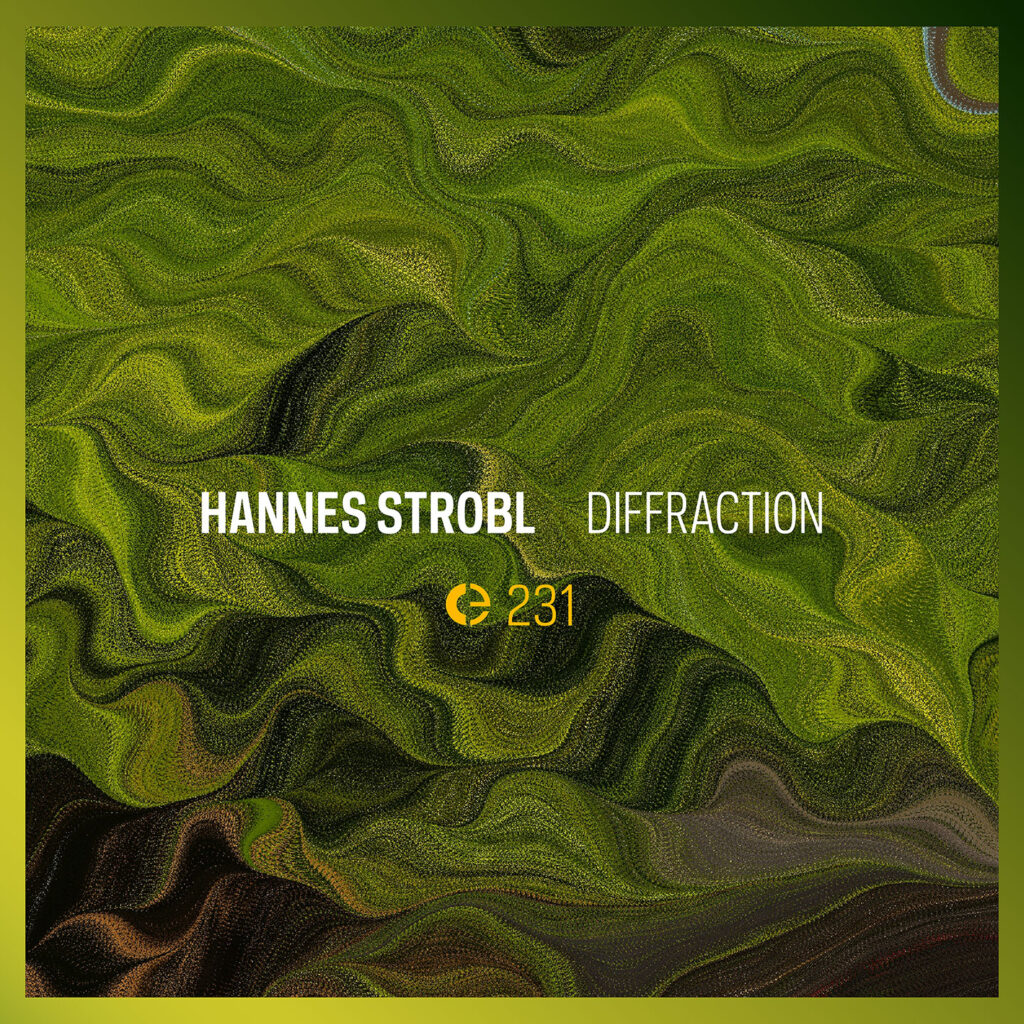
New release: Hannes Strobl’s “Diffraction”

Diffraction explores the idea that emptiness and form are inextricably linked. Every sound emerges in interaction with the silence that precedes and follows it. Yet even in supposed silence, something remains audible—a faint murmur, a subtle vibration, an echo of the surroundings. Pauses here are not empty spaces but active forms that shape the context for the next sound. Silence is understood as a form-giving presence, constantly interacting with the sounds and shaping the structure of the music.

The title Diffraction refers to the physical phenomenon where sound waves are deflected by obstacles and scattered in new directions. In a similar vein, the sounds in this work undergo dynamic transformations—they break, flow, and evolve in an ongoing, ever-changing process.

Diffraction invites us to perceive sound not merely as a linear sequence but as a living event, as a dynamic process. In the oscillation between silence and sound, stillness and activity, an exploration unfolds that probes the boundaries between physical reality and subjective perception.

Diffraction is now available to stream or download from Crónica.

Kunrad’s “Kleine Geluiden” reviewed by Felt Hat

Some albums come across as something subtle and almost unnoticeable. Not in a negative way, on the contrary.

Kunrad’s new cd released by the Portuguese label Crónica is a great example of how a sound art modal can be blended with art installation and field recording.

It is an important aspect of his work – he has the Bachelor of Music in Composition for Electronic Music at the University of the Arts Utrecht, and the Masters of Music at the Interfaculty ArtScience in The Hague. Kunrad lives and works in The Hague.

Keine Geluiden is an affirmation of every day rituals. Each tracks has a corresponding title with every day objects and elements. They encourage curiosity through their form – use of field recording with the right dosage and a bit of electronics – all in good measure.

In a art gallery environment such dosage lays out a great ground for a person to participate – it’s a delicate balance between attentive listening and observation of the whole scenario set up for a tracks which are, when you make a short comparison – quite long for a label of electroacoustic experimental and electronics.

Definitely one of the albums that have both great resonance and balance between the form and the functionality.

Kunrad’s “Kleine Geluiden” reviewed by Bad Alchemy

KUNRAD arbeitet als Klangkünstler in Den Haag mit Metall, Papier und Lehm und bei seinen Installationen etwa mit 1.000 kleinen Messingröhrchen, ins Wasser geworfenen Steinen oder Gummihämmern mit einer Brücke als Klang­skulptur. Das hört man als ‘Brass & Sand’, ‘Stones & Water’ und ‘Bridge & Hammer’ auf Kleine Geluiden (C 230), neben der 3-teiligen ‘Water & Paper Suite’. Als Feier der kleinen Dinge, als Ohrwürmer, die dem Stofflichen abgewonnen werden. Mit zu Beginn sandkornfeinem und hagelig perkus­sivem Zauber, beim Brückenschlag zuletzt in dongend schwankendem und trossig schellendem XXL. Am See unter summenden Insekten, zwitschernden Vögeln und Aquafau­na, drüber weg Flugzeuge, dran vorbei Züge, mit blubbri­gem und rauschend aufgewühltem Wellenwurf als ‘Wasser­musik’ mit Stock und Stein und bloßer Hand und finalem Crescendo, nach dem wieder Frieden einkehrt. Auch mit geknülltem, gerissenem Papier in großen, knistertauglichen Bögen und Säcken lässt sich ein Höllenlärm und blitzgewitt­riger Bühnenzinnober veranstalten, ein papierkriegeri­sches Hörspiel in drei Akten und ohne Worte. Akt 2 über­gießt das Papier wie mit Gießkannen mit regnerischem Prickeln, Plattern und Rauschen. ‘Convergent’ als 3. Part erhöht den Prickel- und Rauschfaktor zum Platzregen – ‘wie aus Eimern’. Nach 10 Min. lässt das nach, es plattern nur noch große Tropfen wie von der Traufe und patschen mo­noton zum verrinnenden Guss. [BA 128 rbd]

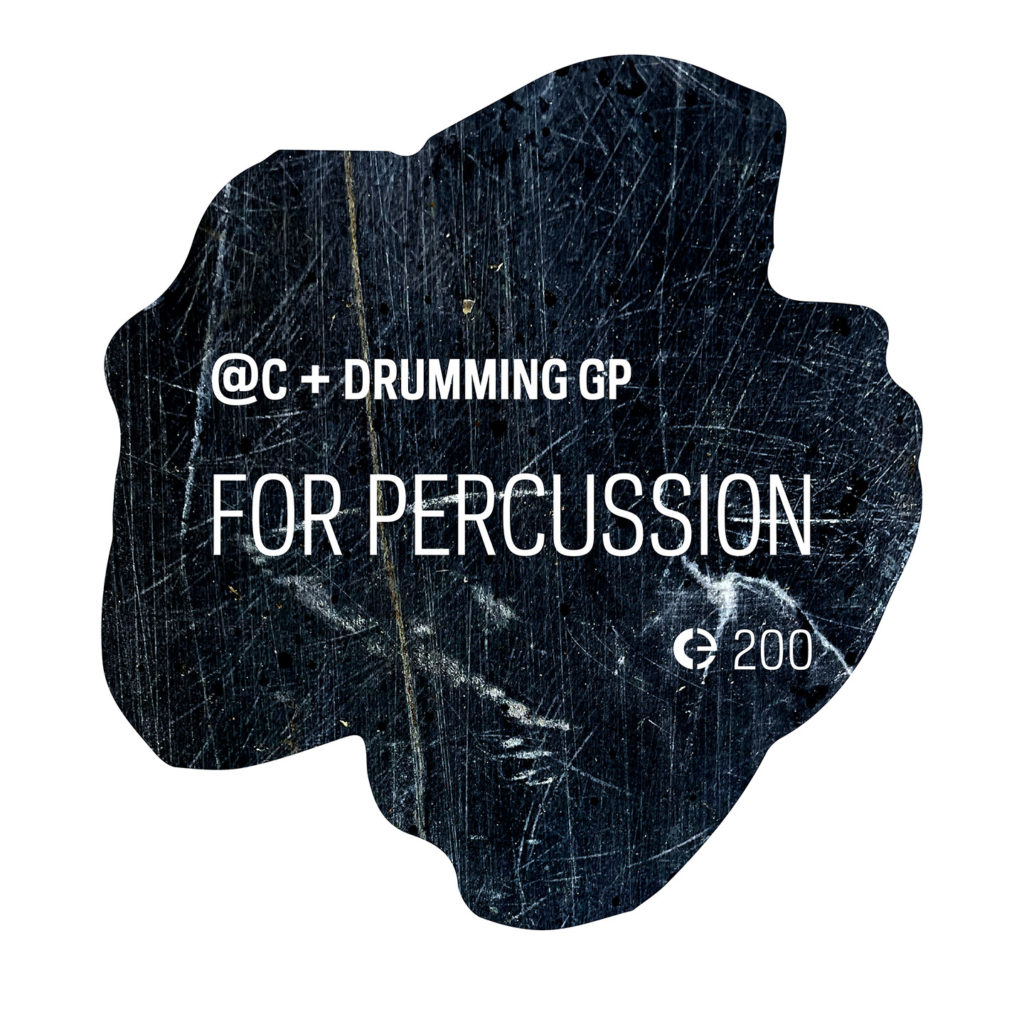
@c + Drumming GP‘s “For Percussion” reviewed by Percussive Notes

For Percussion is a collection of six electronic tracks with various acoustic elements incorporated into the recordings. Some of these tracks were recorded live during performances from 2002 to 2008, while others have been recently revisited in 2022. The electronic components and core compositions were created by @c a duo composed of Miguel Carvalhais and Pedro Tudela, artists on faculty at the Fine Arts College at the University of Porto in Portugal. The percussion is all performed by members of Drumming Grupo de Percussão a Portuguese percussion ensemble founded and directed by Miquel Bernat.

The music takes heavy influence from artists like Luigi Russolo as well as composers as Edgard Varèse Karlheinz Stockhausen, and Frank Zappa. One of my favourite tracks “66, for sampled bells, computer” is reminiscent of a slower paced, modernised trance version of the opening to “Poème Électronique.” In “88,” the composers incorporate various microphone elements and placements to affect the recording a la “Microphone 1.” Finally, Zappa’s references are evident in the first and final tracks, both in style as well as some direct references: take a listen to “Buffalo Voice” from Zappa’s

Civilization Phase Ill for the vocal addition at the very end of this album.

It is difficult to differentiate the original source material performed by Drumming GP with what has been modified or digitally created from @C. The electronic and acoustic components work well together to create a seamless soundscape of sonic explorations. This is done exceptionally well with track “88,” a recording using stones scratching and scraping objects, into “88R,” a remixed version done entirely electronically. Even though they use the same source material, there are little-to-no comparable sounds between the two; however, @C creates something hauntingly similar with a unique, tech-driven aural landscape to encounter.

Although these experimental compositions may not be for everyone, this album generates eclectic effects utilizing wide-ranging sonic interesting, thought-provoking digital alterations and additions, For Percussion provides a timbral spectrum worth investigating in experimental electronic music.

-Matthew Geiger

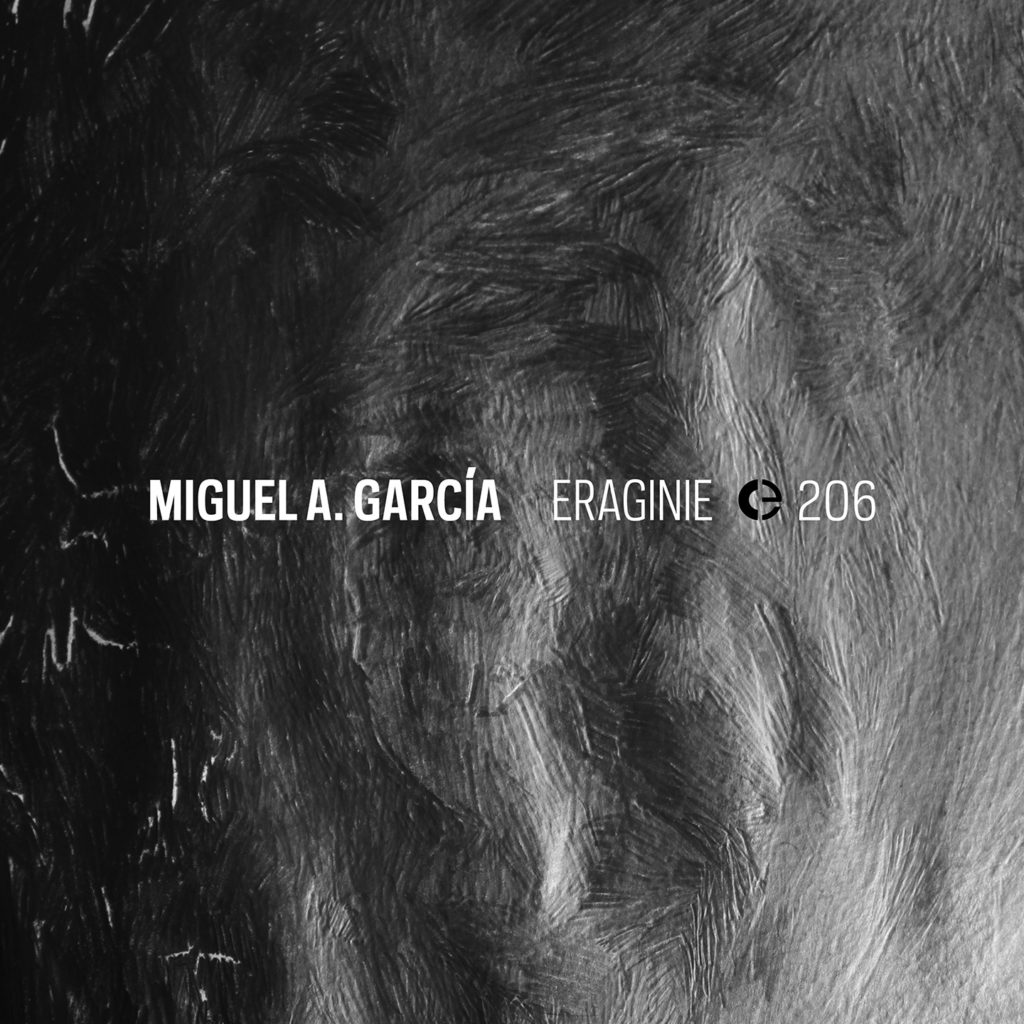
Miguel A. García’s “Eraginie” reviewed by The Sound Projector

Some years ago Miguel A. García informed me he was starting to work with string ensembles and classical players, directing musicians who can sight-read music to play his scores or execute directions in music devised by him. This represented quite a departure from his usual solo work with laptops, mixing desk, and processed recordings.

I keep hoping to get sent a CD of the “new” sock-it-to-em García approach, but today’s record Eraginie(CRÓNICA 206-2023) doesn’t seem to be representative of it. Instead, it’s four tracks of very grainy and granular processed noise, which suggest he hasn’t yet traded in his Apple Mac for a conductor’s baton. The label are hoping to wow the audience with García’s new hi-fi approach, telling us he’s turned his back on all that home-made distorted messy noise that he used to trade in, and has created a record fit to be broadcast on any art gallery PA system, the better for its sedate audience to savour the subtle tones and textures and delicate glitchoid experiments. A number of fellow creators have provided “additional raw sound sources” for him to create this record, namely Pedro A. Mirones, Maite Mugerza, Garazi Navas, Schahram Poursoudmand, Alex Reviriego, and the American Jeff Surak of Zeromoon.

Sadly, I found little excitement or tension in these slow grey stretches of digital combines, and I miss the days when my favourite Spaniard from Bilbao would send me genuinely shocking and unsettling records of home-brew noise. But maybe I’ll learn to love this low-key mode of Miguel’s – after all, better to be served a cucumber cocktail than given a digital slap in the mush. Ed Pinsent

via The Sound Projector

Kunrad’s “Kleine Geluiden” reviewed by African Paper

“Kleine Geluiden”, das neue Album des niederländischen Künstlers Kunrad alias Koenraad L. de Groot, erscheint am 18. Februar bei Crónica als limitierte CD und digitaler Download. Die Veröffentlichung kompiliert Aufnahmen aus seinen Klanginstallationen und Performances der letzten sechs Jahre, in denen er, wie er es beschreibt, “die kleinen, oft überhörten Klänge unseres Alltags feiert und auf ein Podest hebt”. Kunrad, ausgebildet in elektronischer Komposition und interdisziplinärer Klangkunst, bewegt sich an der Schnittstelle von Musik, Kunst und Performance. Seine Arbeiten umfassen Maschinen, die Regen und Papier in Klang verwandeln, ein 50 Meter langes, von Menschen betriebenes Carillon oder Konstruktionen, die metallene Röhren durch die Luft schicken. Diese akustischen Momente, eingefangen mit wechselnden Mikrofon-Setups, sind nun erstmals als eigenständiges Hörerlebnis zusammengestellt.

“Kleine Geluiden”, dessen Titel auf deutsch “Kleine Geräusche” bedeutet, verbindet organische und mechanische Klangquellen zu einer dichten, detailreichen Struktur. Manche Stücke erinnern mit prasselnden, elektrifizierten Klängen an experimentelle ASMR-Techniken, andere vermitteln die physische Präsenz der ursprünglichen Installationen. Die Aufnahmen wirken dabei nicht dokumentarisch, sondern als offene Erzählungen, die die Vorstellungskraft der Hörerinnen und Hörer herausfordern. “Ich hoffe, dieses Album wird wie ein Buch sein, das einlädt, sich die Konstruktionen und Räume vorzustellen und neue Geschichten zu erfinden”, so Kunrad. Mit seiner minimalistischen, oft flüsternden Ästhetik fordert Kunrad zur aktiven Auseinandersetzung mit Klang auf: “Ein Mensch, der flüstert, ist besser zu verstehen als einer, der schreit”. In diesem Sinne ist “Kleine Geluiden” nicht nur eine Sammlung akustischer Eindrücke, sondern ein Raum für neue Wahrnehmungen und Deutungen.

via African Paper

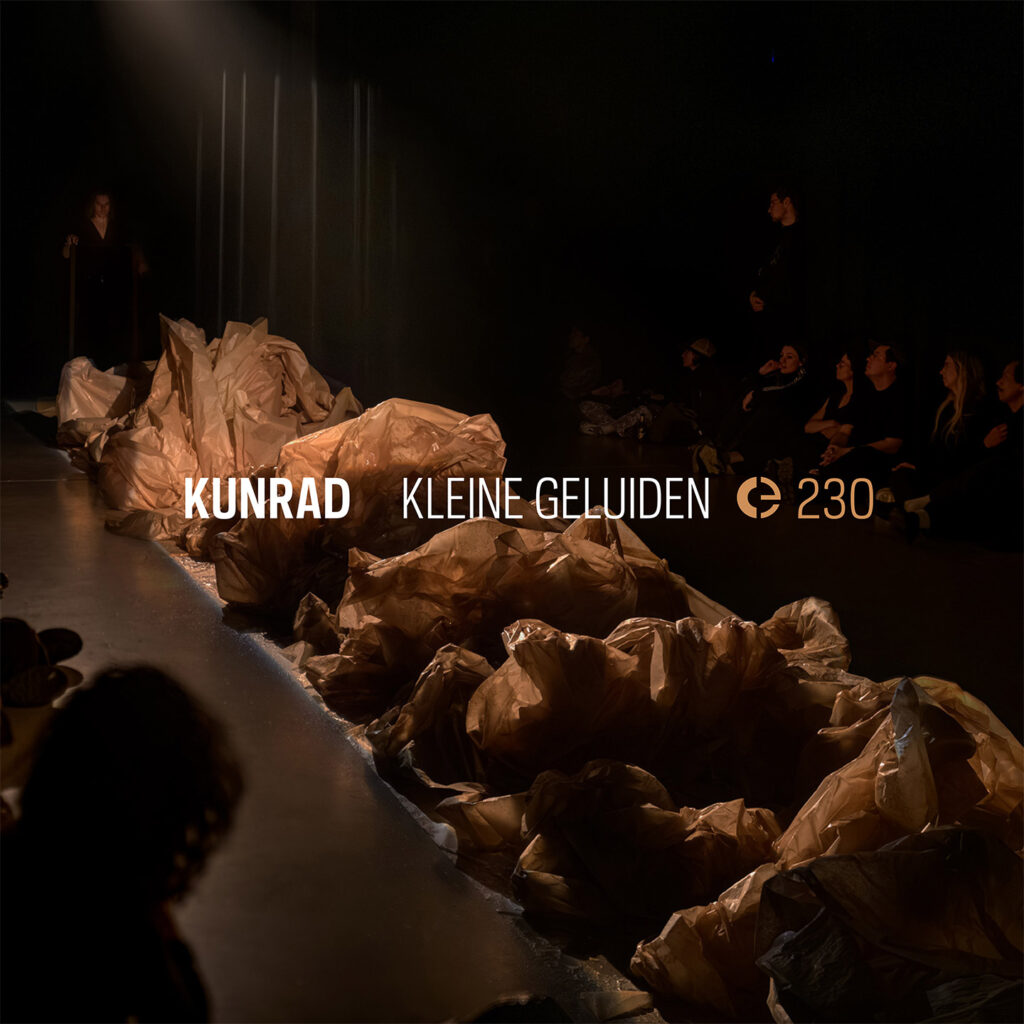
New release: Kunrad’s “Kleine Geluiden”

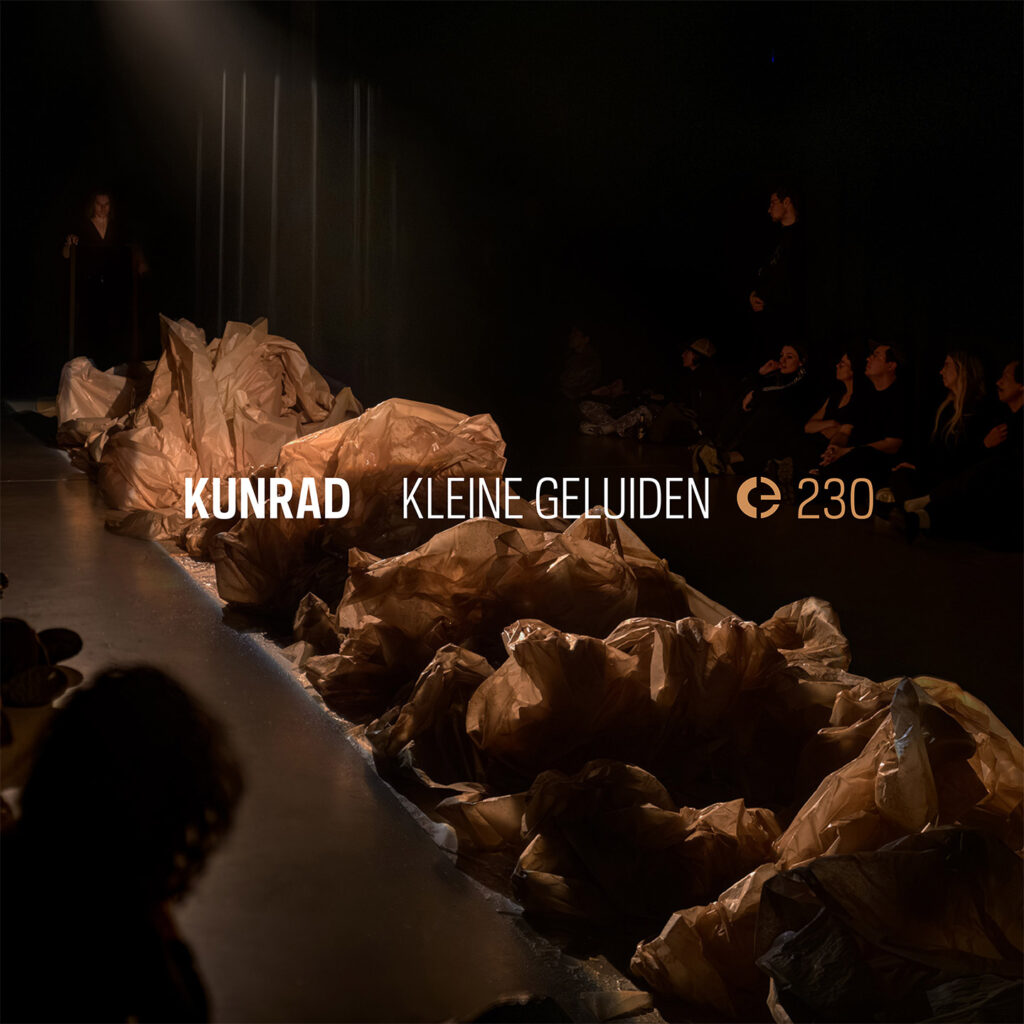
Over the past six years, Kunrad has created installations and performances that celebrate the small, often overlooked sounds embedded in our daily lives, placing them on a pedestal. From machines that transform rain and paper into the first Physical Audio Workstation, to contraptions that send 1,000 small brass tubes ringing and tumbling through the air. Performances where stones are thrown into water with intent, or a human-powered carillon, spanning 50 meter long ropes, harnesses, and rubber hammers striking a bridge at the heart of a city.

Driven by a passion for field recording, he captured these fleeting, temporal moments using an ever-changing array of microphone setups. We are now delighted to present these recordings, extracted from their original artworks and curated into a new, standalone listening experience.

Hopefully, this album will act like a book, inviting you to imagine the contraptions, the spaces, and invent new stories behind the sounds. In this way, it becomes a canvas for your imagination, a place where new worlds emerge so that kleine geluiden, small sounds, find new ways to enrich our daily lives.

Kleine Geluiden is now available as a limited-release CD, stream or download from Crónica.