Guitarras Variáveis in Maia

gv_2014maia_flyer02
Albrecht Loops, Alexandre Soares and Pedro Almeida will be performing at Fórum da Maia (café-concerto) one more experimental non-fixed improvised guitar session of “Guitarras Variáveis”

Guitarras Variáveis” (Variable guitars) is an experimental project that approaches and explores the improvised side of the guitar as an instrument of sound creation. It aims to gather musicians, despite their academic or free styled orientations on an uncommitted way of guitar-chating. Amplified influences, repeated chords, rebuild non-fixed structures and distortorted melodies focused on exploring the act of performance, the individual techniques and the exchanging attitude.

The ideia arose at EME 2003, the Experimental Music Encounters (Palmela-Setúbal, Portugal), where Pedro Almeida invited musicians Luis Varatojo and João Hora for a improvised guitar gig. Here is the list of the participants since then: André Gonçalves (okSuitcase), Alexandre Costa, Alexandre Soares (3 Tristes Tigres), Bruno Silva (Ondness), Carlos Lobo (Evols), França Gomes (Evols), Horácio Marques, João Hora (FFT), LOC, Leonel Sousa (Alla Polacca), Luís Varatojo (A Naifa), Luis Lopes, Manuel Guimarães, Paulo Lopes (Repórter Estrábico), Pedro Almeida (aCUR), Pedro Boavida, Shinjiro Yamaguchi (Two-Lines), Tó Trips (Dead Combo), Vítor Santos (Evols).

3 Mar 2014 :: 22H :: café-concerto Fórum da Maia, Portugal

+ info Albrecht Loops
+ info Alexandre Soares
+ info Pedro Almeida

“Ab OVO” reviewed by A Closer Listen

Ab OVO
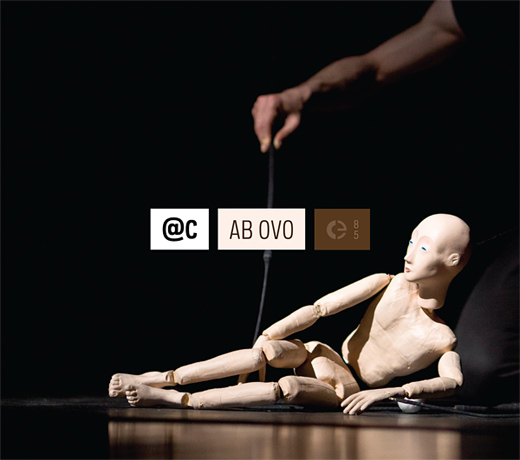
These are not normal puppets, and this is not a normal soundtrack. @c‘s Ab OVO is a recreation of themes for the home listener, a condensation of ideas that were first used to augment the puppet theatre of Porto. Highly original, incredibly dense and occasionally maddening, the new score creates its own intrigue. What exactly were those puppeteers and musicians up to in the São Bento da Vitória Monastery? And do we really want to know the answer?

The nearly 66-minute work is oppressive and claustrophobic from its very first note. ”98″ gurgles and fizzes, pops and bends like the best of Zbeen, an electronic miasma with no immediately recognizable form. The sounds are industrial in nature, although without drums. These clanks and echoes are more suited to the boiler room of a factory than the main floor of a dance hall. The drone provides the constant as disparate noises lurk and lunge. As the album progresses, it continues to retreat to this sonic abyss, defying ready definition or interpretation. In its thickest moments, the album wraps the listener in a blanket of charged ions; but in its thinnest moments, the album leaves the listener cold and shivering. Whenever the drone disappears, the warmth disappears with it.

The album as a whole feels entirely alien, the work of a visiting species. On the surface, the sonics seem at times to be random, but curious patterns are embedded in the mix, including certain sounds – a swoosh, a glissando, a percussive pattern – that are separated by regular intervals. But the longer tracks (especially the 22-minute “100″) tend to meander, disappearing down a rabbit hole. One imagines the puppet becoming the puppeteer as the human holding the strings shrinks in size. Without the visual drama, the context is lost. Fortunately, there’s enough treasure to carry the album through a few desert stretches. ”101″ pairs robotic pings with electronic waves, like Wall-E at the beach. ”103″ adds drums, sampled and looped, doubling back to confront their own echoes. In the end, we’re not sure what is literal and what is metaphorical, an honest reflection of a puppeteer’s craft. (Richard Allen)

via A Closer Listen

“Residual Forms” reviewed by Carnage

Residual Forms
‘Deriva’, termine chiave dell’ultimo lavoro di Monty Adkins uscito per l’etichetta Crònica. Il lavoro viene introdotto come di seguito: ‘una deriva urbana / con sentieri labirintici di beatitudine intossicante / forme residuali / danza della retina / di un sogno troppo stanco’ . Il sentore di una revérie ossidata, un vagare che ha poco a che vedere con la fantasmagoria del flaneur, piuttosto con la psicologia del corridore che si approccia agli scritti di Iain Sinclair e del suo rapporto con Londra, alla visione di William Blake. A differenza di quanto già successo per l’esplorazione di BJ Nilsen e del suo Eye of The Microphone – in particolare la traccia Londonium -, questa traccia di, più o meno, 15 minuti vuole tracciare una propria topografia della città, mescolando ciò che è immaginato e ciò che effettivamente vissuto – come se i sogni non potessero essere vissuti…

via Carnage

“Quark: How Does The Invisible Sound?” launches

Quark-logo
Quark: How Does The Invisible Sound? is a media project born with the specific intent of exploring the possible inter-relationship between sound and the invisible, strictly related to science and physics. It relies on monthly digital releases and a MaxMSP custom software called Cconfin, inspired by elementary particles interactions and a physical phenomenon known as Colour Confinement. The software allows the artists and musicians involved to seek and discover their own vision of the invisible through sound by treating and processing audio files via custom algorithms. Presented as a collection of digital graphic cards and heterogeneous sound art pieces, the research aims to find a deep connection as close as possible to the boundary of knowledge. An attempt at quantum sound in a not-visible yet perceptible world.

The First release in this series, [ Q01 ], includes pieces by Ennio Mazzon, France Jobin, Robert Crouch and Franz Rosati. Further releases will include new works by Nicolas Bernier, @c, and many other artists.

More information at Farmacia 901.

“Ab OVO” reviewed by Musik an Sich

Ab OVO
Das aus Porto stammende Experimental Elektronik Duo @C existiert seit 2000. Sein neues Album AB OVO ist das Resultat einer Soundtrack Produktion die sie für ein experimentelles Puppenspiel der Portugiesischen Künstlergruppe Teatro de Maronetas do Porto kreierten und Aufnahmen.
Wie dieses Soundgebilde ein Puppenstück untermalen kann ist schwer Vorstellbar, aber es wird wohl funktionieren bzw. beeindruckt haben. Denn die elektronischen Klanglandschaften der Beiden sind höchst beeindruckend.
Auch sie spielen wie viele Ihrer Kollegen mit elektronischen Sounds die wie Rückkopplungen, Pfeifen und Zirren, Interferenzen und sonstiges klingen, jedoch verbinden diese sich unter dem Einsatz stets vorhandener dunkel dröhnender Sounds und elektronischer Bassklänge zu einer Art dunkler elektronischer Symphonie und bleiben nicht störendes Geräusch.
Auch beherschen die Beiden das Spiel von Laut und Leise. Mal puckern die Sounds unscheinbar und relaxed dahin, dann brechen Sie in wilde Eskapaden aus. Immer wieder formen sich melodische Passagen, welche die Spannung aufrecht erhalten.
Es tauchen auch melancholische und hochmelodische Fragmente, eingespielt mit traditionellen Instrumenten (Gitarren, Klavier und andere) auf, die wie Oasen in dem mitunter auch verstörenden elektronischen Klangbild wirken.
Somit schlägt das Duo z.B. im über 20 Minuten langem “100“ die Brücke zwischen Ambient Künstlern wie Mimir, Andreas Heemann und anderen zur Klangkunst und elektronischen Experimental Musik.
Gerade dieses Stück lädt eben mit diesen traditionellen Passagen, den klackenden und sehnsuchtsvollen Sounds zun Träumen und Relaxen ein.
Doch Vorsicht: hinter jeder Ecke kann eine Überraschung warten.
Das Klangbild dieser Aufnahme ist ebenso perfekt ausgepegelt. Glasklar, perfekte Stereoeffekte und trotzdem nicht steril.

Ein sehr interessantes Werk welches sich auch für Neueinsteiger in das Feld der experimentellen Musik eignet.
Und eigentlich kann ich mir nach dem inzwischen 8. Oder 9. Hördurchlauf doch sehr gut vorstellen, wie ein Puppenspiel von dieser Musik, die schon allein interessante Bilder im Kopf erzeugt, untermalt wird. Wolfgang Kabsch

via Musik an Sich

“Meubles” reviewed by Onda Rock

Meubles
La proposta del compositore lituano Arturas Bumsteinas è di adottare i più tipici stilemi di folktronica e poptronica e di estenderli in lunghe composizioni da camera anziché rinchiuderli in arrangiamenti per canzoni tradizionali. L’ultimo “Meubles” (a seguire i vari “Stories from Organ Safari”, “Heap Of Language”, “Three Sixteens” etc.) è un esempio lampante di questo metodo.

L’idea è sulla carta ottima, ma all’ascolto priva di cardini che tengano insieme i brani. “Hszcz”, 17 minuti, soundscape aurorale di tocchi quasi raga e accordi dal timbro eterogeneo, suona come un lungo preludio. “Llull”, 20 minuti, ha qualche stridore in più, briciole di percussioni, e un appena accennato feeling jazz che filtra fioco tra i coriandoli sonori. “David”, 13 minuti, aggiunge qualche vapore elettronico e qualche ombra di slide desertica all’usuale micro-giungla rarefatta di cenni sonori.

Una domanda, posta dallo stesso Bumsteinas, da far arrovellare Brian Eno e da far rivoltare nella tomba Erik Satie: “If music could be furniture, which piece of furniture it would be?” E’ vacuo però trovare una risposta in questi poemi neo-ambientali dall’amichevole appeal timbrico, in pericolante bilico tra casuali prove d’orchestra ed elogio del metodo stocastico. Eseguito con il suo Works & Days Ensemble (Ilia Belorukov, Kamil Szuszkiewicz, Lina Lapelyte, Anton Lukoszevieze, Birute Aseviciute, Piotr Bukowski, Bartek Kalinka, Hubert Zemler), registrato tra 2011 e 2013 in vari “portable studios”. Michele Saran

via Onda Rock

“Ab OVO” reviewed by Sonic Seducer

Ab OVO
Seinen Ursprung hat “Ab Ovo” in der musikalischen Begleitung für eine Aufführung des Puppentheaters der portugiesischen Stadt Porto. Nach der Premiere Anfang 2012 machten sich die beiden Urheber, Pedro Tudela und Miguel Carvalhais, daran, den Soundtrack zu erweitern und aus dem Kontext der Aufführung zu lösen. Hieraus entstand “Ab Ovo” — ein Säurebad elektronischer Kompositionen. Es zischelt, schwillt an und entlässt dann doch unerwartet warme Töne aus Gitarre und Akkordeon. “Ab Ovo” wirkt streng und nachdenklich; den Ansatz eines ergebnisoffenen Experiments findet man hier nicht — hoer merkt man dem Album seine Herkunft an. Im Gegenzug bedarf es num keines Puppentheaters mehr, um “Ab Ovo” genießen zu können. Sascha Bertoncin

Futurónica 108

futurónica_108
Episode 108 of Futurónica, a broadcast in Rádio Manobras (91.5 MHz in Porto, 18h30) and Rádio Zero (21h GMT, repeating on Tuesday at 01h) airs tomorrow, February 21st.

The playlist of Futurónica 108 is:

  1. David Vélez, Caudal (2013, Yoi, Unfathomless)
  2. Simon Whetham, In Many Ways, Trapped (2013, Yoi, Unfathomless)

You can follow Rádio Zero’s broadcasts at radiozero.pt/ouvir and Rádio Manobras at radiomanobras.pt.

“Ab OVO” reviewed by Neural

Ab OVO
Miguel Carvalhais & Pedro Tudela began work on this new project edited by Crónica Electronica in May 2012, finishing in July 2013. The composition originates from work by @c for the soundtrack to OVO, a pièce of puppet drama by Oporto, developed between the end of 2011 and the beginning of 2012. Starting from an original idea by Eric de Sarria, OVO is the result of a synergic process: after several rehearsals that involved all the performers (actors, puppet masters, musicians and other creators), the show made its debut on 10th February 2012, at the São Bento da Vitória Monastery. 19 compositions were produced, forming the larger part of the soundtrack for the play. These were eventually morphed into six new tracks, which faithfully retain the feeling of the previous works while enlarging the creative process through re-reading, reinterpretation and re-discovering the same “masks” and atmospheres. The sequences performed by the duo are powerfully expressive and the landscapes shine with a great intensity and formal coherence. The new tracks also provide another opportunity to discuss the creative process and its underpinnings. The use of the Latin phrase Ab OVO – which literally means “from the egg” – is no accident: another good reason to keep attention focused on the contemporaneity of similar musical approaches. Aurelio Cianciotta

via Neural