
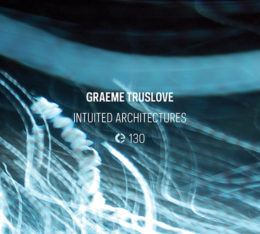
Graeme Truslove es un compositor y performer basado en Glasgow, Escocia. Su producción incluye composiciones sonoras y audiovisuales y música improvisada. Graeme Truslove toca la guitarra y el Laptop en diferentes proyectos en solitario y en colaboración.
Hasta ahora, la producción musical de Graeme Truslove se ha dividido entre mundos muy diferentes: la composición electroacústica con elementos muy fijos y la improvisación libre. Abrimos esta noche “Intuited Architectures†un trabajo en el que todas sus piezas están enfocadas precisamente a la integración de estos conflictivos extremos. A lo largo de su desarrollo, los procesos creativos empleados pasaron de lo escultórico a lo performativo -desde la creación de mosaicos sónicos, construidos a partir de la cuidadosa colocación de impulsos sónicos individuales, hasta la grabación y manipulación de interpretaciones de instrumentos digitales auto-creados.
Los montajes se convirtieron en actuaciones, que a su vez se convirtieron en montajes de nuevo. El centro de todas las composiciones es la preocupación por las escalas de tiempo musicales, que van desde la fabricación de timbres sintéticos, a través de estos enfoques performativos-algorÃtmicos, hasta su integración en estrategias temporales a mayor escala.
“Under my Skin†reviewed by Gonzo Circus
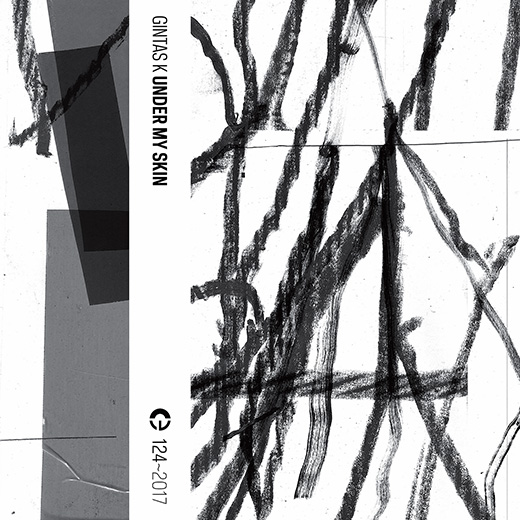
Een kleine verrassing bij Crónica is de nieuwe uitgave van de Litouwse componist Gintas K. Hij is geen onbekende – ook niet op dit Portugese label – maar meneer K komt hier met zijn eerste uitgave op cassette. De reden om voor die geluidsdrager te kiezen blijft onduidelijk. Belangrijker: ook inhoudelijk is ‘Under My Skin’ een aardige verrassing. Het album bestaat uit acht composities waarbij Gintas K binnen een afgebakend sonisch terrein blijft; meer dan op zijn eerdere werk, naar mijn idee. Zoals we dat van Gintas K kennen bouwt hij zijn stukken op uit overwegend kleine elektronische klankjes – ‘Particles’, zoals een van de nummers heet, is een goede aanduiding. Het betreft op dit album veelal hoog tinkelende, rinkelende, klingelende geluides. Die veranderen de ene keer richting de klanken van morseseinen en computerspelletjes, een andere keer richting een druppelend en sijpelend geluid. In nummers als ‘Atmosphere’ en ‘Escape’ klinkt daar onder het ruisende geluid van een beek. Een elektronische dan, want Gintas K verzekert de luisteraar dat alle klanken digitaal zijn opgewekt. Daar valt dan waarschijnlijk ook een digitaal muziekbestand onder: vaag op de achtergrond klinkt in het titelnummer Frank Sinatra’s stem, ‘I’ve got you’, zingend. Alleen de korte afluiter wijkt qua klankkleur en sfeer wat af, als een contrapunt. Verder is het album met acht afzonderlijke nummers een duidelijke eenheid. Dat pakt heel goed uit. Robert Muis
via Gonzo Circus
Futurónica 198

Episode 198 of Futurónica, a broadcast in Rádio Manobras (91.5 MHz in Porto, 18h30) and Rádio Zero (21h GMT, repeating on Tuesday at 01h) airs tomorrow, August 4th.
The playlist of Futurónica 198 is:
- Timothy Brown & The Choir of Clare College, Cambridge, Purcell: Funeral Music for Queen Mary: Funeral March (1694)
- Michel Chion, Requiem Æternam “Donnez-Leur Le Repos Éternel†(1973/1993, Requiem, Empreintes DIGITALes)
- Funeral Dance (1975, Kenya & Tanzania Witchcraft & Ritual Music, Nonesuch)
- Nurse With Wound, Beware The African Mosquito (Ring Your Doorbell, Put You To Sleep) (2002, Man With the Woman Face, United Dairies)
- Timothy Brown & The Choir of Clare College, Cambridge, Purcell: Funeral Music for Queen Mary: In the midst of life (1694)
- Timothy Brown & The Choir of Clare College, Cambridge, Purcell: Funeral Music for Queen Mary: Canzona (1694)
- Michel Chion, Domine Deus “Nous Vous Offrons Victimes Et Prières†(1973/1993, Requiem, Empreintes DIGITALes)
- Michel Chion, Sanctus “Trois Font Saint Le Seigneur†(1973/1993, Requiem, Empreintes DIGITALes)
- Nurse With Wound, Funeral Music for Perez Prado (1995, Yagga Blues, United Dairies)
- Michel Chion, Lux Æterna “L’Éternelle Lumière†(1973/1993, Requiem, Empreintes DIGITALes)
- Michel Chion, Libera Me “Libérez-Moi†(1973/1993, Requiem, Empreintes DIGITALes)
- Timothy Brown & The Choir of Clare College, Cambridge, Purcell: Funeral Music for Queen Mary: Funeral March 2 (1694)
- Michel Chion, Évangile “Il Va Ressusciter†(Jean 11, 21-27)(1973/1993, Requiem, Empreintes DIGITALes)
You can follow Rádio Zero’s broadcasts at radiozero.pt/ouvir and Rádio Manobras at radiomanobras.pt.
Soon in Crónica: Monty Adkins’s “Shadows and Reflectionsâ€
“Nowhere: Exercises in Modular Synthesis and Field Recording†reviewed by The Sound Projector
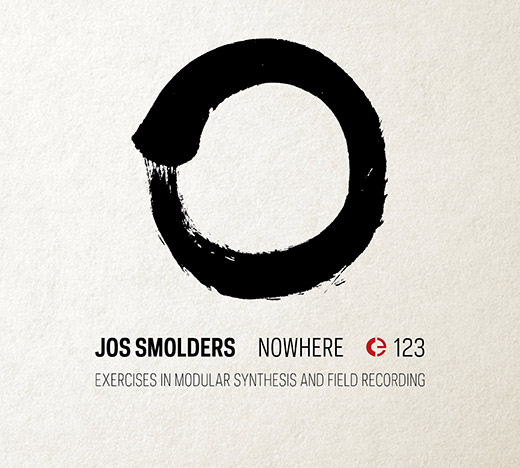
We haven’t heard a great deal from Jos Smolders, the Dutch musician who began his career studying architecture, outside of his contributions to a compilation of sorts called International Musique Concrète Assembly where he appeared with fellow Netherlandish droner Frans de Waard. But that was in 2007. It would have been nice to have heard some of his 1980s releases on Midas, or his 1990s records for Korm Plastics, but I’m missing these parts in my education. More recently, he’s been conducting a series of experiments called Modular Works, some of which were released online in 2014 and 2015. I’m assuming today’s record, called simply Nowhere (CRÓNICA 123-2017), is more or less in that same area, basing my guess on the subtitle “Exercises In Modular Synthesis and Field Recordingâ€, plus the record’s inner gatefold which shows foreboding images of modular synths with knobs, patches and cables a-plenty, a sight which presents a challenging barrier to the ignorant novice.
Smolders used to be a self-confessed control freak in terms of editing his work. For Nowhere, he’s been trying to cultivate a more spontaneous technique for the production of electronic music. He’s basing it on Zen; he tells the story of how a traditional Zen calligrapher works, describing the process as 99% preparation. The artist must spend a long time getting into a deep state of concentration, and then create the artwork in a matter of seconds. I have heard this applied to painting and poetry as well as calligraphy. I’ve also heard it applied to project management, but that’s a dull topic which has no place here today. With Smolders, this means that he thinks long and hard about which patch to connect and how to set the parameters, before he even starts the session. When the sound / music is underway, he goes with the flow and only “interferes when necessaryâ€, a phrase which may refer to purely technical considerations. When the work is completed, overdubs and editing are not eliminated altogether, but he forces himself to forego his usual extensive re-working method.
I’m all in favour of artists lifting themselves out of the rut of familiarity and using whatever means are necessary to get their brain to that point where they short-circuit their own comfort zone. Taking all the above into account, you might expect Nowhere to present a wild and chaotic spread of crazy electric noise, but in fact it’s a strong example of restraint and understatement. There’s much to enjoy and appreciate in these quiet tones, crackles, percussive pops and ambiguous whirrs, and the music sometimes develops into pleasing nocturnal drone-scapes, as it does on the fourth track which is a tribute to Maya Deren (who made visionary sleep-walking dreamy films with the help of her husband). Some of the pieces are quite lengthy, and they take a long time before they get to the point of their long and drawn-out statements, but the journey is more interesting than the destination and I can see the value of working out all the stopping-points in longhand. For the most part, Jos Smolders succeeds in transcending the workings of his machines, creating something more than mere process music. From 21st November 2016. Ed Pinsent
“Juryo: Durée de la vie de l’ainsi-venu†reviewed by Aural Aggravation
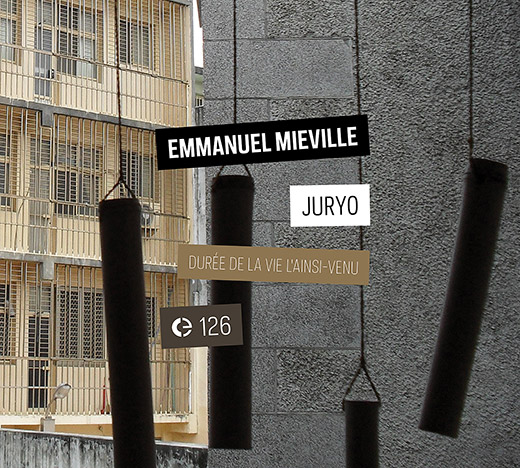
The title of the latest album by the super-prolific experimental composer and student of film and musique concrete, Emmanuel Mieville, comes from the Japanese translation of the Sanskrit word and alludes to a chapter of the Lotus Sutra, a renowned text from MÄhÄyana Buddhism. Apparently. It’s hardly my field of expertise. And so the inevitable question arises: what’s my point of entry?
Juryo is by no means an accessible album and its four longform tracks, which span between nine and eighteen minutes don’t readily lend themselves to lengthy debates about Buddhism and the path to enlightenment. Similarly, that the album consists of four compositions shows no obvious correlation with the twenty-eight chapters of the Lotus Sutra. As such, it’s fair to surmise that the allusion which connects the title to the contents is in largely an oblique one, beyond the fact that the album features field recordings captured in Asia.
This is swampy, abstract, murky noise. On the surface, it’s a formless conglomeration of noise, grating, grinding scrapes and bumps. Woozy rippling bubbles flit and floom over tidal waves of surging extranea, which may or may not be the swash of actual water rippling over rocks: it could equally be an aural illusion, or an intentional simulacrum.
Top-end whistles sustain for an eternity and aggravate not only the aural receptors but the mind on ‘Nyorai’, although in the mix are recordings of Tibetan nuns and FM radio from Hong Kong. These manifests as chants and clattering chimes and finger cymbals which emerge around the midpoint of the seventeen-minute sonic journey. According to the liner notes, ‘Murasaki’ means ‘purple’ in Japanese, but the spinning, swirling sonic discombobulations which eddy and swirl present a kaleidoscopic vista.
In the sleeve notes, Mieville explains that ‘Taisi Funeral’ (the fourth and final track) is a ‘recording of Buddhist chanting for a deceased person recorded in a small village in Taiwan, mingled with my own synthetic sounds. Tanit Astarté is a quotation from Antonin Artaud’s book Héliogabale and refers to the moon goddess, as described in Phoenician myths’. It’s certainly the most overtly musical and rhythmic of the four compositions, but as a rising surge of amorphous sound rises to wash away the voices and the rhythm peters out, it transforms to an altogether more ambient soundscape. Morever, while still linking back to the overarching theme of the Lotus Sutra, we can see that Meiville’s sphere of reference is considerably broader than may first appear.
Juryo is subtly complex and had both range and depth. It doesn’t readily conform to any one genre, but to lazily slot it into the broad space occupied by ‘experimental / avant-garde’ is to fail to recognise the spectrum of stylistic elements it incorporates. Christopher Nosnibor
Futurónica 197
Episode 197 of Futurónica, a broadcast in Rádio Manobras (91.5 MHz in Porto, 18h30) and Rádio Zero (21h GMT, repeating on Tuesday at 01h) airs tomorrow, July 21st.
The playlist of Futurónica 197 is:
- Farmers Manual, Fsck (1997, Tray)
You can follow Rádio Zero’s broadcasts at radiozero.pt/ouvir and Rádio Manobras at radiomanobras.pt.
“Intuited Architectures†reviewed by Blow Up
Nel greco classico ci sono due parole per indicare il tempo. “Cronos†indica il tempo che scorre uguale e può essere misurato (per cui parliamo di “cronologia†o “cronometroâ€), “kairos†indica invece un tempo speciale, una occasione particolare (la prima volta che sono stato a un concerto, ad esempio, o il giorno del matrimonio) o una durate particolare (se sto con la mia fidanzata il tempo corre mentre se mancano due minuti al novantesimo e la Juva sta vincendo 1-0 ma è sotto assedio, per il nostro direttore questi 120 secondi sembrano ore). Une etichetta che abbia come nome “Crónica†ha di sicuro a che fare con il tempo. Nell’ultimo paio d’anni, mi sono ritrovato più volte ad ascoltare e recensire dischi e cassette dell’etichetta portoghese e devo dire che, nonostante la varietà di musicisti coinvolti, il tenore musicale è sorprendentemente omogeneo, sia come atmosfere che come qualità . Spesso, inoltre, altro tratto comune, i musicisti operano in ambito accademico, attraverso manifestazioni, concorsi e festival che promuovono nuove produzioni. Da questo punto di vista, il lavoro del musicista scozzese è una buona occaione per ffare il punto della situazione. Truslove è impegnato fell’Università di Glasgow oltre che in varie manifestazioni internazionali. “Intuited Architectures†reccoglie composizioni già presentate in contesti diversi. Alcune richiamamno le sonorità di @c, che non a caso sono i boss della label (“Suite II, Convergenceâ€, “Suite II, Divergent Dialogues†e na finale “Strataâ€). In altre, la deriva elettronica si combina a cinguetti (“Elementsâ€) e gracidare misto a um basso pulsante (“Concrètisations Xâ€). Lo spettro sonoro à comunque caratterizzato ora da cigoli e brussi, ora da un tappeto sonico che sembra transportato da un vento elettronico. Si parte, quindi, con il rombo ventodo di “Suite II, Portals†attraversato di incursioni elettroacustiche, tutto un susseguirsi di vuoto e pieni un po’ fracassone. Segue “Suite II, Convergence†più lirica, sospesa ed emozionale, meno variegata ma anche meno monotona, con i suoi riflessi cangianti come onde marine su una spiaggia urbana. “Suite II, Divergent Dialogues†mette in fila sghemba, come farebbe un bambino, una serie di suoni come ciottoli in un giardino zen. Dal vuoto di questo pezzo si passa al pieno di “Elementsâ€, un muro di rasoiate elettroacustiche che lentamente si rischiara lasciando spazio a cinguetti digitali che si dilenguano prendendo il volo. “Concrètisations X†sembra un gracidade distorto in ruggiti e singulti sincopati che vanno ad incontrare altre sonorità come paesaggi eterogenei da esplorare, guardinghi e curiosi, in cui il cammino si fa attenzione oltre che tensione. Concludono in venti minuti di “Strata†che partono e ripartono da suggestioni di “Ab OVO†degli @c, in cui grumi sonori si sciolgono e distendono per poi rotolare di nouvo, pensosi, su se stessi. Il titolo del disco parla di “architetture intuiteâ€. Potrebbero essere un corrispettivo architettonico del sculture di Calder, delle sculture “sonoreâ€, che nello spazio vibrano e, giocando, il movimento dispiegato nel tempo crea dei suoni. La composizione à così una organizzazione dinamica, vibratile, dello spazio vibrano e, giocando, il movimento dispiegato nel tempo crea dei suoni. La composizione è così una organizzazione dinamica, vibratile, dello spazio nel tempo, una “scultura di tempo†o — forse meglio ancora — riprendendo l’immagine architettonica, una urbanistica kairologica, in cui ogni momento si dischiude a una sorpresa, nel gioco tra ordito e trama. In realtà più che di architetture potremmo parlare di paesaggi, in modo particolare quelli urbani segnati da rovine e luoghi dismessi. Qualcosa che porta impressa l’usura del tempo, da cui à inciso e screpolato, ma ancora solido, in una alternanza di spazi vuoti e pieni, pareti intere e parete crollate. Finestre diroccate, scorci, macerie: ecco l’immaginario poetico che la Crónica sta liricamente computando, con pazienza e metodo. (8) Girolamo Dal Maso
“Stikhiya†reviewed by Blow Up
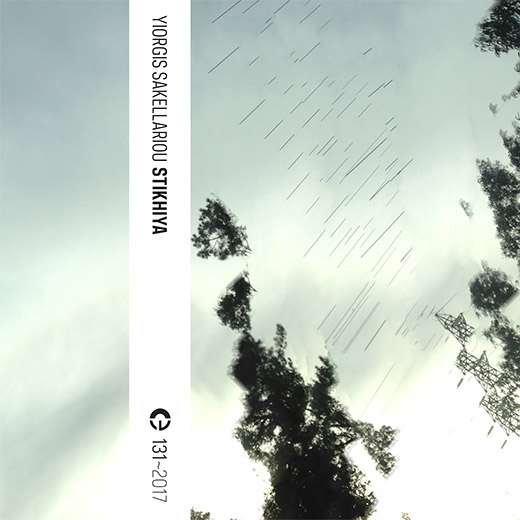
Il titolo è uma parola russa che indica un contatto e una immersione immediata, quase magica, con la natura, senza mediazioni intellettualistiche, usata dai poeti nell’800 (Tolstoj e Blok i riferimenti letterari). Ecco allora un’immersione panica che Sakellariou, comositore elettroacustico greco, appronta con una sensibilitè da entusiasta (nel senso mistico greco). Nonostante sia musica urbvana decadente (proprio per questo), sarebbe una colonna sonora ideale per um meriggio estivo ai templi di Paestum, ma anche Tarkovskij non avrebbe disprezzato. (7/8) Girolamo Dal Maso
“Intuited Architectures†reviewed by Nitestylez
Put on the circuit in early May, 2k17 via the Portuguese Cronica-imprint is “Intuited Architectures”, the new longplay effort by Glasgow-based and multi-awarded composer Graeme Truslove who on this piece deals with the possibilities of real time interaction with micro-level production techniques. Opening with “Suite II, Portals” Graeme Truslove opens up a world of a weirdly shifting, moving palette of highly digital quality which cause a feel of dizzyness and relative unease when consumed via headphones, “Suite II, Convergence” comes in on a softer, yet very experimental Ambient-related tip, combining simmering tones with sparse, improvised guitars that provide a slightly Post-PostRock related feel whilst “Suite II, Divergent Dialogues” amalgamates both hyperabstract Electronica and repetetive Electroacoustic Improvisation to a highly scientific sounding effect before turning into a radio transmission from a future beyond our imagination. In “Elements” we see the artist explore electronic buzzes which evoke far away memories of Muslimgauze’s work on the former Audio.NL imprint, that is before they’re building up into a screaming wall of sound and turn into tweeting digital birds later onwards. Furthermore “Concretisations X” weigh in quite a lot of morphed scraping sounds and what seems to be altered Field Recordings of micro-acoustic events accompanied by additional guitar manipulation over the curse of the tunes approx. 15 minutes runtime and the final, 20 minutes spanning cut named “Strata” leads us through the full spectrum of Graeme Truslove’s work from full-on guitar improv to droning Ambient sequences and beyond. Abstract, yet interesting for those digging the far out spheres of electronic music.
via Nitestylez