New release: Durán Vázquez‘s “Hiku Komuro, Hikikomori”


This album was created from January and December 2016 in Vigo, Galicia, using digital media in a Windows laptop, and hacked VST plug-ins from the late 1990s. Samples from old videogames were used as source materials, recorded with the freeware emulator Nestopia (v1.40) by Martin Freij, FM synthesis with Sound Forge (v6.0) and other synthesized sounds created with the modular synthesis freeware application SynFactory (v1.16rc1) by Peter Wendrich and Ruud de Jong.

Durán Vázquez was born in Vigo on 1979. He started recording his work at the beginning of 1998, using self-taught methods and without prior musical formation. His work is mainly focused on audio creation, radio-art and live performances. Occasionally he composes tracks for cinema, sound-art contests, audio collaborations and his own audiovisual pieces and covers for demos. He produced the fortnightly radio program Radio Mil Colinas for Rádio Zero and Radio FilispiM, and later the Spanish version for Radio Rakumin.

He played at festivals like Sónar (Barcelona); LEM (Barcelona); Experimentaclub (Madrid); MEM (Bilbao); In Sonora (Madrid); RadiaLx (Lisboa); ZarataFest (Pontevedra); and sound-art events like ArtEx Sonora showcase (A Coruña). He also performed at LIMb0 (Buenos Aires); Ciclo Vibra; Natal dos Experimentais (Porto); Vigotransforma (Vigo), and venues like Contemporary Art Museum (Vigo); Maus Hábitos (Porto); Fine Arts Faculty (Pontevedra); NASA (Santiago de Compostela); Spanish Cultural Centre (Montevideo); Galery DF (Santiago de Compostela); Club Le Larraskito (Bilbao); Cervantes Institute (Berlin); Alg-a Lab (Vigo); Goethe-Institut (Lisboa); Casa Atochas (A Coruña); Vigosónico (Vigo); Teatro Ensalle (Vigo).

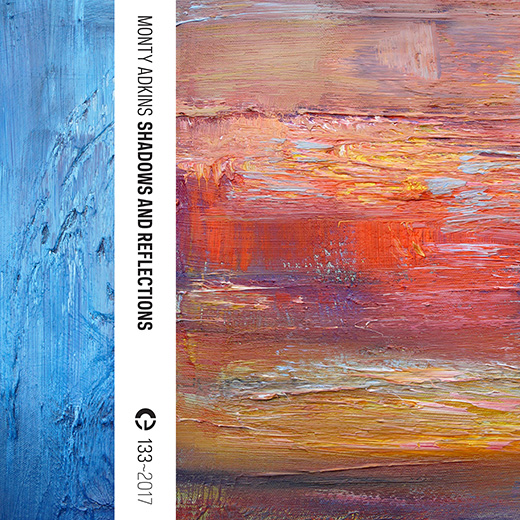
Mastered by M. Carvalhais. Cover art by Lia.
Durán Vázquez would like to thank Crónica for the constant support, and to friends Emiliano, Dani, and Alvar for supporting his ideas, even the crazier ones!

Hiku Komuro, Hikikomori is available as a limited-release tape and as a digital download.

“The Waste Land” reviewed by A Closer Listen


As we wrap up our five-day field trip, we travel into unfamiliar territories ~ mysterious lands marked by strange and unsettling sounds. Your guides for these journeys: Luci Forcucci, Yannick Dauby & Hitoshi Kojo and smallhaus.

Luca Forcucci was given an unusual challenge for his journey into The Waste Land ~ to compose a film score based on an unidentified six minute field recording. He rose to the challenge by splicing, repeating, expanding and layering his source material until it became wholly his own. This title piece is now truly its own entity. But the album’s B side is even more stunning. “My Extra Personal Space” is a complex soundscape that travels back and forth between the streets of Paris and the Normandy coast, allowing for bizarre juxtapositions ~ helicopters and church bells, kicked bottles against streaming water. And then there are the birds. Usually when one encounters birds in field recordings, one experiences them as a joy ~ not so here. These birds seem to have flown directly from a Hitchcock movie. Throughout the mix, they emerge and retreat, watching from the trees and planning their next move. A dog is not enough to frighten them away. For one brief moment, the lapping of waves implies safety, but then the birds return en masse. In this wasteland, no one is safe. Richard Allen

via A Closer Listen

“Digital Junkies in Strange Times” reviewed by Sherwood


Mi avvicino con passo guardingo, fingo di non conoscere l’essere impalpabile che governa il mondo nel quale mi trovo. So per certo che al minimo cenno lui si volterà, cercherà i miei ricettori sensoriali e trovati, inizierà la danza circolare che pian piano avvolgerà tutte le mie difese trascinandomi tanto così, vicino alla sorgente della sua magia.

Succede sempre, immancabilmente da quando ho iniziato ad ascoltare i suoi lavori, nel 2009. Brock Van Wey in arte BVDUB espande nuovamente l’eco irresistibile della sue visioni, la sostanza metafisica che le compone e lo fa attraverso una delle più prestigiose labels in circolazione, l’italiana Glacial Movements che produce l’ultima possente produzione del sound artist americano: Epilogues For The End Of The Sky.

Il suo tratto, oramai noto, ha la capacità di non stancare. Al pari di qualche misteriosa soluzione chimica, una volta assunta richiede di essere riproposta all’ascolto per un numero svariato di volte. Ad ogni assunzione i particolari si sommano ai particolari, la base ambient allarga all’infinito le sue spire accogliendo al suo interno esplosioni musicali che si dilatano e abbracciano e si mescolano in un unico codice d’ascolto che si erge maestoso al limite dello spleen e dello splendore tardo romantico. Iterazione infinita, voci in loop, echi, droni e uso massiccio di melodia, questa la riserva immaginaria che serve per raggiungere l’angolo remoto dove termina il cielo.

La traversata continua, abbandonati i cieli infiammati dal dolce languore elettronico, mi ritrovo nel vasto territorio abitato dai suoni taglienti e dolorosi di Maurizio Bianchi che occupa una side delle due che compongono questo split EP prodotto assieme ad Abul Mogard. Due mondi decisamente lontani che hanno in comune un luogo d’origine: la fabbrica. Da sempre referente sonico per MB e la sua filosofia industriale, reale luogo di vita lavorativa per Abul Mogard, abbandonato solo dopo la raggiunta pensione.

Come sempre il suono di MB ci penetra da parte a parte, non permette tregua, si irradia lucido e diretto usando i canoni della ripetitività industriale. Tutto attorno il caos di un mondo in delirio che gira vorticoso attorno al ritmo della battuta imposta dalle macchine. Danza folle, trasfigurata belle èpoque meccanica, trionfo del vuoto dell’anima schiacciata dagli ingranaggi di un’ansia che appare come Hydra, creatura che si rigenera, ferita dopo ferita

Tutto si placa, all’improvviso. Una dolce, gentile litania sale lenta iniziando ad avvolgermi. Abul Mogard è qui, vicino a me. Lo sento. Ascolto le amate antiche onde soniche del suo synth modulare, la soffusa melodia del Farfisa, la grazia sconfinata di un suono che non riesco ad abbandonare. Il suo gesto artistico è colmo di antica gentilezza e celata poesia, la sua musica colloquia con te, ti permette di aprire pagine di lettura intima. Con lui a fianco ti commuovi pensando ad un passato per sempre fermo nell’attimo del ricordo.

Durante questo breve viaggio ho incontrato varie tipologie di sound artists ma quello che mi attende nell’angolo più buio e metropolitano del paesaggio sonoro che sto attraversando, è forse il più misterioso e complicato da capire. Si chiama Ran Slavin, principalmente si occupa di video installazioni, ma il suono ha sempre accompagnato il suo respiro.

Digital Junkies In Strange Times è il suo ultimo lavoro, l’ennesimo per la portoghese Crònica che lo distribuisce in free download via Bandcamp. Un titolo che meglio non poteva rappresentare l’attualità di un popolo curvo sul proprio pc, totalmente assuefatto al suono che quei circuiti producono, musica che veste perfettamente la taglia di questi strani tempi. Quattro traccie che non rispondono a nessun canone di genere, sbandano volutamente tra l’ambient, il jazz, il soul, la ricerca e l’improvvisazione. Un melting pot metropolitano nel quale stranamente ci si riconosce e ‘piacevolmente’ ci si immerge, convinti di far parte di un mondo abitato da junkies digitali, con i motori di ricerca sempre spinti al massimo della potenza. Mirco Salvadori

via Sherwood

“Under my Skin” reviewed by Data.Wave


Lithuanian musician Gintas K released his new work on Crónica label called Under My Skin. This is a cassette release in limited edition of 100 copies. I think that with Under My Skin album the author found his original sound, which he was reaching for a long time.

I’ve listened to a number of his records, but only Under My Skin release was truly impressive to the depths of my soul! Sophisticated progressive electronic, here we have a very fine surgical work with sound – just play Minml and Atmosphere tracks.

To my mind, all the compositions of the album are strongly connected with the circulation of water, blood, liquids.
I’m not aware where these processes occur – inside the body, in the natural world, in the universe, or maybe it’s
the sounds of the microcosm.

The title track Under my Skin is a true example of perfection alchemy of sound. Listening to this music, I definitely had a feeling that this whole album is studying all kinds of manifestations of the water element. A huge number of sounds immerse our consciousness in a special world, making us understand that everything consists of important elements that shape our entire life. In addition,
I was surprised to learn that all the tracks created only with the help of digital synthesis – I would have never guessed.

via Data.Wave

“The Waste Land” reviewed by Exclaim!


There are times when the creative process is enriched by limitations. The challenge to produce meaningful work within the confines of this or that restriction can be inspiring; under certain circumstances, it can even define the work.

A fine example of this is Luca Forcucci’s The Waste Land, in which the internationally recognized artist and researcher takes a six-minute field recording from a documentary film he’s never seen and turns it into a 37-minute soundtrack. Forcucci’s WordPress site attributes the project to his interest in “perception, subjectivity and consciousness,” and lists the great avant-garde composer and musician Pauline Oliveros as a key inspiration.

Fans of her work will feel right at home in Forcucci’s new soundscape. Beautifully recorded (and mastered by Taylor Deupree), these three pieces reflect a mature, refined artistic voice that’s been recording since 2000.

The cassette’s title track launches into a white noise/heavy industry combo right from the start, followed by a delicious electronic hum. There’s no aggression here, though; the sounds are passive, sort of half-lazy. It’s just another day at the office, even if you can’t fathom what kind of hellish workplace this piece invites you to inhabit. “Voices from the Coal Mine” has a similar feel, as banging metal overpowers non-descript PA announcements, making for the album’s harshest work. Counter-intuitively, “My Extra Personal Space” takes the listener outside, and treats us to church bells, birdsong and running water. It’s a lovely contrast to the oppressiveness of the previous two tracks.

If there’s a complaint to be lodged, it’s that the work lacks an obvious musicality. But then, that’s hardly the point. The Waste Land is a success, despite — or perhaps as a result of — how little the artist had to begin with. Kevin Press

via Exclaim

Futurónica 190


Episode 190 of Futurónica, a broadcast in Rádio Manobras (91.5 MHz in Porto, 18h30) and Rádio Zero (21h GMT, repeating on Tuesday at 01h) airs tomorrow, April 14th.

The playlist of Futurónica 190 is:

  1. Durán Vázquez, Solus Ipse (2017, Hiku Komuro, Hikikomori, Crónica)
  2. Durán Vázquez, Solus Ipse (2017, Hiku Komuro, Hikikomori, Crónica)
  3. Durán Vázquez, Solus Ipse (2017, Hiku Komuro, Hikikomori, Crónica)
  4. Durán Vázquez, Koroshiya (2017, Hiku Komuro, Hikikomori, Crónica)
  5. Durán Vázquez, Solus Ipse (2017, Hiku Komuro, Hikikomori, Crónica)
  6. Durán Vázquez, Segunda Natureza (trebón, paxaros, electrostática) (2017, Hiku Komuro, Hikikomori, Crónica)
  7. Durán Vázquez, Earthquake Synthesizer Remix (2010, Audible Landscapes, Crónica)

You can follow Rádio Zero’s broadcasts at radiozero.pt/ouvir and Rádio Manobras at radiomanobras.pt.

“The Waste Land” reviewed by The Swatch Art Peace Hotel


Former artist-in-residence at the Swatch Art Peace Hotel has just released his new album “The Waste Land”.
The starting point for The Waste Land was an invitation to compose a twenty minutes soundtrack for a documentary movie. Accordingly, Luca Forcucci received six minutes of a field recording, without any mention of its own nature, or any information about the documentary. Forcucci didn’t ask anything about it, instead he listened carefully to the sonic material until images started to appear. The more he listened the more clear images emerged from his own mental movie.

The resonances emerge from the multiple projections of sounds into the power plant of an abandoned coal mine within a process that progressively recombines sound.

Voices from the Coal Mine is freely inspired by Alvin Lucier’s I Am Sitting in a Room. Real spaces act as resonant filters and lead to virtual spaces made of resonances. Metaphorically, it encapsulates the memory of the voices and activity of the former workers from the coal mine.

My Extra Personal Space explores convergences of timbres from antagonist soundscapes of nature from the Normandy coast and urban contexts from Paris. Soundwalking is a component and tool to investigate, listen to and compose with the environment. This piece pays a tribute to urban drift of the Baudelairean flâneur — the casual wanderer, reporter and observer in the city.