

Next Monday, June 20, Ephraim Wegner and @c (Pedro Tudela and Miguel Carvalhais) will perform in Freiburg, at E-Werk. This concert is a part of the Freispiel series of performances.
Starts at 8:30PM, more info at ewerk-freiburg
Next Monday, June 20, Ephraim Wegner and @c (Pedro Tudela and Miguel Carvalhais) will perform in Freiburg, at E-Werk. This concert is a part of the Freispiel series of performances.
Starts at 8:30PM, more info at ewerk-freiburg
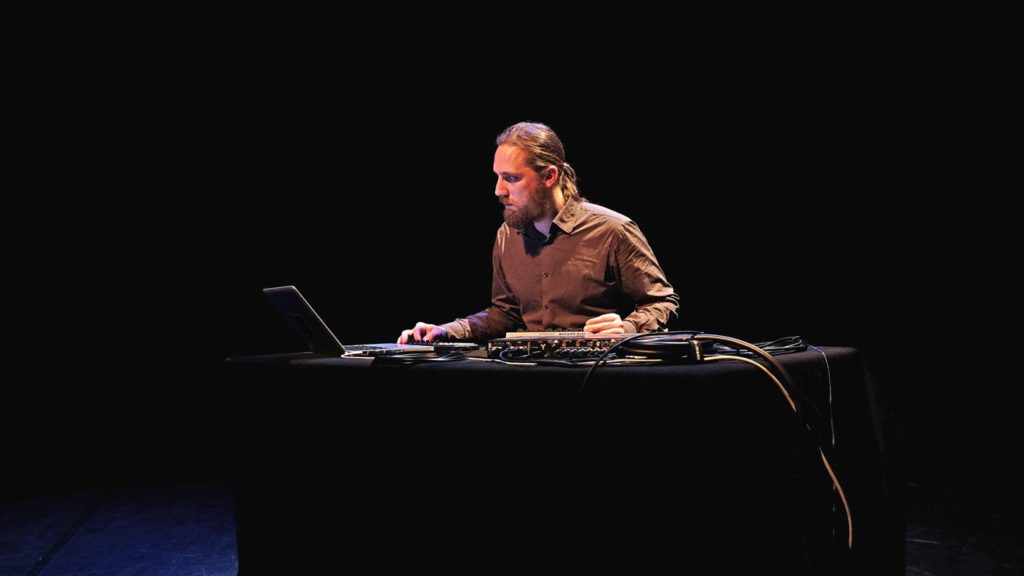
Next Sunday, June 19, Ephraim Wegner and @c (Pedro Tudela and Miguel Carvalhais) will perform in Basel, at the Schwarzwaldallee gallery. This concert is a part of the show In a Good Shape, with works of Martin Chramosta, Sonia Kacem, Brigham Baker and David Hanes, curated by Sébastien Peter. The event is organized in collaboration with Klappfon and Michael Zaugg.
Starts at 7PM, more info at www.schwarzwaldallee.ch

Clicks’n’cuts, Glitch – da war doch was. Wem die bittersüßen Melodien auf dem elften Studioalbum von Ran Slavin etwas aus der Zeit gefallen erscheinen, liegt damit nicht ganz verkehrt. Das Material, dass Sklavin hier abliefert, was ursprünglich für eine Veröffentlichung auf Mille Plateaux vorgesehen – die bekanntermaßen vor vielen, vielen Jahren recht abrupt ihre Pforten schließen mussten. Dank gebührt somit auch dem Label Crónica, dafür, dass das Album doch noch das Licht der Welt erblicken konnte. Sklavin entführt hier in die Postkartenvariante einer Welt voller Sonne und Verbrechen – Miami Vice lässt grüßen -, gefiltert durch den Blick einer DSP-Junkies mit Hang zum Lofi-esken. Der Sound hakt und stolpert, während zwielichtige Gestalten in der Hotel-Lobby auf die Geldübergabe warten und dann mit dem nächsten Flieger nach Fernost verschwinden. Doch die Angst vorm Erwischtwerden weicht hier der Freude an kreativen Software-Fehlfunktionen. Sascha Bertoncin
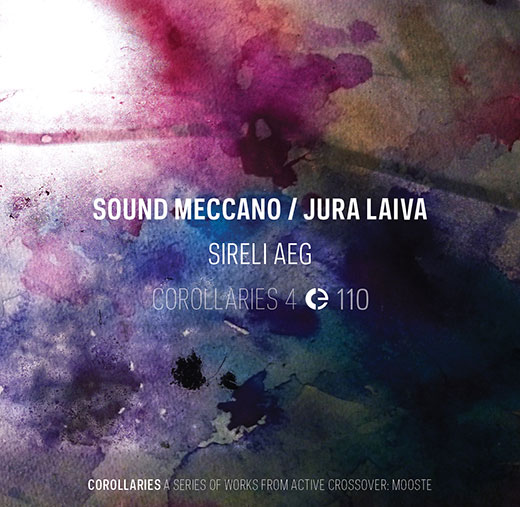
Continuing the excellent Corollaries series, compiling works resulting from the Active Crossover: Mooste residency (Estonia) curated by Simon Whetham, part IV introduces Sound Meccano (Latvia-based Rostislav Rekuta-Dzhordzhevich) collaborating with Jura Laiva (Jurii Santalov, also from Latvia).
All of the Corollaries recordings rely heavily on the environmental recordings of the location, which are often stunningly realistic, and Sireli Aig is no exception.
Adding Jura Laiva‘s guitar drones and glitchesand Mirva Tarvainen‘s double bass and occasional vocals to Sound Meccano‘s field recordings, electronics and sound processing brings a whole new dimension, resulting in impressive soundscapes that are ‘environmental’ as well as ‘musical’.
A fresh taste of the northern hemisphere, available as a Name Your Price download. Peter van Cooten
via Ambient Blog

Artistes multidisciplinaires, Miguel Carvalhais et Pedro Tudela aka @c, sont des quasi vétérans de la scène lusitanienne. Avec ce nouvel album, Three-Body Problem, le seizième de leur discographie, tiré d’une création pour un spectacle de marionnettes, Agapornis, le duo nous plonge dans un monde étrange fait de murmures et de bruitages semblant surgir d’un monde envouté.
Bien que composé pour un spectacle, @c a complètement revisité et minutieusement réengistré Three-Body Problem, pour lui offrir une nouvelle dimension sur disque. Travaillant sur les ébauches des enregistrements passés, réutilisant les sonorités des instrumentistes invités : Angelica V. Salvi, Susana Santos Silva, João Pais Filipe, Ricardo Jacinto, et les voix d’Edgard Fernandes & Rui Queiroz de Matos, Miguel Carvalhais et Pedro Tudela ont composé une oeuvre à part entière, qui a su se détacher de ses origines pour en trouver de nouvelles.
Leur électro-acoustique épurée s’engouffre avec finesse entre les interstices du field recording, tout en créant des espaces vagabonds aux mouvements légers comme le souffle du vent sur les roseaux. @c traque les cliquetis et les transforme en faune et flore électronique aux effluves poético-cinématographiques subjuguantes. Un album de post-ambient déviant et féérique, aux soubresauts iconoclastes et aux retombées voyageuses. Fatalement attractif. Roland Torres

Episode 168 of Futurónica, a broadcast in Rádio Manobras (91.5 MHz in Porto, 18h30) and Rádio Zero (21h GMT, repeating on Tuesday at 01h) airs tomorrow, June 10th.
The playlist of Futurónica 168 is:
You can follow Rádio Zero’s broadcasts at radiozero.pt/ouvir and Rádio Manobras at radiomanobras.pt.
Quello musicale è solamente un aspetto dell’attività creativa di Ran Slavin, artista multimediale israeliano con base a Tel Aviv. Le sue installazioni sono esattamente come potreste immaginarle ascoltando i suoi dischi: luci al neon e paesaggi distopici. Slavin, in ogni caso, nasce proprio come musicista: voce e chitarra del gruppo post-punk israeliano Shalosh Hait e prima ancora parte dei Cholera.
Il tema principale del disco è quello della finzione, dei paesaggi da cartolina, di tutto ciò che è oleografico, chiaramente inautentico. L’impressione è che Slavin voglia mettere in scena la tensione, irrisolta, fra tradizione (di qui l’utilizzo di materiale variamente folklorico in forma di sample) e turbocapitalismo: nonostante lui provenga da un’area dove arte e rivendicazione politica spesso e comprensibilmente vanno a braccetto, il piano del discorso non è politico per sua stessa ammissione, bensì socioculturale, nel senso di una rappresentazione di contesti di normale alienazione derivati dai modelli di vita diffusi e dallo sviluppo urbanistico. Va detto per inciso che tutto ciò una valenza politica ce l’avrebbe comunque, anche senza tirare in ballo il conflitto israelo-palestinese.
Le ambientazioni sonore create dall’artista israeliano sono permeate da un’aura vagamente noir, e sono assolutamente complementari alla sua videoarte: un parcheggio multipiano, un centro commerciale all’ora di chiusura, la hall deserta di un grande albergo sembrano essere i possibili scenari evocati. I motivetti da videogioco s’intrecciano con armonie mediorientali, deliri tropicalisti e house music deformata, tutto sporcato a dovere con una buona dose di glitch. La ripetizione ossessiva dei campioni conduce l’ascoltatore ad una sorta di stato catatonico: a dominare è una sensazione di desolazione, una situazione di fatiscenza emotiva piuttosto che fisica.
Bittersweet Melodies è disponibile su cd dallo scorso 19 aprile; l’etichetta è la portoghese Crónica, che ha già pubblicato gli ultimi lavori di Ran Slavin. Angelo Borelli
via The New Noise


Martijn Tellinga is wellicht nog het beste te omschrijven met de titel ‘geluidskunstenaar’, want ofschoon hij componist is, schiet de klassieke connotatie bij die titel tekort. Simpelweg omdat Tellinga het allemaal net iets anders aanpakt. Zijn stukken worden steevast niet op het concertpodium gespeeld, veelal zijn er geen partituren en de stukken worden ook lang niet altijd door professionele musici uitgevoerd.
Op de recente CD ‘Postitions’ is werk van de laatste jaren bijeen gebracht. Een mooi moment om eens uitgebreid in te zoomen op de bijzondere composities van Tellinga. Belangrijk in zijn werk is het begrip ‘ruimte’. Het speelt letterlijk een rol, Tellinga is kritisch over de plaatsen waar zijn stukken worden uitgevoerd en de opstelling van de instrumenten in de ruimte, maar ook symbolisch speelt het begrip ‘ruimte’ een belangrijk rol. In een recent interview met Danae Bos in Gonzo (Circus) zegt hij hierover: “In mijn composities zitten altijd ruimtelijkheden in de zin van vrijheden. Interpretaties van de partituur, de symbolen of een beeldtaal die gebruikt wordt. Ze zijn niet uitgeschreven in een notenschrift dat van punt tot punt is gedefinieerd, het zijn veeleer ruimtes of gebieden…De aanwijzingen kunnen ook symbolisch zijn, of gerelateerd aan een actie, een akoestische ruimte of aan de hand van fysieke ruimte.â€
In de twee uitvoeringen van ‘Three Modulators’ uit 2011 komen de beide opvattingen samen. De drie trombonisten, respectievelijk de drie bassisten krijgen niet alleen als musici maximale speelruimte, Tellinga werkt hier ook met de fysieke ruimte. Je hoort duidelijk dat de ene musicus dichterbij klinkt dan de ander. In het stuk openbaart het zich in aanzwellende en afzwakkende klanken, als golven in de branding. Bij de versie voor drie trombones doet zich bovendien de associatie met scheepshoorns gelden. In ‘Truth. Excercise for a listener’ krijgen musici de opdracht om de via geluid de locatie te verkennen. Op welke wijze ze dit willen doen, staat vrij. Verder heeft Tellinga bepaald dat opnames alleen gemaakt mogen met draagbare apparatuur en dat het publiek niet mag weten dat er een uitvoering gepland staat. In de uitvoering op deze CD horen we trombonist Rishin Singh en bassist Sam Pettigrew tijdens de Now Now Serie in Sidney, 2012 en natuurlijk het publiek, want dat weet immers van niets. Die rol van het publiek wordt overigens gedurende het stuk, eveneens vanzelfsprekend, steeds kleiner. Tot we alleen de instrumenten nog horen. En ook hier bewegen deze zich duidelijk door de ruimte. ‘Branching into Others, for a large instrumental field’ vinden we hier in een uitvoering van Ensemble Modelo62, in het Muziekgebouw aan ’t IJ. Ook hier speelt de fysieke ruimte een belangrijk rol, terwijl de leden van het ensemble hun klanken laten groeien in duur, dichtheid en dynamiek. Tot het stuk eindigt met één lange, door alle instrumenten gespeelde puls, die langzaam uitdooft.
Het meest bijzondere stuk op de CD is ongetwijfeld ‘Positions, for those involved’. Hier zorgt het publiek voor de uitvoering. Een publiek dat slechts één opdracht meekrijgt: “Bedenk een simpel systeem van luisteren en reactieâ€. De rest is vrij. Tellinga zelf over dit stuk in het eerder genoemde interview: “Ik heb dat werk op best veel plekken op de wereld laten uitvoeren en de uitvoering is erg afhankelijk van waar je bent. In Japan nemen mensen het extreem serieus en zijn ze heel gedoseerd en precies. In Argentinië (waarvan de uitvoering op deze CD terecht kwam, red.) werd het een soort van noise-interpretatie waar mensen met stoelen aan het slepen waren en colablikjes aan het verwringen waren, totaal het tegenovergestelde.â€
Hier past de uitspraak van Joseph Beuys: “Jeder Mensch ist ein Künstlerâ€. Benieuwd hoe andere uitvoeringen van dit stuk klinken. De uitvoering die we hier horen is in ieder geval een prachtig klankkunstwerk. Welllicht een idee voor een volgende CD: meerdere uitvoeringen van ‘Positions, for those involved’ op een rij. Ben Taffijn
via Nieuwe Noten
Un tour du côté de 2010, embranchement vers les tops de l’année. Tout en haut de l’échelle, là où les espoirs de disques indémodables tentent de préfigurer l’avenir. Elle se dessinait aux sons d’une ambient venue d’Israël, mise en abime par RAN SLAVIN, sous le nom bienvenu de ‘The Mediterranean Drift’. Six ans plus loin, c’est long comme une traversée de l’océan sans The Caretaker, l’homme de Tel Aviv nous refait le coup du sublime sur ‘Bittersweet Melodies’ (Crónica, le fidèle hébergeur). Carrément peur de rien. Musique noire sous le bras de Giuseppe Ielasi, extensions cinématiques sous le coude d’Achim Szepanski, on se met carrément à fantasmer au retour du légendaire label Mille Plateaux. Ça vire dans moult directions, entre mille clins d’œil d’illusionniste confirmé – et jamais blasé. L’abstraction s’élève, le jazz joue un rôle en sourdine, des beats lo-fi déboîtent la sagesse, ça vrille, ça fuse, c’est un ticket gagnant pour la médaille olympique sans pousser la chansonnette. Même pas besoin de gonflette aux hormones ni de juge corrompu. S’il va à Rio, il n’oubliera pas de monter là -haut. Fabrice Vanoverberg